A plea from house-price hell: don’t let the nimbys win

M Nolan Gray outside Ockham Residential’s Toi apartment building in Point Chevalier.
A visiting urbanist from California is sharing a cautionary tale from his home state, and urging New Zealand to actually follow through with its plans to build more houses in central areas.
M Nolan Gray doesn’t like giving advice on town planning in other countries. The field is filled with byzantine rule books and weird local quirks. He sometimes puts his foot in it. But he’s certain of one suggestion: don’t be like us. “As painful as significant housing production can be, and as painful as it is to have a lot of change, the alternative is just so much worse,” he says.
Gray is a US urban planner and the author of Arbitrary Lines, a treatise on the need to do away with land use zoning as it’s currently practised in nearly all Anglosphere countries. He’s also a resident of California, home to all four of the US’s worst housing crises. In Los Angeles, houses cost 12.2 times the city’s median household income. San Jose, Long Beach and San Francisco aren’t far behind, with properties costing 11, 10.4 and 10 times that median figure respectively. (Auckland, by contrast, is now down to 7.7.)
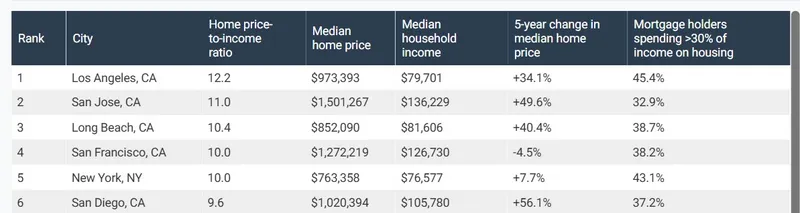
These cities took the usual route to a crippling affordability problem: they just didn’t build enough houses for decades on end. It’s a common story, echoed everywhere from New York to Bournemouth. There might be some local variation, but the themes are always the same. In service to a coterie of change-averse, generally well-off local residents, city councils and their planning teams banned development in large swathes of the city. Left in place a few decades, those rules generated a chronic undersupply problem that locked people out of homeownership.
If that sounds familiar, it’s because it also happened in New Zealand. The difference is we’ve done more to fix the problem. Gray is in Auckland with a group of Californian senators to see the impact of the 2016 Unitary Plan, which has caused an explosion in townhouse construction centred mainly in the west and south of the city. He’s toured Te Atatū’s medium-density housing developments and Ockham Residential’s multi-storey apartments in Ponsonby and Point Chevalier.
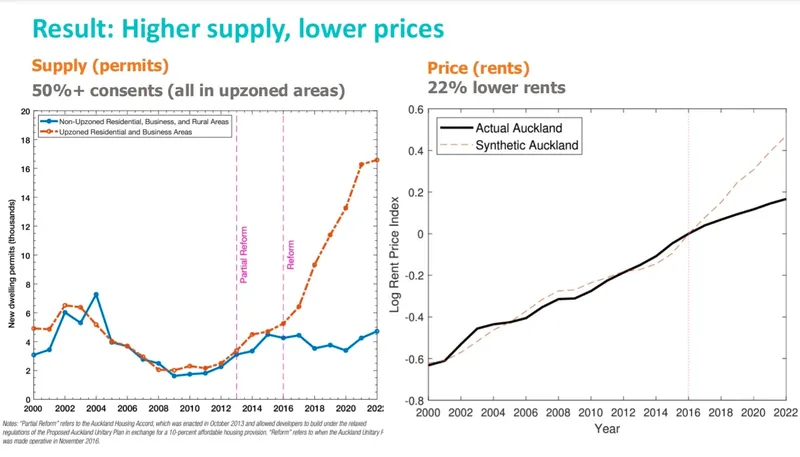
He’s come away impressed. Studies show the Unitary Plan has lowered rents and reduced house prices. Auckland is now nearly 10 years into a reform programme which many parts of California are only just adopting, and in recent years similar changes have been enacted in Christchurch and Wellington. “I think there are real serious conversations happening around this issue here, in a way that’s not always true in places that have a housing crisis,” he says.
But Gray has also seen some things that remind him of home. “In California most of our suburbs close to the city centres are declining in population,” he says. “These suburbs are essentially like retirement communities, where old wealthy homeowners don’t feel any pressure to move. Schools are being shuttered, and, in every meaningful sense, these communities are dying.”
Hey, same here. Auckland’s inner suburbs also remain locked off from development. Their populations are going down and school rolls are declining. Again, the city is further along than the US in addressing the issue. Plan Change 120, which the council has recently put out for consultation, will enable apartments around the train stations in Auckland’s centre and inner west. The two government bills replacing the Resource Management Act will effectively scrap the rules councils are using to ban dense new housing in places like Thorndon and Ponsonby.
If Gray has a message, it’s to reinforce the importance of making those changes. Living in a city like Los Angeles, he’s seen the end result of failing to allow growth in the areas where most people want to live. There, ageing property owners in those central suburbs have “won the lottery” in the form of spiralling home values, he says. But it’s come at a cost. Their children have moved to cheaper states and taken the grandchildren with them. It’s hard to find workers for local hospitals and supermarkets. Poverty has risen and tent cities have sprung up nearby.
Gray is now an executive at California Yimby, and his job is primarily centred around drawing the link between those problems and town planning rules that ensure housing scarcity. At the moment, much of the debate around Plan Change 120 is focused on the supposed negative effects of new housing. Councillors are complaining that Christchurch doesn’t have to plan for as much future construction as Auckland. The country’s biggest newspaper is issuing dire warnings about the possibility of apartments in suburbs five minutes from the city centre.
If Gray had his way, we’d focus less on the downsides of building and more on the downsides of doing nothing. He knows those are worse, because when he goes home in a couple of days, he’ll see them all firsthand. “You don’t want to live in an Auckland where every renter is spending half of their income on rent. You don’t want to live in an Auckland where young families have no path to homeownership. You don’t want to live in an Auckland where your kids are having to move away because they can’t afford to stay nearby,” he says. “As annoying as it might be to have a new building built near you, the alternative is to not have anything built near you, but have your community nonetheless dramatically change in every meaningful sense.”

Hayden Donnell
Hayden Donnell is a senior writer for The Spinoff. He previously worked at RNZ, TVNZ and the New Zealand Herald, alongside other media companies that have since closed down or been renamed. His primary passions are local politics and the Big Fresh animatronic fruit and veggies.


