
This is theatre as it should be: urgent, rooted, and transformative.
Te Pou Theatre, in Auckland’s Henderson, is more than a venue – it is a whare tapere, a Māori house of storytelling steeped in manaakitanga and cultural guardianship. To host Tales of a City by the Sea here is a profound act of symbolism: a meeting of two peoples whose histories echo with dispossession, land loss, and the enduring fight for sovereignty.
Written by Palestinian playwright Samah Sabawi, this poetic and politically urgent work brings Gaza’s lived realities to the heart of Aotearoa. It is a story of love and longing under siege, but also of resilience – a narrative that resonates deeply in a theatre that itself stands as a bastion of indigenous identity and creative resistance.
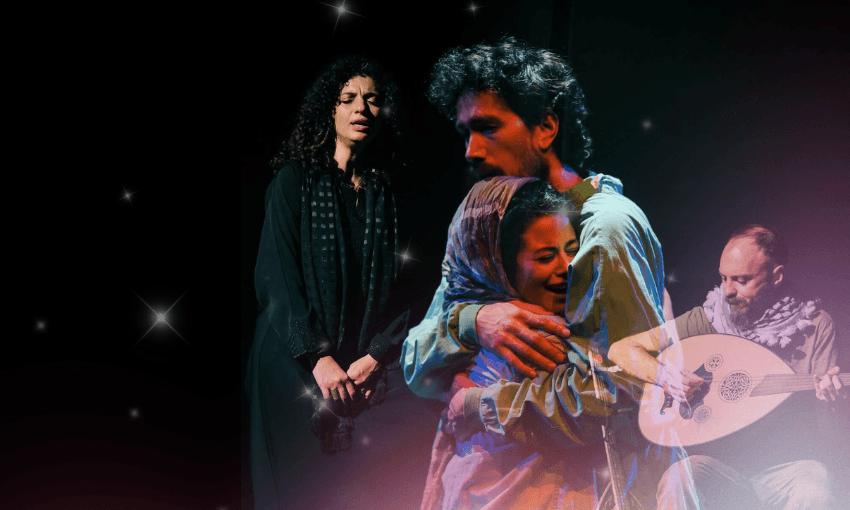
When the theatre doors open, Eva Maria Ghannam’s rich, spine-tingling vocals transport the audience to Gaza, drawing them into the space like a karanga. From that moment to the final notes of the oud, the production pulses with life. Live darbuka rhythms and plaintive melodies create a sonic landscape that feels vibrant and alive. This is theatre that sings – even when the world tries to silence it.
The play’s thematic spine is the tension between intimacy and occupation. Love in Gaza is never private; it is politicised by borders and checkpoints. Sabawi insists that tenderness is revolutionary – that to love under siege is to defy oppression.
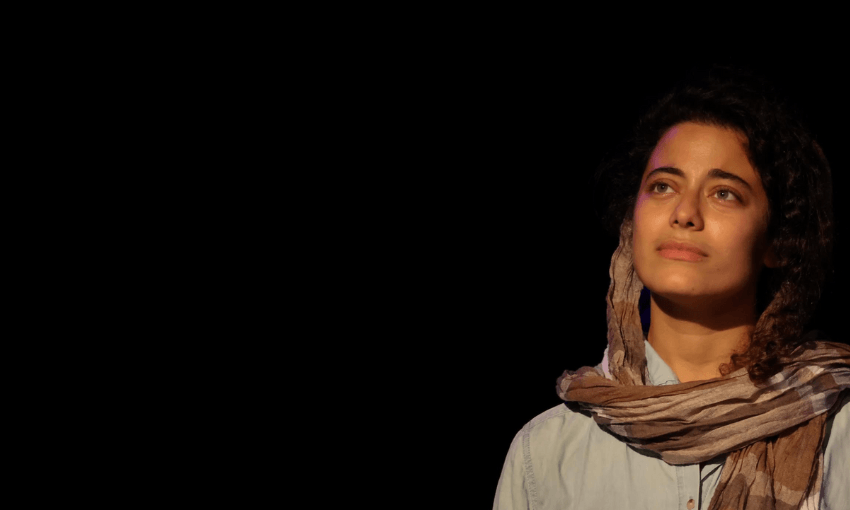
At its core, the play tells the story of Jomana (Rana Hamida), a young woman activist living in Gaza, and Rami (Hone Taukiri), a Palestinian doctor raised in the United States. They meet when Rami breaches the blockade and navigate love, identity and survival under occupation, where ordinary desires – connection, safety, freedom – become radical acts.
Sabawi’s text is lyrical, weaving Arabic idioms, poetic monologues and heartfelt traditional Arabic singing and music courtesy of an accompanying on-stage musical ensemble, into a tapestry with English dialogue that feels both intimate and universal.
Hamida’s portrayal of Jomana is strong and nuanced. Her quiet moments – such as gently stroking sand on the beach – symbolise a deep longing for freedom and normalcy. Jomana is profoundly connected to her homeland and family, embodying the struggles of ordinary people living under siege. Her emotional depth and resilience are tested by the conflicts she faces between hope and despair, love and survival.
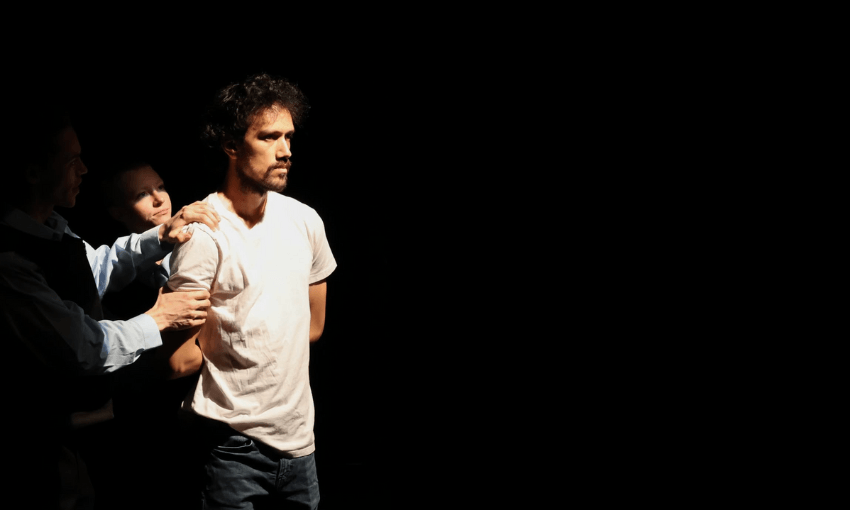
Rami emerges as a complex character whose journey poses the broader question of whether hope can endure in the face of relentless hardship. He ponders whether he should stand and risk his life in Gaza, or return to safety abroad. This dilemma underscores the play’s exploration of sacrifice, survival and love under siege, as well as themes of identity and displacement in a fractured world. Taukiri’s performance of Rami, however, lacks emotional depth, diminishing the role’s potential.
A standout performance comes from Lama (Acacia O’Connor), Jomana’s cousin, whose emotional journey is profoundly moving. Her guttural scream upon learning of her family’s death freezes the theatre in stunned silence. The subsequent lament – evocative of a karanga – draws tears from the audience, serving as a haunting reminder of lives lost.
Later, at Lama’s wedding to her long-time suitor, joy erupts. Song and Dabke dance intertwined with exuberant celebration and the high, jubilant trilling of women’s voices – affirming that language and movement endure as powerful acts of resistance in places of oppression, much like the haka.
Directors Rand Hazou and Acacia O’Connor orchestrate a staging that is both grounded and transcendent. While ensemble dynamics falter at times, the Sumud Ensemble – whose members have sailed with the Gaza Freedom Flotilla – bring an authenticity and activism that infuses every gesture.
Tales of a City by the Sea is not an easy watch, nor should it be. It insists on discomfort – not for its own sake, but as a catalyst for solidarity. This is theatre as it should be: urgent, rooted, and transformative. It reminds us that stories can cross oceans, that resistance can be staged, and that in the face of erasure, the act of telling, of performing, is itself a reclamation.
Performing this work at Te Pou Theatre is integral to its meaning. Both Māori and Palestinian peoples carry histories of colonisation, displacement, and cultural erasure. In this shared context, Tales of a City by the Sea becomes more than theatre – it becomes a ceremony of mutual recognition, a wānanga of resistance through art.
What lingers is not despair but complex tenderness. The production demands empathy and action, inviting audiences to see Gaza not as a distant tragedy but as part of a shared human struggle for dignity. Post-show kōrero deepen this, as Māori and Palestinian voices exchange stories of resistance.