
The category two cyclone will hit New Zealand this weekend. Here’s how to get ready.
What’s coming?
A “multi-hazard, potentially life-threatening” weather event: Cyclone Vaianu. The category two cyclone is expected to make landfall at 9pm on Saturday and reach maximum impact on Sunday afternoon. The entire North Island has been put under a strong wind warning or watch for Sunday April 12. It’s the first time MetService has done so, and MetService forecaster Brian Mercer said this reflects the fact this is a “very significant storm”.
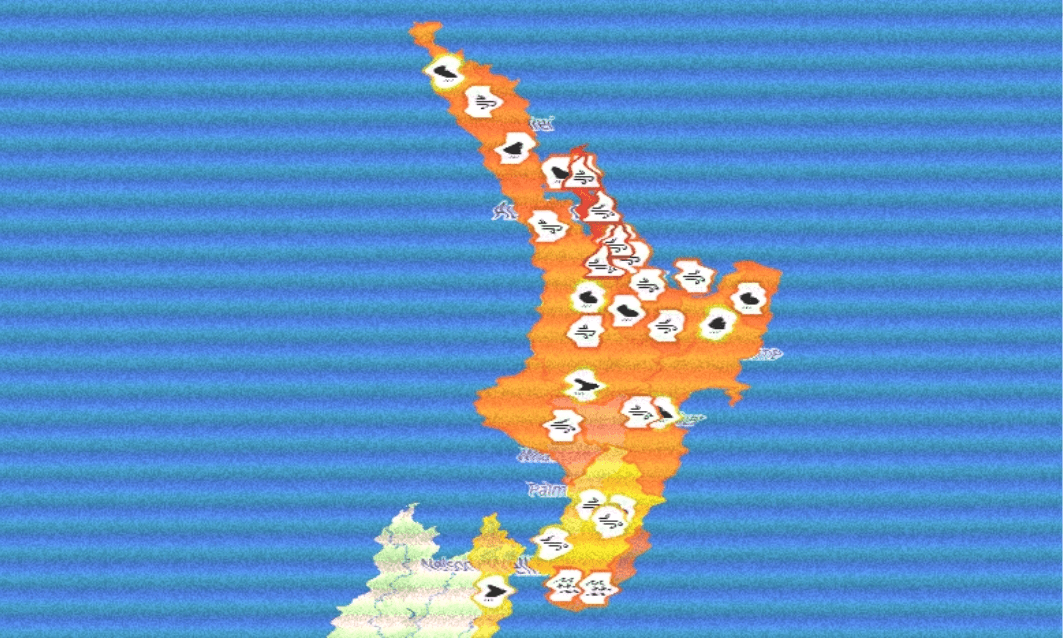
MetService uses a traffic light system of yellow, orange and red to signal the severity and likelihood of potential weather events. As of Friday afternoon, the Coromandel and Great Barrier Island are at the most serious wind level – a red – with forecasts for gusts of 140km/h or more. There is a “threat to life from flying items and falling trees. Destructive winds will cause widespread damage including powerlines and roofs, with dangerous driving conditions and significant disruption to transport and power supply,” MetService’s warning says.
Orange wind warnings are in place for the rest of the North Island, except for Manawatu, Kapiti Coast and Wellington, which are on a strong wind watch.
There are orange heavy rain warnings for Northland, Auckland, Great Barrier Island, Coromandel, some of Bay of Plenty and some of Gisborne, as well as heavy rain watches for other parts of the North Island.
It’s expected to be a fast-moving storm, with rain across the North Island from noon Saturday to noon Sunday. By noon Monday it will be south-east of Dunedin and largely clear of the New Zealand landmass.
What’s the advice?
Northlanders were advised earlier this week to begin preparing.
Get supplies. It’s advised to have three-days worth of water per person (around nine litres) for drinking as well as basic hygiene. It’s also worth having non-perishable or long-lasting food. If you don’t have access to a gas stove or barbecue, ensure you have food that doesn’t require cooking. Don’t forget babies and pets.
Make sure you have enough toilet paper. You can also use a lidded 15-20L plastic bucket for an emergency toilet (ideally lined with a plastic bag).
Get Ready advises having work gloves and a properly-fitted P2 or N95 mask.
Make sure you have a first aid kit and any critical medication.
Have some cash. Small notes and coins are recommended in case the eftpos systems go down.
Prepare a grab bag. This should include a raincoat, hat, warm clothes and walking shoes. You’ll also want food and water, hand sanitiser, a phone charger, torch, photo ID and copies of any important documents.
Get your car ready. Get Ready advises having survival items like food, water, warm clothing, a torch and phone charger in your car. A brush and shovel, tyre chains, windshield scrapers are also recommended if driving in extreme conditions.
Wear your medical alert tag or bracelet if you have a health condition or disability. Check in with your family, support team or neighbours, and make sure you have all your medication and a back up plan if you rely on life-sustaining equipment. Get Ready has detailed advice for people living with disabilities and health issues.
Be ready for power outages. Powerco is also telling customers to “prepare now to potentially be without power for several days”. The National Emergency Management Agency (NEMA) recommends having torches ready and a solar or battery powered radio. Batteries and candles are also good to have on hand. Make sure all power banks and devices are fully charged.
Secure objects. Remove any debris from outside – firewood, pots, etc. Tie down furniture and anything that could be picked up by the wind or broken. Turn trampolines upside down.
Clear your drains. Leaves, debris and any blockages should be removed.
Stay inside. Don’t drive unless it’s absolutely necessary.
But be prepared to leave. “Make and practice your emergency plan, make a grab bag and have emergency supplies in case you need to evacuate,” advises NEMA. If you see rising water, head to higher ground rather than wait for an official warning.
Stay away from flood water. It can be contaminated and is more powerful than it looks; just 15 centimetres is enough to sweep you off your feet.