‘I consider myself a bastard clown’: Jo Randerson’s secret art power

Artist Jo Randerson’s book, Secret Art Powers, reveals how the tools of the artist can help everyone in daily life.
Made possible by
In this excerpt, originally called ‘sorry about this’, from Jo Randerson’s book, Secret Art Powers, Randerson considers the life-affirming qualities of the clown.
For those of us who have followed artist and writer Jo Randerson’s work, her book Secret Art Powers does indeed feel like a secret: a book of spells passed from magician to apprentices. But what this book is, in fact, is a full-hearted offering to everyone on Earth. In a world that can be restrictive, pressured, dominated by worries and digital saturation, Secret Art Powers looks right at you, at your human self and all you have to offer. The “powers” are tools that everyone on Earth posses: “lies”, “fluidity”, “multiplicity”, “wrong”, “live”, “imagination”. Each chapter breaks down a power into its multiple parts – Randerson takes examples from her own experiences as an artist, but also as a child and a mother and a partner and a citizen.
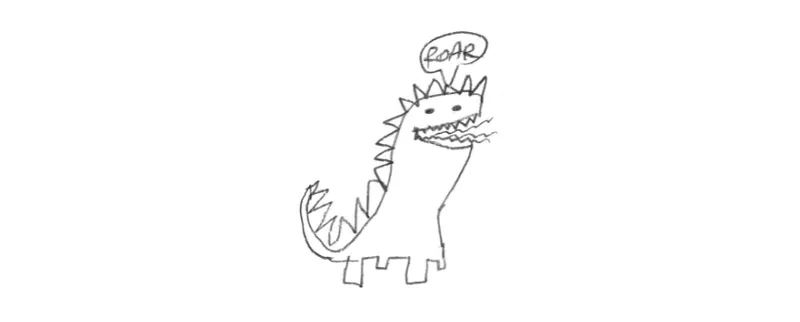
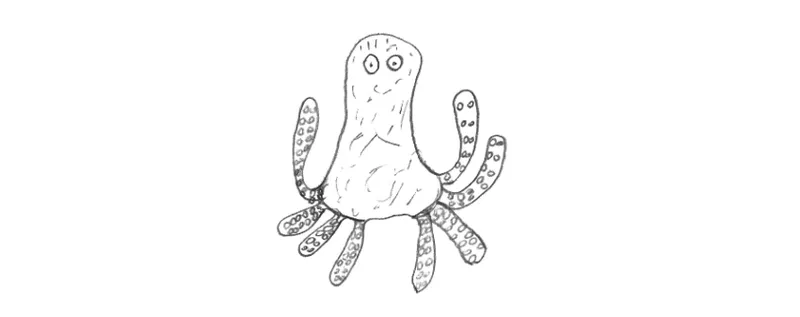
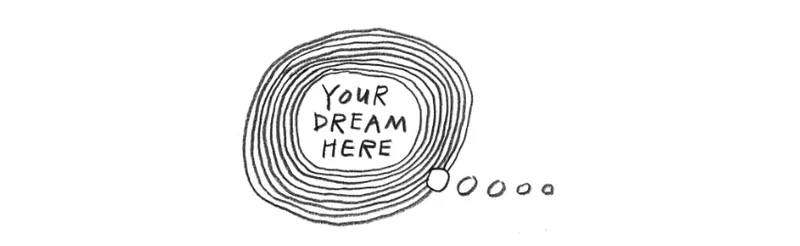
In other words, Secret Art Powers is intensely relatable, even for those for whom the word “art” might be off-putting. The joke of the book is, of course, that the secret is that there’s no secrets at all: once you’ve read this book you’ll come out the other end with your electrical bits stripped, your boxes busted and your knots untied. Randerson writes for her readers: the book is addressed to you, the potential wizard, the one with the secrets you might not even know you have. Secret Art Powers has been designed (beautifully by Sarah Maxey) to have and to hold and to scribble in – and in fact already comes with doodles collected by group-drawing sessions organised in order to sprinkle the book with the tangible dreams of the collective. I’ve inserted some in the excerpt below to give you the gist. I recommend you go in for the real thing, though – this is a not-self help book that will help you tremendously with life, with art, with figuring out what it means to be here today. / Claire Mabey
I live in a country where people apologise a lot. It’s important to say “sorry” when the moment arrives, but it can become a habitual and meaningless word when overused, a kind of performative apology. It’s more important to feel the impact of our actions and reflect on them for the future, rather than to demonstrate self-flagellation or get caught up in lengthy justifications of why we dropped the ball. Just pick up the ball already and keep going!
Someone who is really good at “taking the hit”, someone who can help us here is one the most unpopular, scariest and stupidest characters of all — the clown. Please don’t stop reading now. I know lots of people hate clowns.
Clowns can terrify some people, and they have often been used to propel violent narratives, but my personal experience with clown has been one of the deepest spiritual wells I have drunk from. I consider myself a bastard clown. I haven’t trained formally, because the practice is dominated by European men, some of whom have questionable techniques. But when one of my teachers suddenly referred to me as “a clown”, I started following this track, and my world opened up. Like any performative form, there’s clowning that I like and some which doesn’t ring my bell, but there are some principles which have been like a lightning rod for me, philosophically speaking.
Some clown KPIs:
Clowns are like four-year-olds: unable to hide their intentions or mask their feelings — they’re an open book.
Clowns are like goldfish, because they forget to harbour grudges — they just move forward.
Clowns are like phoenixes because they rise from the ashes and reattempt impossible tasks, despite all evidence that they will again fail.
They win because they are not scared to lose; they just get up, dust off and try again.
The clown is always the one doing things differently, the kid who is out of time or can’t stop talking. The clown breaks the rule, disrupts the pattern, says the unsayable. It’s a practical form, not just a concept: the practice of trying again. The practice of letting go. The practice of accepting a lower position, accepting defeat — but not wallowing in it. It’s very good for white people to learn how to do this.
In some societies clown is an extremely respected form, deeply appreciated and valued.
(Clowns)… are respected and revered alongside the medicine men and women… their function, their status is high, their means of expression often low… the purpose of which is to keep everything in order. Order through disorder… The clowns are society’s safety valve… (they) provide the emergency exit. They keep society safe by being unafraid. Unafraid to say what needs to be said, see what needs to be seen and if necessary tear down that which should no longer be allowed to prevail… Being human they experience fear… but being clowns they speak, they see and they act despite that fear. / John (Fire) Lame Deer, Lakota medicine man
Our world would be better if everyone did more clowning, or any creative task. Music, pottery, dance and weaving, all of these require you to try something, to make mistakes which you learn from and keep practicing. That’s what ‘practice’ means: you do it over and over. Art is not a concept but a kind of making; you make things, like jokes or pictures. Sometimes a mess.
You have to be in the moment to make something. And you have to let things happen, things that you may not have intended. Once a mess has occurred, then you try to find something alive in the mess—the mistakes often become the most beautiful part. That’s the power of WRANG (I just made that word up – it’s the past tense of wrong) when your making goes wrong and you have to fix it.
The Japanese technique of Kintsugi takes the broken seams of ceramic and fills them with gold. It celebrates and uplifts the ‘mistakes’ or the ‘breaks’ as a central feature of the dish. It doesn’t try to hide them, as we often do with moments that embarrass us. Instead, they become core identities for the vessel.
Secret Art Powers (Barbarian Productions, $35) by Jo Randerson can be purchased at Unity Books; and from Barbarian Productions.
The Spinoff Books section is proudly brought to you by Unity Books and Creative New Zealand. Visit Unity Books online today.

Jo Randerson
Jo Randerson (tangata Tiriti) lives in Te Whanganui-a-Tara where they write, perform and make media with other cool creatives through Barbarian Productions.


