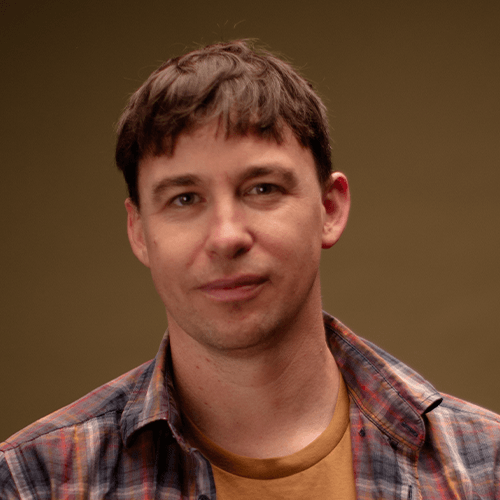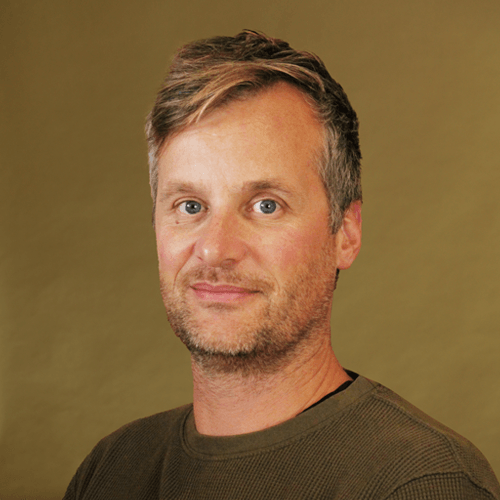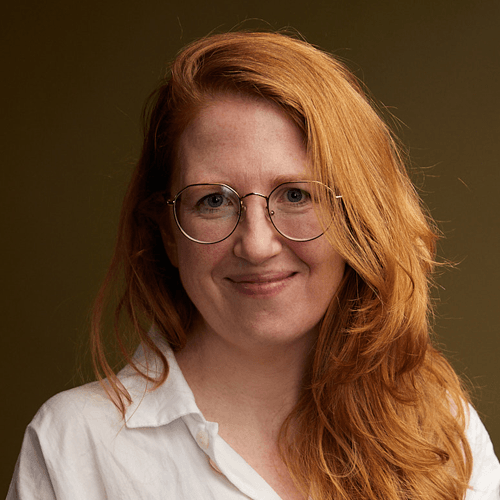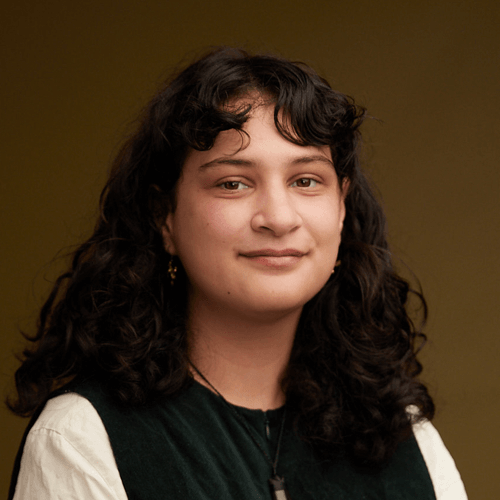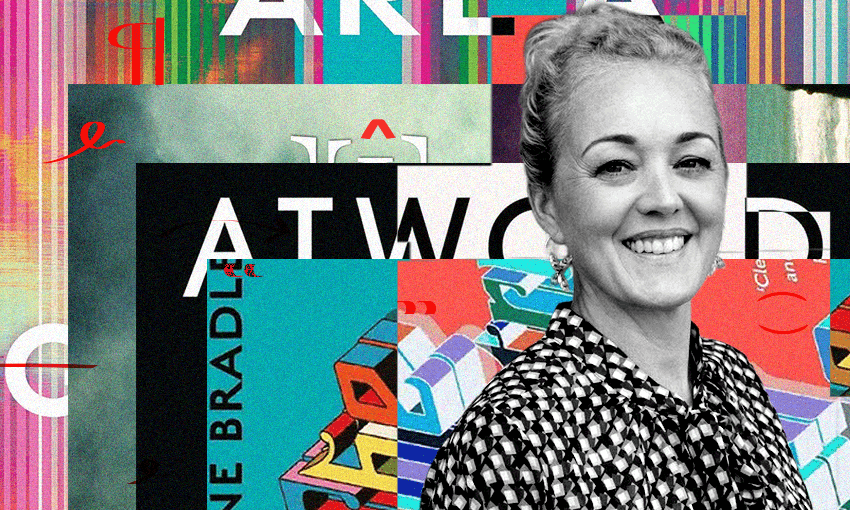

Welcome to The Spinoff Books Confessional, in which we get to know the reading habits of Aotearoa writers, and guests. This week: Gina Butson, author of The Stars are a Million Glittering Worlds.
The book I wish I’d written
There are so many books that I admire and wish I’d written. I’m generally not a reader of fantasy but I’ve realised that a lot of the books I wish I’d written are what I describe as magical realism. It’s not a term you hear much these days, and maybe I’m mis-applying it, but I generally mean: “no” to dragons and vampires; “yes” to (mainly) human characters and real(ish)-world settings with a highly imaginative overlay – books like The Night Circus (Erin Morgenstern) or The Vintner’s Luck (Elizabeth Knox).
Everyone should read
New Zealand fiction, especially recent releases. Writing takes a lot of time and energy, but very few writers in Aotearoa can afford to do it full time – not without years of a previous career behind them, some kind of side hustle, a generous partner, and/or spending a lot of time applying for grants and residencies, etc. All support from readers – financial or otherwise – is valuable if we want to continue to have a varied and world-class literary landscape – which we obviously do want.
Reading local work helps us to better see and understand ourselves as a society. For instance, Poorhara by Michelle Rahurahu really lets people into a different way of seeing the world – not just through the story and the characters, but also in the language that Michelle uses. It’s a story that couldn’t have been written anywhere other than Aotearoa.
The book I want to be buried with
I’m currently inclined to have some kind of natural burial where my remains nurture a native tree, so I won’t be taking any books into the earth with me. As I write this, though, it strikes me how beautiful the idea of a tree grown out of books is. Perhaps that’ll be the premise of my next novel: people could be buried with a small library and it would sprout a tree bearing all the small and large moments of their life grafted together with scenes from their favourite books. Eating the fruit of the tree would let you experience those moments. As a more pragmatic answer, I would like the poem Ulysses by Alfred Lord Tennyson to be read at my funeral. It’s about travel and friendship, ageing, seeking knowledge, and one last adventure. It has some beautiful, poetic lines, especially about the sky and the sea.
The first book I remember reading by myself
I don’t remember the first book I read by myself, but Mum was a teacher so I could read before I started school. I remember finding Are You My Mother? which was read in class incredibly tedious. I have a memory of being sent outside to read by myself during the class lesson, which, in hindsight doesn’t seem like a reliable memory – but it was the 1980s so I guess it’s not implausible.
Utopia or dystopia
Definitely not dystopia. I read a lot of post-apocalyptic fiction when I was young and I think I reached my limit. From time to time, I’ve tried again but I just can’t get past the few first pages or even the blurb on the back. The exception is The Handmaid’s Tale, which I re-read recently. But, like a lot of people have been saying, I’m not sure that it really counts as dystopian or even fiction at the moment. My aversion to dystopia doesn’t mean I only read happy books. I can handle (in an empathetic, tearful kind of way) books about one person’s suffering and tragedy, but can’t read “the-whole-world’s-f***ed-and-there-is-no-hope” kind of books.
If I could only read three books for the rest of my life they would be
This is the premise of a dystopian novel. It gives me the same sense of despair.
The book that haunts me
The book club I belong to has been running for 20 years now. Back in the day, we used to have a “book box”, which was filled with books (obviously) and bottles of wine (obviously…). We’d lug the box to meetings in flats across Wellington. The books in the box weren’t the books we were reading as a book club – it was essentially a book exchange for any other books that people wanted to pass along. I found Giraffe by J M Ledgard in there. I was probably drawn in by the title: giraffes are such beautiful animals. And I think that is what makes the brutal slaughter at the end of the novel even more harrowing. I still have such vivid, horrible images in my head from that book. I know other members of book club are, to this day, equally traumatised by Giraffe.

It’s a crime against language to
It’s a crime against language to forget that language is one of the most human things there is. AI has its uses, but it should ultimately enable us to have more leisure time. It shouldn’t be used to usurp human creativity. The theft of authors’ works to train large language models is a crime (and then to have the audacity to say that the em dash is an indicator that something has been written by AI! AI uses em dashes because authors use em dashes). The large tech companies are running an argument that copyright laws should allow an exemption to train AI models – in other words, they’re saying that they shouldn’t have to pay, acknowledge, or get permission from authors to use their work. Luckily, the Australians rejected that argument last year, so hopefully the New Zealand government will follow suit – I urge people to keep an eye out for the review of the Copyright Act, which might be coming this year, and submit to protect the rights of creators.
Most underrated book
The Exorcist by William Peter Blatty. I know this novel is actually very well-regarded but I’m counting it as underrated simply on the premise that a lot of people love the film and haven’t read the book. I read it by chance: it was the only book in English at a book exchange in a hostel in Guatemala. I snapped it up because I never like to be without a book and especially not if I’m about to undertake a long day of travel by myself. I’m prone to motion-sickness so don’t usually read on buses but I began that book before the bus started moving and I was engrossed. I read the whole novel during that journey.
I think a lot of the classics fall into this “we-know-they’re-good-but-then-you-(re)read-them-and-realise-just-how-good-they-are” category. For instance, it’s remarkable how well Jane Austen’s novels still hold up – the satire and wit are just as applicable and engaging. And Dracula – still a classic horror (although that might be because I read it by myself, at night, in a quiet campground in Opononi and the tent started flapping in the wind just as the bat’s wings started beating against window in the book).
Encounter with an author
I never met Janet Frame, but when I was about 10 years old someone came to my school looking for children to be extras in Jane Campion’s An Angel at My Table. Half of us were the young Janet’s classmates and the other half were adult Janet’s pupils when she was a teacher. There are a couple of shots where you can see me lining up outside the classroom and in the audience of her school prize giving.
What I’m reading right now
Butter by Asako Yuzuki. It’s been on my radar for a while and I’ve finally got around to reading it after a friend gave me a copy for Christmas. Maybe it’s something to do with reading in translation, but I like the way that contemporary Japanese fiction is stylistically different from Western literature – kind of matter-of-fact and whimsical at the same time – and how that I makes my brain shift into a slightly different key. Plus, there are always great descriptions of food, as well as day-to-day life like convenience stores and public transport.
Gina Butson is appearing in the HamLit programme on February 21 at the Hamilton Gardens. Butson’s novel, The Stars are a Million Glittering Worlds ($38, Allen & Unwin) is available to purchase at Unity Books.