What is paranormal romance? (And how is it different from fairy smut and romantasy?)

Vampires are back, baby.
Made possible by
Paranormal romance writer Steffanie Holmes explains the ins and outs of steamy stories featuring not-quite humans.
What is paranormal romance?
Romance and smut with love interests who are not entirely human.
And how does it differ from fairy smut?
Good question.
Fairy smut is generally considered to be romantasy, which means it has a second-world setting (ie, set in an invented place, like a sexy Middle Earth.) Magic and unique creatures are common and unsurprising to the characters. There might be an “old-timey” vibe, with limited technology and nods to recognisable mythological tales.
In contrast, a paranormal romance is set in our world, in the present day, where vampires, demons, ghosts, monsters and all manner of shifters exist alongside humans (usually in secret but sometimes not).
But don’t worry if you get them mixed up or call it all “fairy smut” or “hot vampire books” – we don’t gatekeep our romance around here.
Where does paranormal romance come from?
In her article about fairy smut, Claire Mabey points to mythology and Medieval and Victorian fairy tale traditions as the basis for fantasy writing, including paranormal romance. Any author writing speculative fiction draws directly or indirectly from the deep well of human mythology.
But paranormal romance also draws from another, much darker well – that of gothic literature.
Yes, Dracula biting his guests, family curses, rotting estates, maidens running dramatically from castles after nicking a candelabra, and a dark, brooding hero who keeps too many secrets form the basis for many modern paranormal romance tropes.
The Gothic has always blended horror elements with romance. Unlike fantasy, which usually takes place in another world, gothic novels are set in our world, often on isolated estates, crumbling family piles, or dark and twisted forests. Given this influence, it’s no surprise that paranormal romances riff on the monsters we see in gothic literature – the vampire, the werewolf, and (less commonly) the ghost or demon.
Most gothic novels ask “how can I escape the horrors?” But paranormal romance asks, “What if the horrors and I held hands and kissed a little?”
In 1973, Anne Rice published Interview with a Vampire. While this is not a paranormal romance, it did present the myth of the vampire with a romantic, sexy edge. In 1997, Buffy the Vampire Slayer hit TV screens and introduced a young, largely female audience to the idea of a heroine who thinks and acts like them interacting with the supernatural and coming out on top. Harlequin launched the Harlequin Nocturne imprint and staked the romance world’s claim on hot, horny vampires.
After September 11, paranormal romance took off in the publishing world, with many authors getting picked up by mainstream publishers. During this period, paranormal romance crossed audiences with fantasy readers, giving rise to a sub-genre called “urban fantasy”. How are urban fantasy and paranormal romance different? One is romance-forward, the other, fantasy-forward. But most readers don’t acknowledge a difference and enjoy both under their preferred umbrella genre. Authors like JR Ward, Jeanine Frost, Kresley Cole and Nalini Singh rose to prominence during the golden age.
What about Twilight?
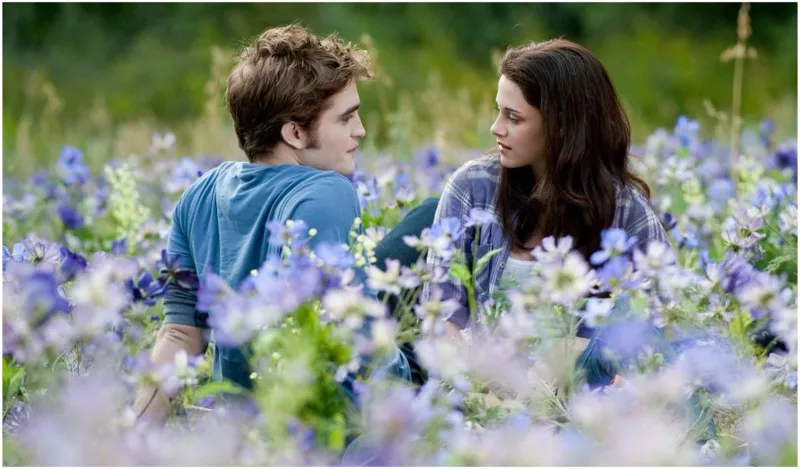
Stephanie Meyer’s Twilight Saga books have the dual honour of both bringing vampires thoroughly into the mainstream market and driving a stake through the heart of hot, horny vampire books.
Much has been written about why vampires waned in popularity after Twilight. I think that if the media is portraying the most popular vampire in the world as this cringe teenager who sparkles in the sunlight and doesn’t even have fangs, you’re going to struggle to see vampires as the bad boys and girls of baroque they truly are. Many imprints publishing urban fantasy and paranormal romance shuttered completely or dramatically reduced their lines to only those names that were already popular. But all was not lost for those of us who love fangs and slutty little cravats…
Where did all these new paranormal romance books come from?
In 2007, Amazon opened KDP Publishing to revive sales of its Kindle device. Anyone could upload their manuscripts and publish an ebook for free. By 2011, authors were becoming well established on the platform as a way to reach voracious genre readers who couldn’t find what they wanted in stores. And one of the main genres that flourished during the early days of self-publishing was paranormal romance.
Unfettered by publisher demands, the indie wave of paranormal romance decided we needed a little more variety, and thus began a few years of wild creative abandon and creative experimentation. Vampires still weren’t selling, but wolf shifters, fated mates and pack dynamics became a reader obsession. Indie authors like Milly Taiden and Zoe Chant published short, fun, lighter reads that spoke to a hungry audience as traditional publishers closed their doors to paranormal books following the vampire apocalypse.
In 2015, during the height of the shifter craze, a certain New Zealand author grew frustrated that no one recognised the genius of her self-published dinosaur steampunk science fiction books and decided to embrace the genre she loved to read. I wrote a fox shifter romance called Art of Cunning in three weeks, bought a cover of a bare-chested man and a dead-eyed taxidermy fox from an internet forum for $50, stuck it up under a pen name with the thought that maybe I’d tell my husband in six months and we’d have a laugh, and then had to deal with the wild ride of it selling 1,000 copies in a week.
I rode the shifter craze until 2018, when I jumped on a new paranormal romance trend – why choose romance (where the heroine has three or more love interests and has a happily-ever-after with all of them). During this period, the traditional market for paranormal romance shrank, but indie paranormal romance thrived. We had the academy romance trend (the protagonist attends a magical academy), omegaverse (stories set within a rigid wolf-inspired hierarchical society, with biological mating tropes), and the proto-fairy porn that eventually became the romantasy genre.
What does the paranormal romance landscape look like now?
In the current speculative romance landscape, paranormal romance has been overshadowed by the popularity of romantasy, which is having its much-deserved moment in the spotlight. Readers are getting their fix from shadow daddy fae, dragon riders, secondary world settings and kingdom-ending stakes. Many paranormal romance books are marketed as romantasy. The distinction between fantasy and paranormal is important to authors but not so much for readers. As long as there is magic and a beautiful romance, they show up.
Paranormal romance is not dead. Never. It’s decidedly Undead. Romance is booming, which means new imprints are opening and traditional publishers are scouting the ranks of well-performing indies for their next hit. Many indie paranormal romance authors have found themselves being scouted by trad, including me! Anthea Bariamis at Atria Australia read my cosy paranormal about a hot, brooding 500-year-old vampire with too many hobbies and the sunshiney human professional organiser he hires to declutter his castle, and for the first time my books are on the shelves in bookstores all over the world.
Vampires are back from the coffin, and I couldn’t be happier. The new vampires are dark, gothic, and decidedly not sparkly. We’re seeing vampires hit the bestseller charts across romantasy, dark romance, fantasy books (such as Jay Kristoff’s Empire of the Vampire series) and horror. So there’s no surprise that they’re back in the romance moonlight, too.
Cosy paranormal is having a moment, too, with BK Borison’s Good Spirits, Rachel Herron’s The Seven Miracles of Beatrix Holland and (shameless plug) my own Nevermore Murder Club and Smutty Book Coven series all gaining new fans with a lighter take on the paranormal. Think Stars Hollow from the Gilmore Girls series, but with more fangs and magic.
We’re also seeing many more queer and diverse books, although indie romance is definitely leading the way here. In particular, sapphic books, like Ali K Mulford and KL Morrison’s Maple Hollow series and Marie Cardno’s How to Get a Girlfriend (When You’re A Terrifying Monster), have become visible in a way they weren’t even five years ago.
No matter if your vibes lean dark and gothic or cosy and fun, there is a supernatural creature out there for you.
Where do I start?
We have some amazing Aotearoa authors writing incredible paranormal romance. Why not try…
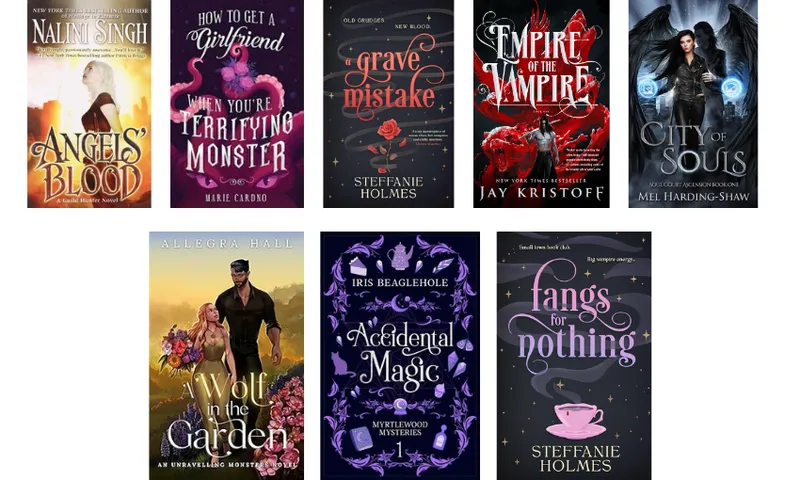
How to Get a Girlfriend (When You’re a Terrifying Monster) by Marie Cardno: a sapphic monster romance about love, self-discovery and trying not to destroy the world.
The Griffin’s Mate (Hideaway Cove #1) by Zoe Chant: a cosy small-town romance where the small town’s residents are 1) all super hot; 2) good at cooking, and; 3) can turn into mystical animals and take you flying over the ocean. 100% popcorn wish fulfilment – Hallmark but with dragons.
City of Souls by Mel Harding-Shaw: an enemies-to-lovers, fake relationship paranormal romance set in a post-apocalyptic Wellington where the beehive is now a dilapidated nest of winged spider monsters.
Angel’s Blood (Guildhunter 1) by Nalini Singh: introduces a world of beauty and bloodlust where angels hold sway over vampires.
Accidental Magic by Iris Beaglehole: a paranormal women’s fiction series that’s Gilmore Girls meets Practical Magic, about a mother and daughter who inherit a sentient house and a host of kooky magical troubles.
A Wolf in the Garden by Allegra Hall: a monster romance that features a female lead of mixed New Zealand European and Māori descent who is not afraid to love her man in both his human and his werewolf form.
Fangs for Nothing (Nevermore Murder Club & Smutty Book Coven 1) by Steffanie Holmes: a cosy, spicy paranormal romance about a grumpy vampire with too many hobbies who is desperately trying not to fall for the oblivious, sunshiney human professional organiser he’s hired to declutter his castle.
A Grave Mistake (Nevermore Murder Club & Smutty Book Coven 2) by Steffanie Holmes: the sequel to Fangs for Nothing, featuring enemy vampires who were once lovers, a meddling book club, a compelling murder mystery and endless cups of tea.
A Grave Mistake (Nevermore Murder Club & Smutty Book Coven 2) by Steffanie Holmes can be purchased from your local indie bookshop.
The Spinoff Books section is proudly brought to you by Unity Books and Creative New Zealand. Visit Unity Books online today.

Steffanie Holmes
Steffanie Holmes is a USA Today bestselling author of paranormal romance, urban fantasy and supernatural mysteries.


