‘You’ll laugh, you’ll cry…’: Wendy Parkins on the book everyone should read

Wendy Parkins won Best First Book at this year’s Ngaio Marsh Awards, for her novel The Defiance of Frances Dickinson.
Made possible by
Welcome to The Spinoff Books Confessional, in which we get to know the reading habits of Aotearoa writers, and guests. This week: Wendy Parkins, winner of best first book at the 2025 Ngaio Marsh Awards, for her novel The Defiance of Frances Dickinson.
The book I wish I’d written
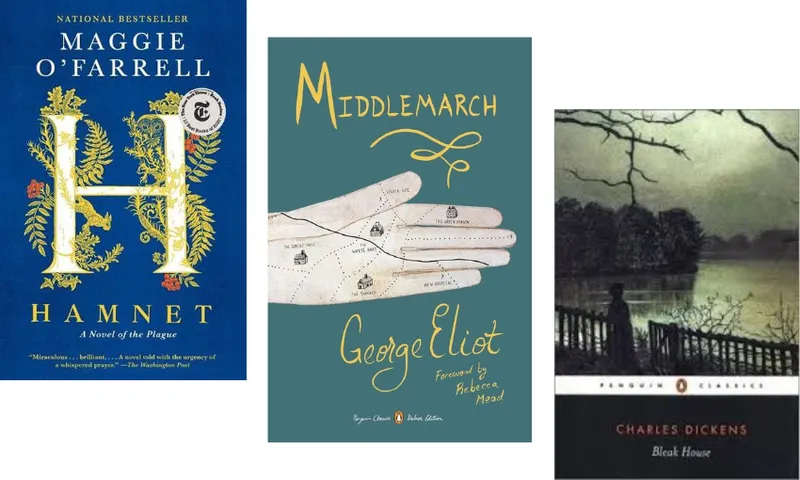
Hamnet by Maggie O’Farrell. Truth be told, I’m not a big Shakespeare fan (despite spending too many years of my life in university English departments), so I almost didn’t read it. What I envy so much about Hamnet is the way it wears its research lightly, it doesn’t revisit the Big Stories about Shakespeare but brings the so-called background to life – the smells and sounds and textures of home and garden; the emotional intensity of life with young children; and the centrality of women’s work. O’Farrell lays bare the strangeness of the past, showing how profoundly it differs from the present, but her exploration of love and grief is utterly arresting.
Everyone should read
Bleak House by Charles Dickens because it’s a trauma novel long before that was a thing. Dickens gets trauma. Childhood trauma, inter-generational trauma, it’s all here, along with dozens of characters from all across the spectrum of Victorian society in a rollicking plot that seems at first to be going off in all directions. You’ll laugh, you’ll cry, you’ll marvel at an episode of spontaneous combustion! Gradually, though, everything and everyone is shown to be connected, as all mysteries are unravelled by this masterful storyteller. It’s a matter of life and death, Bleak House shows, that we recognise how we are all implicated in each other’s lives before it is too late.
The book I want to be buried with
George Eliot’s Middlemarch; specifically, the coverless, yellow-paged, scribbled-over copy I first read as an undergraduate, and re-read until the cover fell off so it’s now wedged into my bookshelf to hold the pages together. I’ve replaced it with a small hardcover edition that I read again every few years. It’s another sprawling Victorian novel about people’s hopes and failings, empathy and ego, and the damage we do to each other when communities are destroyed.
Fiction or nonfiction
Yes please. I read and write both. High school introduced me to Jane Austen, Thomas Hardy, and George Eliot, and the 19th-century realist novel remains my happy place but I read more widely these days. I always have a novel on the bedside table. In non-fiction, I read a lot of nature-writing memoirs. Noreen Masud’s A Flat Place is one of the best I’ve read in the past few years – haunting and beautifully written. I also read anything by the psychoanalyst Adam Phillips. I hope he never stops writing books.
It’s a crime against language to
More a crime against fiction: dreams in novels. I don’t mind characters mentioning their dreams in passing but what I dislike is when dreams do the “heavy lifting” of plot or characterisation in a novel, or – even worse – perform some kind of tricksy foreshadowing.
The book that made me cry
It’s Bleak House again. It’s not the only book that has moved me to tears but it is unique in that it makes me well up every time I re-read it, in the same two scenes – I know what’s coming, but it still happens (even once when I was reading one of the passages aloud in a university seminar; so embarrassing). Both are moments of high drama in which Dickens seems to pause, to shine a spotlight or hold a close-up, so that the pathos of the scene culminates in one intense sentence. I still can’t quite figure out how he does it. Maybe I’m just soft.
The book that made me laugh
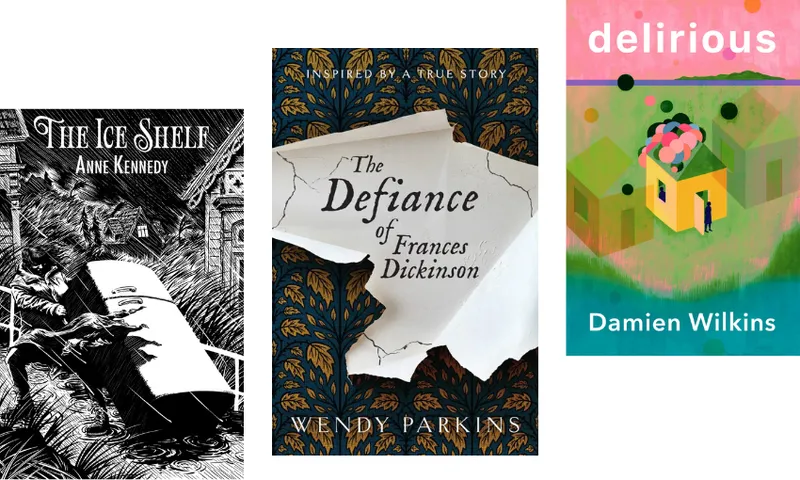
The Ice Shelf by Anne Kennedy. From the first page beginning with “Acknowledgements” (that never end), it is a hoot. I especially love the way she skewers writing workshops and literary festivals. More please, Anne!
The plot change I would make
There is a string of 19th-century novels where a “fallen-woman” character ends in disgrace or tragedy. I would like to re-write them all to give the women a better ending but I am starting with one: I am currently writing a novel that continues the story of Edith Dombey, from Dickens’ Dombey and Son. Dickens left Edith in exile in Italy, consumed with shame (while redeeming her awful husband), but I think she deserves a fresh start – why not a new life in New Zealand?
Most overrated book
Ulysses by James Joyce. There, I’ve said it. I had to deliver a series of lectures on it in my first academic job many years ago (my belated apology to those students) so I had to read it carefully and I’ve tried to appreciate it but it does nothing for me. If you want a “one-day-in-the-life” novel, it has to be Virginia Woolf’s Mrs Dalloway.
Most underrated book
Lewis Grassic Gibbon’s Sunset Song. OK, not underrated by any Scottish person but perhaps just underread outside Scotland. It was recommended to me by a Scottish friend (of course) a few years ago and it is unlike anything else I’ve ever read – lyrical, moving, brutal, whimsical, historical. Like all the best books, it does two things at once: takes the reader into another world while also showing you new and beautiful things you can do with words and language. You will never forget it.
Greatest New Zealand book
Wow, a big ask. Well, the greatest NZ book I read in the past year was Damien Wilkins’ Delirious. So beautifully observed (right down to the dog walk on the beach), so grounded in the ordinary stuff of daily life, but not afraid to go deep. I loved it.
Best place to read
In bed, drinking the first coffee of the day, with the vast blueness of Otago Harbour outside my window. Any day that begins like this, rather than doom-scrolling on my phone, is more likely to be a good writing day, too.
What I’m reading right now
I was going to say Hiding Places by Lynley Edmeades but I couldn’t put it down and read it in a day when I was supposed to be writing so, technically, I’m not reading it anymore. It’s original, challenging, funny. Now I’m reading In Ruins, a book about why we find ruins fascinating and beautiful. “When we contemplate ruins, we contemplate our future,” Christopher Woodward writes, which seems a fitting observation as the world collapses around us. (Sorry to end on a depressing note!)
The Defiance of Frances Dickinson by Wendy Parkins ($38, Affirm Press) is available to purchase from Unity Books. Parkins will appear at the Dunedin Readers & Writers Festival on Saturday, October 18 in an event called ‘Telling truth through fiction: the art of honest lies’.
The Spinoff Books section is proudly brought to you by Unity Books and Creative New Zealand. Visit Unity Books online today.

The Spinoff Review of Books
A smorgasbord of books thoughts and formats by The Spinoff.


