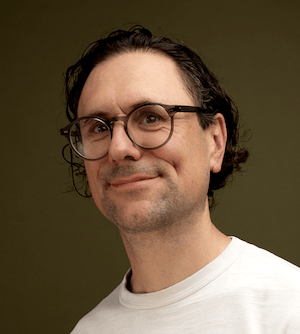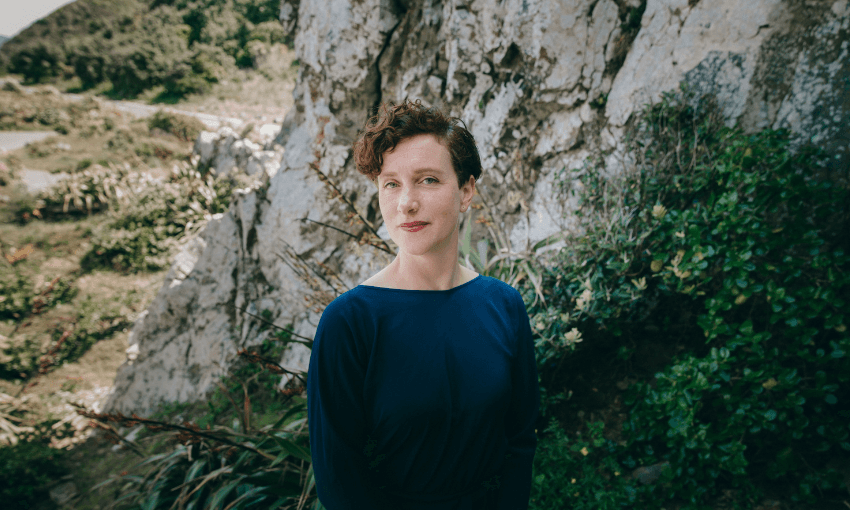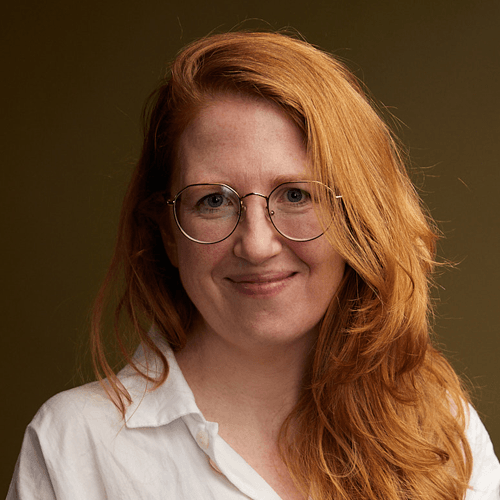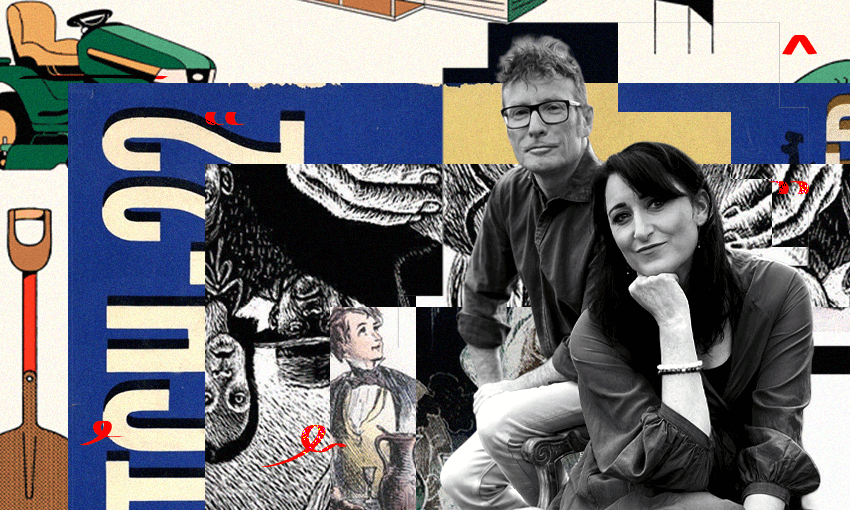

Welcome to The Spinoff Books Confessional, in which we get to know the reading habits of Aotearoa writers, and guests. This week: Ruth Spencer and Te Radar, authors of Kiwi Country.
The book I wish I’d written
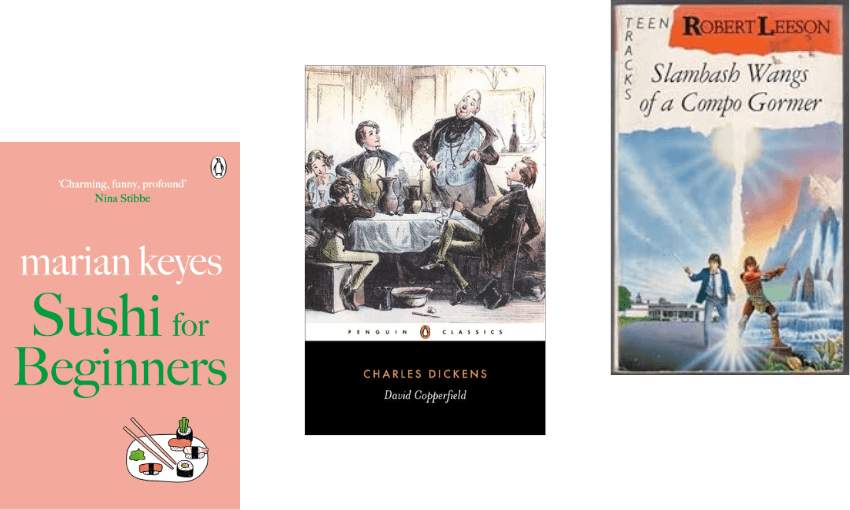
Ruth: I wish I’d written Sushi for Beginners. I remember when it came out everyone was raving about this incredible new talent Marian Keyes, men and women alike. Then came the deluge of what was derogatorily called “Chick Lit” and she was subsumed in it, as though her books were just a cliché confection for only women to consume, like bonbons. But she’s an amazing chronicler of her society – and her writing is delicious. Both things can be true.
Te Radar: Alistair MacLean’s classic Where Eagles Dare. Nail-biting, derring-do that refuses to allow you to put it down for a break and featuring all the classic tropes: espionage, death, bad goodies, good baddies, ridiculous bravery, moral quandaries, wisecracking characters and parachuting! Ridiculous escapism of the very best form.
Everyone should read
Ruth: Everyone should read Dickens, not because it’s clever to say you like Dickens but because it’s good. David Copperfield was assigned reading my first year of Uni and I put it off until the last minute because the book was big, and old, and I was certain it would be boring. It was not boring. I learned then that classics often get to be classics by being funny, gripping and moving. Looking like a bookish intellectual on the bus is just a bonus.
Te Radar: Exactly: How Precision Engineers Created the Modern World by Simon Winchester. This is precisely (pun intended) the sort of book I love. It’s full of arcane information about the history and nature of the new-fangled (mid-17th century onwards) concept of precision. Who knew it was so new? Well, clearly Simon Winchester. Be warned however, you’ll never want to think too much about that the fragility of that airplane jet engine you’re relying on to get you anywhere ever again.
The book I want to be buried with
Ruth: The Shepherd’s Crown by Terry Pratchett, the last Discworld book. Also Curtain, the last Poirot. I don’t want those series to be over so I’m not going to read them in this life … so they might as well come with me into whatever’s next. Also I hope my most loved books are read by someone else after I go, so I don’t want them buried anywhere.
Te Radar: Slambash Wangs of a Compo Gormer by Robert Leeson. If they ever dig me up I want the archeologists to be as confused as I was when I found a copy in a disused fridge repurposed as a book swap cupboard. One of more than 70 books Leeson wrote, it features some made up language: the title (best title ever) is “Klaptonian” for “The Fighting Fantasies of a Comprehensive Wally”. It’s a very British rewrite of The Prince and the Pauper.
The first book I remember reading by myself
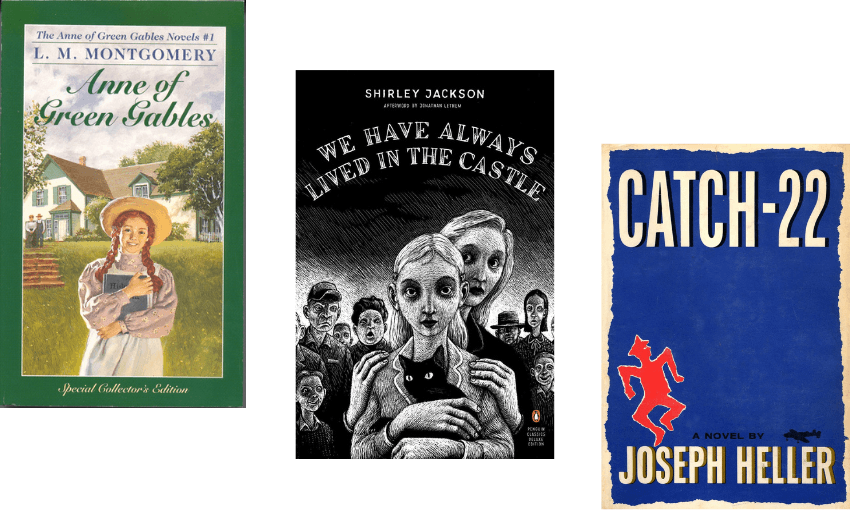
Ruth: I don’t remember which book I read first, but I was reading something else when my mother read me the first chapter of Anne of Green Gables by L.M. Montgomery. Anne completely floored me and I was scared to pick up my other book again in case I ruined it. I was probably 10 and I’m about to read it to my 10-year-old daughter.
Te Radar: Honestly, no idea. However my parents subscribed to the 1980s big three: Time magazine, New Scientist and National Geographic. Quite the eclectic resource for an isolated Waikato rural kid in the 80s. Seared into my mind are the iconic Time issues on “The Tribes of London” and “Madonna” (circa Like a Virgin). I was inundated with a lot of weird knowledge about all manner of things, which fuelled my ongoing curiosity about the world.
Utopia or dystopia
Ruth: Dystopia. The world as antagonist. If there’s no conflict or problem to solve then there’s no story. Utopia is a nice place to visit, but narratively speaking you wouldn’t want to live there.
Te Radar: Dystopia. To be forewarned is to be forearmed. Or at least that’s what someone said. I like to have an idea of how bad things can get and what I might be able to do to survive. But in reality to be forewarned is to be resigned to things inevitably getting worse, and no one doing anything about it.
Fiction or nonfiction
Ruth: Fiction, for pleasure. But some of the most influential books for my writing were nonfiction. I read The Book of Heroic Failures, The Book Of Lists 2, and Nancy McPhee’s Complete Book of Insults over and over as a young teen, and they set the tone for what I enjoy about informative humour writing. The Book of Lists invented the chatty listicle decades before it became an internet cliché.
Te Radar: Nonfiction. No matter how outlandish a fictional story, reality will always trump it. I’m just as happy to sit down and read an encyclopedia as a novel. Given that we’re now living in the kind of times they write about in history books it’s hard to look away from reality.
It’s a crime against language to
Ruth: Set up suspense with too heavy a hand. Being stalked by a serial killer and the garage door alarm just went off ? It’s probably nothing, must complain to body corporate in the morning, let’s have a shower. There are whole books where the tension is based around stupid choices the protagonist makes. A frustrating hero/ine isn’t relatable, they’re annoying. Waiting for the other shoe to drop isn’t fun when it’s a clown shoe.
Te Radar: Convince yourself that you have “read” a novel when you listened to a 15-minute summary of it. You see so many people claiming to have improved themselves by listening to several of these a week, or even a day. Dude, what you got is a plot synopsis. Handy, but not reading.
The book that haunts me
Ruth: We Have Always Lived In The Castle by Shirley Jackson. Everything she writes is haunting, including the cosy humour writing she did about her children – I’m permanently haunted by the two jellybeans she gives her baby at bedtime to get him to sleep. But We Have Always Lived In The Castle is smothering domestic gothery on another level. It’s so unbalancing, there’s no solid ground, and where your sympathies and allegiances fall are all wrong. So good.
Te Radar: 1984. A seventh form text (along with Catch 22 and L’Etranger … I think our teacher was suggesting something), the thought of living such a constricted life, constantly afraid of being dobbed in by your fellow citizens, always watchful or watched for wrong-thinking, seemed such an impossible notion in even ideologically constrained provincial Hamilton in the 80s. I honestly believed that it would never again come to that because people wouldn’t allow it and because it was almost wilfully naive. How wrong I was.
The book that made me cry
Ruth: The Power Of One by Bryce Courtenay. I was helplessly sobbing in my Uni residence room in Christchurch, hunched up against a radiator. Concerned people came to check on me. It was like the first time I saw Les Mis and couldn’t leave the theatre until my paroxysms of grief subsided. Actually those were both in the same year so possibly I was just going through something. Catharsis!
Te Radar: Robert Falcon Scott’s Polar Diary. I read it on a ship on the way to Antarctica. Despite all the mistakes he made, and knowing that they were doomed (spolier!), it’s a gripping read, especially his passages on the plight of poor old Lawrence Oates, legs frozen below the knees, begging to be abandoned. And Scott’s last entry: “It seems a pity, but I do not think I can write more”. Harrowing.
The book that made me laugh
Ruth: Good Omens was my first introduction to Terry Pratchett and of course I’ve read all the Discworld books since except the last. At his best he’s balanced perfectly at the apex of moral philosophy, social commentary, complex character development and slapstick (literary and literal), and it’s not something anyone else can do. Lots of people try and I enjoy some of them, but he was a unique genius.
Te Radar: Catch 22 by Joseph Heller. A brilliantly comic reminder that life is unfair for no other reason than that it is. Another seventh form read that really helped with the vagaries of being institutionalised at boarding school, and the capricious nature of decisions and rules and inexplicable dictates one encounters in life. It’s an excellent lens to deal with the vagaries of modernity.
If I could only read three books for the rest of my life they would be
Ruth: I couldn’t even choose three authors. If I like someone I read everything they’ve done, and I’m lucky that most of my authors are prolific. I’m so grateful that Agatha Christie wrote so much, and same with Raymond Chandler, Dickens, Terry Pratchett, Georgette Heyer, Dorothy Sayers, Jane Austen, Shirley Jackson. T. Kingfisher is a new fun find who is currently churning out three a year, bless her. More power to her pen.
Te Radar: Catch 22, Bill Bryson’s A Short History of Nearly Everything, and a really good dictionary.
The book I wish would be adapted for film or TV
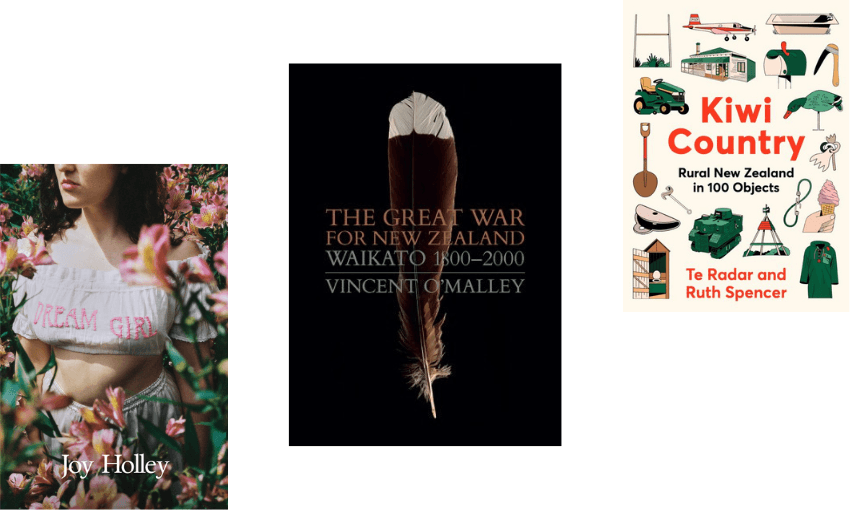
Ruth: Joy Holley’s Dream Girl. Each of its atmospheric short stories could be an episode. Holley is a brilliant New Zealand writer and this book is crying out to be a sexy, spooky, dreamy local hit. Get a diverse cast of young gorgeous unknowns onto the screen and launch a whole new genre of drowsy lusty melancholic-ecstatic shortform drama. 10/10 would watch.
Te Radar: Vincent O’Malley’s The Great War for New Zealand. It’d make a sprawling, infuriating, iconically epic look at the history of New Zealand through the lens of the Waikato invasion with a cast of characters to rival any. I’d love to play Lieutenant-General Duncan Cameron, who’d survived the Crimea, and ended up here at the furthest reaches of the Empire confronted by the challenge of an excellent Māori foe, the terrain, and eventually the ethics of what he was doing.
Most overrated book
Ruth: Moby Dick. I once gave myself the goal of reading all those American high school books: The Great Gatsby, Catcher in the Rye, To Kill A Mockingbird. I thought all these formative books would give me insight into the culture. But any teenager forced to read Moby Dick has a right to be bored, confused and frustrated, with a new hatred for the vagaries of maritime knots. Maybe that does explain the culture after all. Don’t call me, Ishmael.
Te Radar: Frankenstein. I realised I hadn’t read it after I saw the Auckland Theatre Company’s excellent play Mary so I thought I’ll jump in. Shelley’s a great writer but good old Victor is an absolute plonker who squanders his genius on bad decisions followed by worse decisions, all the while immersed in a deep wallow of self-pity. Little wonder his creation loathed him. I’d rather he died far earlier and we were stuck with his far more entertaining creation.
Best food memory from a book
Ruth: Enid Blyton does the best food. She was writing for children during wartime rationing so her foods are a fantasy for deprived young readers to wallow in. Pop Biscuits, toffee, marzipan, the ubiquitous and mysterious “buns”. JK Rowling deliberately followed her example, which is why Harry Potter has butterbeer and chocolate frogs. Rowling truly missed the mark though with pumpkin juice, which sounds like a punishment at Dame Slap’s School.
Te Radar: It’s from a Hudson and Halls cookbook we were looking at for my CookBookery! show (a comedic history of New Zealand cookbooks). They have a recipe for Avocado Toast, and I thought, how positively ahead of their time they were: pre-millennial Millennials! But then it said: “This is an unusual recipe for avocado and brains”. Is there a usual method to prepare avocado and brains? It also includes the ingredient “3 tablespoons tequila” and the note that this was “Most important!!” Quite.
Kiwi Country: Rural New Zealand in 100 Objects by Ruth Spencer and Te Radar ($40, HarperCollins) is available to purchase by Unity Books.