‘I didn’t write any poems today’: the diary of a modern poet

Nick Ascroft has opened up his diary to reveal one week in his life of poet, parent, worker and friend of other poets.
Made possible by

Nick Ascroft documents a week of not writing poetry.

The new flatmates seem to have gotten rid of our pet spider. It’s not a pet like a domesticated spider, if such things exist. It doesn’t roll onto its back for thorax rubs or fetch the newspaper. It has just been in a corner of the bathroom for almost three years now, or has been one in a succession of similar-looking spiders holding the throne on the window by the ventilation fan. It disappeared for a month once after a powerful storm but then it was back, and we were delighted.
The kid named it Man-Spider, like it’s a super-heroic spider with man powers. It can, I don’t know, talk as though it knows all about the Minoan civilisation on Crete though it only skimmed the Wikipedia page that morning. Or complain about a sore neck. Man powers anyway, having been bitten by a radioactive man.
There are four humans now in this small apartment: the married couple are new in the spare smaller bedroom, and the kid and I share the big one. One bathroom for four is stretching it, and maybe not everybody loves a spider. We need the money from the couple though. I don’t want to pass all my debts to the kid when I am mercifully dead. Just the bulk of them.
A diagonal swath across the corner of the window was previously all webs. Old fluffy webs, mainly, that had lost all stick, but Man-Spider wasn’t going to clean them up, and the kid and I didn’t want to scare it off.
I was going to say “her” because I have long presumed Man-Spider to be female. I will read up on spider sexing on Wikipedia then act authoritative about it later. The fluffy webbing is mostly gone and there’s no sign of the spider. It was inevitable someone would put an end to its reign. Oh. Hold on. There it is. There she is perhaps. Phew. Long live Man-Spider and her dynasty.
I didn’t write any poems today.

The flatmates have gone to New Plymouth and the kid to his mother’s. I am left moping about the house and considering my mistakes. I have made, you would imagine, many, but in fact the number is zero. Zero mistakes if viewed from a lofty enough position, such as from the moon. Here in the living room, alone with my face, which is stuck in a permanent cringing rumple, the number seems higher. Poetry for a start is surely a great error. I am single or – putting it another way – I have ended up alone.
Poetry should shoulder a quantum of the blame. I was very naïve as a kid, spectacular in my mistakenness, and must have suffered under the idea that placing a few poems in print might cause womenfolk to swoon. This was not the effect but … as I scan the memory banks for a counterexample my mouth falls open. There was a time. There was one time at least where my poem-writing was not a deterrent. It’s a nice memory. For sure, I’ve embellished it over the years as I’ve run back through it.
I start walking now, down the hill to work lost in the memory. It’s a very chaste one but I am nonetheless proud. I was in my late twenties and visiting Wellington with my friend Jon Cox. We were staying in the backpackers across from the train station and in the late afternoon had drifted to its on-premises bar.
At this point in my life when I saw someone I was attracted to I experienced sweating, watering of the eyes and an actual knocking together of the knees. I tried to stay as far away as possible. My strategy for meeting women was: chase me! I would leave the room and if they hunted me down and pounced on me … well, that never actually tended to happen. But at this backpackers bar as I ordered a beer I saw a young traveller and I felt something new. Not confidence. I want to say gumption. Her head was completely shaven. I have always thought this a great look ever since Sinéad O’Connor’s ‘Mandinka’ video. This woman looked more like Robin Tunney in Empire Records. If the world was divided into leagues as many have suggested, I was clearly not in hers. But, as I say, gumption. Gumption at last.
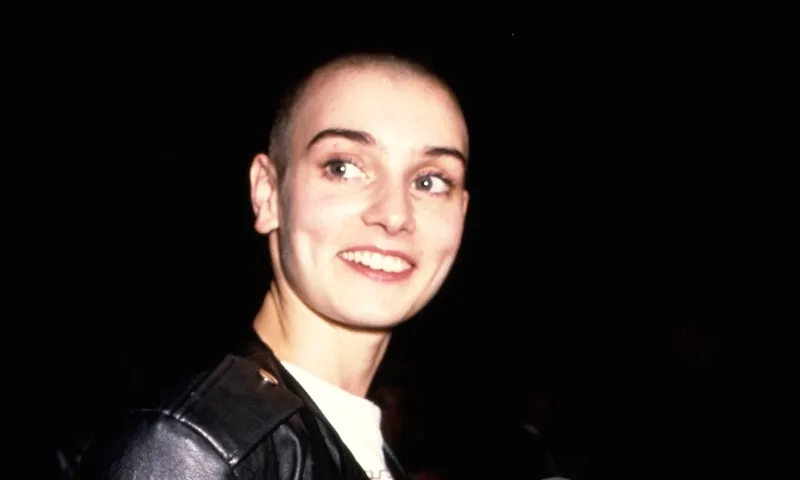
I walked around the bar to her. I had never done this before and have never since. (OK, once I turned to face a woman in a pub who looked at me and, before I could speak, said the word “no”.) I walked around, clutching the pint glass for courage. Clutching too hard as it transpired. I smiled and caught her attention. And as she looked at me I spilled the entire beer down the front of my jersey and onto my jeans.
“I will … go back over there,” I said, turning heel. But something in the complete failure was … if not charming then at least non-threatening. Her name was Kristina. She was from Denmark. She and her friend came over to talk to me and Jon. Jon was excited to show them my book. It was my first collection of poetry, newly published. The Danes checked the author photo for evidence. They had no desire to read any, which was to my advantage I’m sure. An hour or two passed. We talked. We walked them to their evening train as they were headed north.
From the platform I looked at Kristina and Kristina continued to look back. As the train rumbled to life, I blew her a kiss. I don’t even cringe to say it. A blown kiss. After a moment’s pause, weighing up perhaps her own inner cringe, thinking of this poor poet with his beer-sodden jeans, she blew one back. I never saw her again.
Ah memories. I arrive at work thinking that zero mistakes is perhaps too few and it is time I made a couple.
I didn’t write any poems today.

The kid is back with me and has spilt Coke on the couch. “How do you get Coke out of a couch?” I would Google but the AI answer would scold me about giving an eight-year-old Coke and aren’t they complicit in the genocide? Coke I mean, not eight-year-olds, but Jesus, why did I bring that up? Because it’s inescapable. It’s hard enough getting through the day without being tutted at, however rightly, by a non-existent sentence generator.
My work colleague, who is also the poet Tim Grgec, joked once that at least AI won’t be coming for the poets’ jobs. This is a joke I don’t need to explain to poets. AI does write better poetry than we do, but that isn’t the point. To emphasise the point I am scrubbing uselessly at the couch with a Handee towel. One trial after another it is.
Segue alert. I went to One Battle After Another on Wednesday with some poets, after a beer with poet Ashleigh Young, which I also … but this must seem like name dropping. Opposite. I am naming names like a rat. Could the truth be so disgusting? That being a poet is mostly about hanging out with other poets? The kind of cliquey grossness you hear people scoff at but imagine cannot really be true?
And it isn’t true. Our friend circles are just the people we have crashed past, in the course of things; who we had enough commonality with or who could bear us. I grew up far from Wellington and have no family or school connection here, so I have just fallen in with people through my hobbies. Scrabble and poetry. Is poetry a hobby? Does the Pope wear a bedazzled hat?
I remember years ago insisting my writing was a vocation. And, sure. If you want. But a hobby is “a regular activity done for enjoyment in one’s leisure time”. Regular! Ha. Well, close enough. I have fallen in with poets because I knew no one else and they shared a hobby.
One Battle After Another summed up parenthood well. Leonardo DiCaprio’s Ghetto Pat continued doing all he could for his daughter despite being useless and shouty. My son hasn’t been abducted, but spilling Coke on a couch is in the same ballpark.
Before the film I was going to buy a choctop. I looked across at Stacey Teague chatting to Chris Tse and Ella Borrie (names!). At the last film I went to with Stacey Teague she shushed me while I was slurping away at my ice cream in a quiet scene. It was very funny and I appreciated that you couldn’t shush someone unless they were your friend and they could take the joke. But still, I wasn’t going to risk buying one again.
I didn’t write any poetry today, but have momentarily thought of the title ‘Bedazzling Your Mitre’ … and have now dismissed it.

The kid is chatting to his friends on Roblox at 6.45am. Roblox is a game or platform for user-created games of a similar type that … nope, I have no clue. I followed along with the Pokémon cards and was even pulled into Minecraft, both of which played to my obsessiveness. But this one I do not get and do not want to. It’s all flashing lights and popups asking for money, like an early 2000s virus.
My son looks at me with sad eyes and asks to play Roblox with me. I draw a line in the sand. No. The kid is smart enough to know he will wear me down and that sand is the dumbest medium to draw lines on. Nobody respects sand lines. I was going to make a joke about Western Sahara here but I read that the berm dividing Moroccan-controlled territory and Polisario territory is heavily mined and my dumb jokes look at their feet in shame.
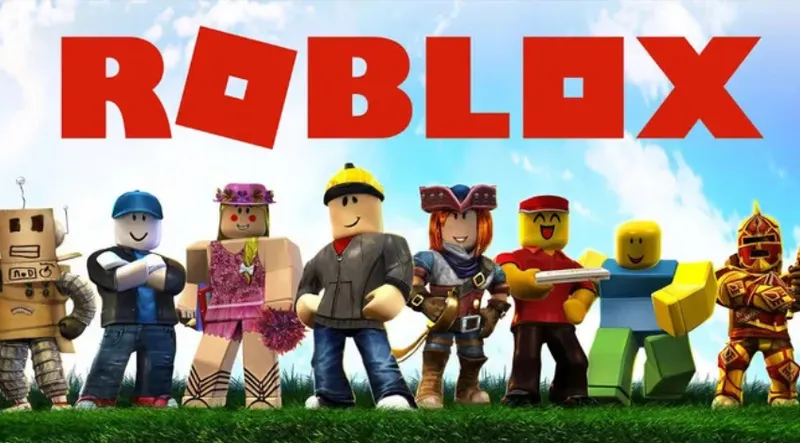
This morning I’m concerned that his friend group on Roblox has grown. The chat function is heavily secured and a lot of words are banned, as is hitting a ‘W’ multiple times, which lands the kid with a temporary ban from messaging. This security is to combat all the creeps who are grooming children on internet-based games.
I had been insistent: no chatting to strangers on Roblox. I was pleased to be able to enable chat to “only friends”, thinking he might occasionally message his one friend who also played. But suddenly this is social media for eight-year-olds. No social media till 16 is an idea I am completely behind. It’s a pitiless world, online and off, and we should protect children from its cruelties and anxiety farming.
But I’ve already failed. Is anyone being bullied in this ballooning Roblox chat? I can at least monitor that. Hmm. One nine-year-old just wants the others to give him stuff. It has protection-racket vibes. That seems harmless. Always good to learn how to appease the powerful.
No poems written today.

I awake in shards. Last night after having dinner with the kid and Kate (his mother) in Brooklyn I bussed home alone and Stacey came over to watch the grand final of the NRL. It finished at 11.40pm. Daylight savings is now one week in, but I am still jangling in its grip.
Every year it’s the same. Just one hour difference. Surely it’s nothing. But that one hour is the pea to my princess. I am bruised all over and dying. I like to brag about how I learned to get by on a few hours’ sleep when the kid was zero to two. Those abilities have evaporated. I have that ache behind the eyes that makes every small task impossible.
“What? You watch rugby now?” Kate had asked, looking disappointed. “League,” I explained. “Rugby league.” This was no help. “What’s that?”
Some questions are unanswerable. Where does consciousness start and end? Why are those Red Bull ads so annoying? It’s a world of inexplicable shapes and whispers. But I just like sport. Football mainly but I’m nothing if not open-hearted. Unless it’s yachting. My tastes in general are knuckle-draggingly lowbrow. Any film festival offering that uses the words “profound” or “unyielding” I run from.
But I think that in part my obtuseness keeps me happy. I am easily pleased, like a baby looking at colourful shapes. September was very hard for some of my friends. Depression, existential weariness and unkind inner voices. I am not immune to a bit of back chat from the inner voices, but often the voices just say, “Shall we watch the Women’s Super League highlights?” I nod: “Duh OK.”
Chelsea have suffered a draw! This is poet Ash Davida Jane’s team. I am sorry for Ash, but there is an essential thread in sports that you want an underdog to beat the odds. This is why the NRL grand final last night was so good. The Brisbane Broncos looked beaten but came from behind to win over the Melbourne Storm, Reece Walsh practically winning it single-handed, hypnotising the Storm with his smoky lashes and ridiculous haircut. Poet Jordan Hamel messaged us at the end, agog with the pathos.
Despite the heavy eyes, today I go to the International Institute of Modern Letters to speak to an undergraduate poetry class of James Brown’s alongside Hinemoana Baker. Hinemoana is a natural, speaking to the students: confident yet humble, inspiring, insightful. I hold my own perhaps. But I am embarrassed to get emotional talking about Gaza. Why did I even bring that up? Because it is inescapable.
Hinemoana says to think about who you are writing as. This gets to the heart of my problem with the poem in my book that skirts the genocide, which I read aloud. I have been careful not to write as a Palestinian. I am writing as myself, imagining myself in an alternate Wellington, bombed to rubble and under constant threat of death or capture. The exercise feels unearned, a delightful imaginative masochism, safe from consequence.
James also has a point that to make poetry of an issue is to try and craft it into art. This is hobbywork and play, and me a sport-loving clown poet. It’s a bad fit. But I’m glad to have tried, if that means anything. A student asked why I included the poem in the collection if I was so troubled with it. Exactly.
I refuse to write any poetry today.

I leap from my bed-bound scrolling Threads, realising I will be late to work. I work for our nation’s government. I can’t detail in what capacity and if you ask me if I am a spy I will make a big show of denying it. I am not a spy. WINK! But really, I would be an inept spy. For one, you can’t be late to work so often. More crucially I am the loose lips that sink ships while chomping chips.
I get to my laptop with 30 seconds to spare before a big, group Teams call with some people in Norway. I can’t divulge which people, which makes this anecdote rather dull. Some people talked to some people about a thing. In the end I offended them a little, but I wrapped the offence in a tight sandwich so they felt they couldn’t be too grumpy. I complimented, then I undermined a decade of their work, then I complimented. This is the kind of greasy operator I am. The meeting is my forte. I am not a puppetmaster per se, but nor am I a muppet pasta. If my work was all meetings, I would be good at my job.
Alas there are action points, follow-up work and long documents to read, write and comment on. I am the Truman Capote of meetings I want to say, which I am pretty sure is both meaningless and inaccurate. Truman Capote described Carson McCullers as “a tall, slender wand of a girl, slightly stooped and with a fascinating face”. I saw this between flotilla updates while scrolling Threads. It makes me feel remiss in having failed to describe the poets I have name dropped in earlier entries.
This is a functional bit of prose-writing I always forget. When a new character enters a scene you are obliged to give them a short description. Let’s just assume they are all stooped wands. I myself am stooped and wand-like today. After the meeting I cycle into the office, my willowy silhouette wobbling like a wand in the wind. There you go, almost a poem.
Some squat animal in a checked shirt tries to overtake me on his analogue bike. I feel fury but rinse the little upstart, making sure my pedal strokes look leisurely, beating him to the lights by a length. Life is a series of petty triumphs.
I write no poems to speak of.

My son and I have an idea for a book while yacking on the bus. It would be called Very Funny Jokes That Will Definitely Not Make You Angry. Inside the book, each page has a joke that is not only unfunny but very dull. Example: “Why did the tennis player play tennis? Because she was a tennis player.”
We spend the half-hour journey laughing at each other’s efforts at boring non-jokes. Sometimes we come up with new twists on the book, where we would sell it, how we would market it. My favourite idea is an infuriating competition to win a large cash prize. Entrants would need to film themselves reading the entire book without laughing and email the video in to win. We have a few ideas of what would happen next. The email address to send the video to might be non-existent. There could be an auto-reply that is clearly wrong, such as thanking them for their order of a live panda. My favourite reply is to say that the competition has closed, and closed perhaps one day before the book published.
Working on an extended joke for half an hour is probably my favourite type of conversation. It’s not something you can do easily with adults, where a couple of backs and forths are OK, but then you are expected to move on. It isn’t so much about having a second childhood when you have a kid; more that in witnessing someone else’s you realise that putting away childish things is deranged.
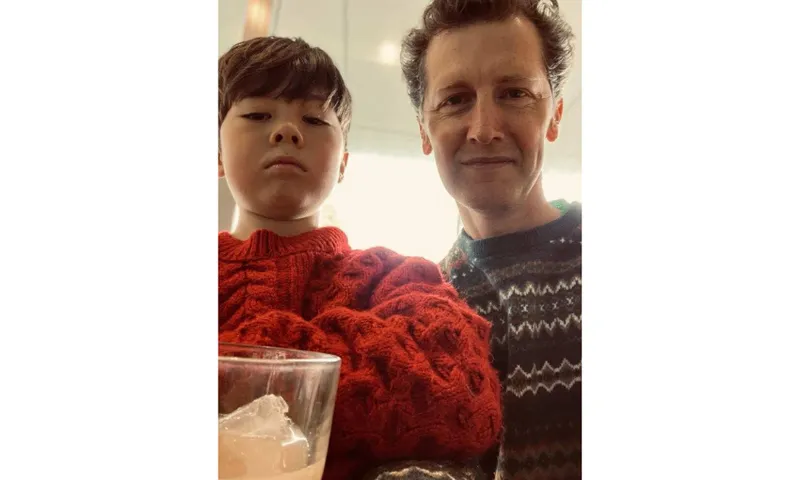
Still high on our silliness, we disembark the bus at the Old Bailey where I have the bike parked. The wind is blasting as we set off up the hill to the apartment. Pedestrians are leaping blindly into the bike lane and I drill my little bell to no effect. I had thought of calling a section of my recent book “Get out of the Bike Lane, Pedestrian Scum” but someone might’ve taken me seriously. Not something I have to worry about much as it happens.
The bike veers left in a gust. I am terrified we will be blown over or into traffic. The thought of my son’s bare legs hitting the asphalt makes me sick. I’m yet to have a spill with him on the back, fear keeping me vigilant. He’s oblivious in his rubber seat with foot rests and a fold up chair-back, and good.
The flatmate has returned, her husband staying in New Plymouth. The dinner she has made herself is ornate and nutritious but we have heat-up pizza in front of the gogglebox as no one calls it anymore. But I am old. I mentioned the “cop shop” to one of the stooped wands the other day and I received a look that I took to mean: “No one says that anymore.” Are the 1990s so distant?
It’s late after the kid konks out, and I think of replying to author Carl Shuker who has messaged asking if my memory of teenage despair in the 1990s mirrors his. I don’t have the strength, and it doesn’t. I remember how lonely old people were. How shut away and forgotten. I mean he’s right, but does our era have a monopoly on desperation and silence? I check the kid is asleep and I hope so.
I imagine writing a poem.
It’s what he would have wanted by Nick Ascroft ($25, Te Herenga Waka University Press) is available to purchase at Unity Books.
The Spinoff Books section is proudly brought to you by Unity Books and Creative New Zealand. Visit Unity Books online today.

Nick Ascroft
Nick Ascroft is the author of five collections of poetry. His latest, The Stupefying (2022), is published by Te Herenga Waka University Press. He is also one of New Zealand's top Scrabble players. Nick was born in Oamaru in 1973.


