‘Too much pain, not enough empathy’: Ingrid Horrocks on a book she wouldn’t recommend

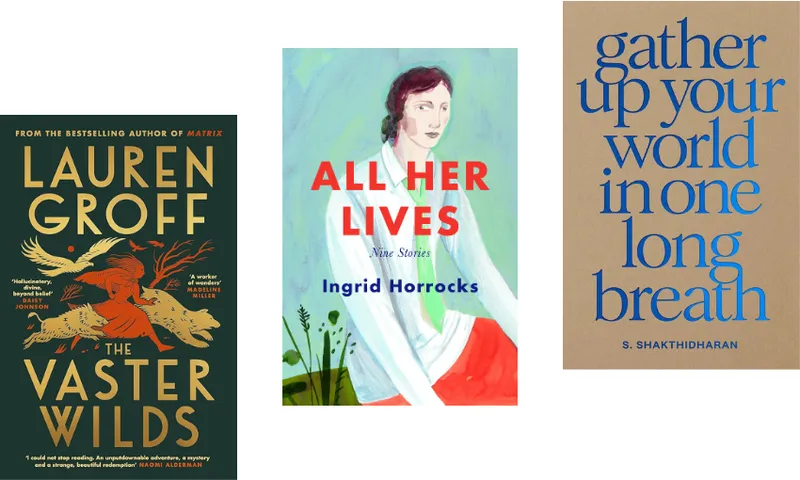
All Her Lives is Ingrid Horrocks’ first book of fiction.
Made possible by
Welcome to The Spinoff Books Confessional, in which we get to know the reading habits of Aotearoa writers, and guests. This week: Ingrid Horrocks, author of the short story collection, All Her Lives.
The book I wish I’d written
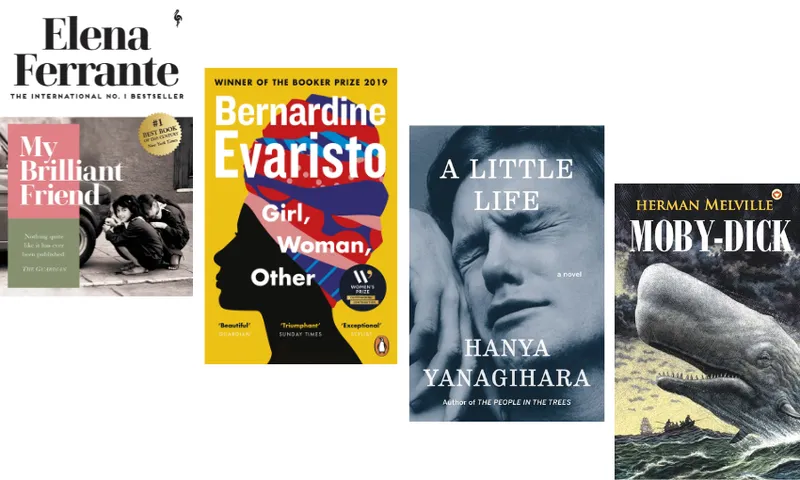
I’m not sure if I have an answer to this, but I know the book that made me fall in love with reading again as an adult: Elena Ferrante’s Neapolitan novels, starting with My Brilliant Friend. Reading Ferrante took me back to the utter absorption in books I remember from when I was a teenager. I left a friend’s 40th birthday party early at one point so I could sit in a bus stop on Cambridge Terrace and find out what was happening to Lenù and Lila. Incredible to have written a book so immersed in intimate lives like that, and also about so many other things – friendship, class, violence, reading, motherhood, how we grow up…
Everyone should read
Whatever they need to read. But one book that seems to me to contain worlds enough for many people to enter – if not everyone – is Bernardine Evaristo’s magnificent Girl, Woman, Other.
The book I want to be buried with
I don’t want to be buried. But perhaps whatever I’m reading at the time could be burned with me? I’d hate to be caught out without a book. I hope I’m reading right up to the end.
The first book I remember reading by myself
I was slow to learn to read. I’m still a slow reader and I can’t spell to save my life – or to write a shopping list (tomato/tomatoe). But I put in the reading hours. I have this idea that The Year of the Yelverton’s by Katherine O’Brien, illustrated by Gavin Bishop, was the first “real” novel I read to myself. Father Christmas gave it to me at the Mikimiki Hall potluck Christmas party when I was 11. But I think perhaps it was more the first physical book that felt like my own, and the first book I read set in a New Zealand I sort of recognised. From around the same time I have memories of getting in trouble for reading The Lord of the Rings under my school desk, so I must have already been deep into reading by that point. Once I was a teenager, I read my way through the 19th-century novels on my parents’ bookshelves. The next intense reading of a New Zealand book I remember is Janet Frame’s To the Is-land in sixth form. I still feel as though I can feel every sentence and scene of that book.
The book I wish I’d never read
I know a lot of people love A Little Life by Hanya Yanagihara, but when I saw it described as “trauma porn” after I finished it, that equated with my own reading experience. Last year it seemed to be doing the rounds at high school, and it’s one of very, very few books I suggested that my daughters not read. Too much pain in that book for me, and not enough empathy.
The book I pretend I’ve read
Moby Dick. I write about water, and the ocean, and whales. I’ve even published a book about travel in 19th-century literature and about “wandering narratives”. It’s sort of ridiculous that I haven’t read Moby Dick. I began it and loved the language, but then that was enough. There is the boys-on-boats problem, and the brutality of it all. But really, as I said, I’m just a very slow reader. Each time I tried to read it, I sort of drifted off into something else.
Dystopia or utopia
Utopia, definitely, because I think to read about and imagine possibilities for hope is more radical than invoking dystopia, which can be nihilistic or conservative. I’m really interested in the shift over the past decade or so from apocalypse to post-apocalypse narratives. The re-build is more interesting to me than the disaster. We’re all-seeing what dystopia feels like, anyway. Perhaps reading can also help us imagine the world becoming something other than what it is.
Fiction or nonfiction
If only I could decide, my writing and reading life would be simpler! Fiction, in many ways, has always been the love of my reading life. I don’t remember when I wasn’t experiencing a fictional story in parallel with my own life. But I’m also a big reader of nonfiction, in particular memoir, which I go to for intimacy and story, and to deep dive into other people’s actual lives. And what about poetry? Which is both.
The plot change I would make
You can’t really change plot in non-fiction, but I’ve been obsessed with the life of early political philosopher and travel writer, Mary Wollstonecraft. I always wished she could have lived to know the daughter she died giving birth to, Mary Shelley. In my story collection, All Her Lives, I gave the two of them a conversation.
But I’m going to flip this around and pay homage to a perfect ending. The layering of different possible endings in American writer Lauren Groff’s The Vaster Wilds is extraordinary. As the main character lies dying, the book blasts open the world, and all the ways in which early American – and human – history could have happened differently, and how we could imagine it differently now.
Encounter with an author
I once did a poetry workshop with Paul Muldoon. He was everything you’d imagine a poet to be. There were eight of us and we met weekly in his Princeton office. He had an enormous dictionary that sat open on a lectern – I seem to remember he also had a couple of guitars. At least once each class he’d jump up and move to the dictionary, making us pause and consider what we really meant by a word we’d used, and what other worlds that word might open.
(Before that I did a course with Bill Manhire, who of course never said much, but somehow taught so many of us to write.)
Best place to read
Anywhere I can find 10 free minutes and get organised to put down my phone. My current favourite spot is on the sofa by our big front window, with a view of the sky. That feels right for the enclosed, solitude of reading, but also the way it opens into a view beyond ourselves.
What I’m reading right now
I just finished a wonderful memoir, Gather Up Your World in One Long Breath, by Australian playwright, composer and storyteller S. Shakthidharan. It is told in parts, each one addressed to a different member of his family. I hope it will find its way to New Zealand.
All Her Lives by Ingrid Horrocks ($35, Te Herenga Waka University Press) is available to purchase by Unity Books.
The Spinoff Books section is proudly brought to you by Unity Books and Creative New Zealand. Visit Unity Books online today.

The Spinoff Review of Books
A smorgasbord of books thoughts and formats by The Spinoff.


