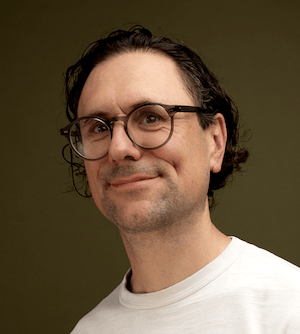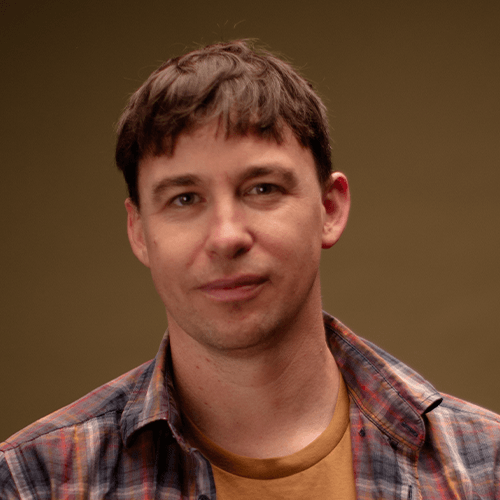



Welcome to The Spinoff Books Confessional, in which we get to know the reading habits of Aotearoa writers, and guests. This week: actor, Stephen Lovatt.
The book I wish I’d written
Orbital by Samantha Harvey. Succinct. Elegiac. Exquisite. Redemptive. Love filled. Kind. Relentless. Humorous sometimes. It’s everything I look for in reading, theatre, story of all kinds. I struggle to explain what this book did to me; meant and means to me. But for me it is an apotheosis of … something. The inexplicable? The cherishable? It feels like a refutation of despair, and yet is despairing. Like the death of someone whose pain needed to end. It’s crunchy being human, but it’s amazing.
The book everyone should read
God is not great: How religion poisons everything by Christopher Hitchens.

The book I want to be buried with
The book I want to be buried with is an A3 sheet of pale green handmade paper rolled up in a hardened leather tube, laid beneath my head, inscribed in red ink with ‘Fernhill’ by Dylan Thomas so I may sing in my chains, like the sea.
The first book I remember reading by myself
I Am David by Anne Holm. I was 12 years old, the same age as David. I was lonely, away from home. Mr Harper – brilliant teacher, the very best kind – gave this book to me. I wasn’t much of a reader. I was a tree-climbing, going too fast on bikes, wiping my nose on my sleeve kinda boy, and so were my all my mates. And then suddenly I was elsewhere and alone. David was too. I hadn’t paid attention to books before. (But, thanks Mr Harper for reading For Whom The Bell Tolls to us. You blew our little minds wide open.) I finished I Am David and experienced my first dose of ennui: loving it, loving its ending, being entirely filled up by it, but simultaneously regretting having to leave its world.
I wish I’d never read
Anything by Kurt Vonnegut so I could do it all again, afresh. He doesn’t seem to withstand a second read, not many authors do I suspect. No slight intended there. The delight in swimming in his writing is utterly unique. I came to him in my early 20s. Maybe if I started on him now I’d be too jaded, too alive to tropes or paradigms or world views (whatever bigotries I’ve unwittingly grown in my reading mind over these last five or so decades). Back in my 20s I couldn’t wait to finish this book so I could get on to reading Vonnegut’s others.
But his stuff read anew, unmet before? No, I think I would only love to stumble into Vonnegut’s oeuvre innocent and ready. Vonnegut fans meet each other every now and then at parties, or in queues at the airport, and (dissimilar to Joyce adherents, who, let’s be plain, can be a bore) we wink a little. Let that be. You’ve read him? So have I. Enough said. Have a really lovely day.
Also. Regretted reading? The first couple of chapters of the Dan Brown’s The Da Vinci Code. Execrable.
The book I pretend I’ve read
Anything by Thomas Pynchon or James Joyce. These feel like authors we’re supposed to have read to get in to whatever club people who actually have read these feel they’re in. Particularly in the case of Joyce it’s just easier to let people assume you’ve read it. They seem so pleased to have someone they can enthuse about their favourite passages with that it feels almost cruel to set them right. I gather these authors really are stunning and fulfilling makers of story, but I’m woefully uninterested in it all. I don’t know why. It feels like a failure of character on my part, but I know I’m not alone. Apparently we read so we feel less alone. It’s nice to know that in the case of these two authors it’s not reading them that brings us together.
Fiction or nonfiction
A slightly vague dichotomy but fair question. I conked out of modern literature somewhere in the mid 90s. I read one too many novels that didn’t know how to end themselves; 250 pages in you start to smell a rat, and by the end you’re kicking yourself for persevering, because whatever this book was about it wasn’t story telling as I wanted it. In revolt I went deep into military history. After 15 years of that grim quest I began to spot the fictions going on in there and I longed for some beauty again. I found it about five years ago I think. Now I mix it up. And probably don’t demand so much from the page.
The book that haunts me
The Road by Cormac McCarthy. The first read leaves you breathless, grateful, but done in. I’m a ponderous reader. I tend to relish, or chew on the matter. But this wee book I knocked off in two sittings. It gets a hold on you and takes you to hell and back. There are things that happen, things that are done, that are not forgettable. McCarthy is an adventurer in the human heart; be careful with him, it ain’t all beer and skittles in there, and he’ll get you lost in the darkness. But he’s exemplifies American literature’s obsession with redemption and damnation. If you haven’t read McCarthy this is the gateway book.
The book that made me cry
Adam Bede by George Elliot. Time and circumstance left me defenceless against the tragedy that befalls one her minor characters. It’s despair, delusion and destruction on such a minor scale, a life of no matter to anyone or thing, that has lived with me for more than 40 years. I can read it now without tears, but that first time Elliot gently opened an artery.
The book I wish would be adapted for film or TV
A Tale Of Two Cities by Charles Dickens. It deserves a meaty, uncompromising 12-part series. Alright, it’s got all the expense of being a period piece, and would be in peril of being put in the hands of someone whose imagination is swamped by “gorgeous” costuming, but in the right hands it would be wonderful. The story is relentless, paced up, redemptive and savage. Revolution has notionally been in vogue since the 60s, or earlier. And fair enough too. But violent revolution needs regular, good old-fashioned serious consideration. This book serves.

Most underrated book
A Gun In My Hand by Gordon Slatter. I picked this up from Arty Bees years ago and was stunned by it. I’m no literary critic. I respond to the written word with almost no observational faculty other than its emotional impact on me. I’ve no notion why this book holds no position (as far as I can tell – and I’m not great at noticing) in New Zealand’s canon. Slatter’s book is a searing investigation into New Zealand’s experience of, and failure to be honest with itself about, the post-war society we built from the ruins of our returned soldier’s lives.
This is not an indictment, or accusation-filled take-down of our “god/country/freedom/heroes!” (all the stuff we still have to stomach at ANZAC day parades), but it sure ain’t no “well done lads, your country is grateful” tale either. Published in 1959, the war was still very present. Maybe it was too hard for us. Our country wanted to move on I think, to turn away from the pain. Fair enough, we had a world to rebuild. But storytellers have their part to play. I am grateful Slatter left this book to chance upon.
Encounter with an author
English playwright David Hare. He was out here for the Auckland Writers Festival (I think) and Silo Theatre asked me to do a rehearsed reading of the play at Herald Theatre. Hare would be there to introduce the play, and discuss the recently (back then) remounted production in London. He was then going to take a few questions afterwards.
Well. No. Apparently there’d been a “bit of a cock up” on the transport front. He arrived only just in time, and would have to leave immediately after his talk to make his flight home. His introduction consisted of him telling the audience how brilliant Bill Nighy was/is in the role (that I was to read), how no other actor on earth could grasp the subtlety of Nighy’s work; the nuance, the lying truths, the passionate calm, the resolved anguish etc etc that even he as the playwright had not known was in the script. And then he hustled off. Thanks man. Brilliant.
I suspect he’d had a gutsful of New Zealand and the idea of sitting a through a butchered reading (complete with awful “English accents”) was just too much for him. Fair enough too. We’re a funny little country at the bottom of everything. We’re hard to “get” in short doses. Especially hard to “get” if one lacks curiosity – like certain Yorkshiremen.
See Stephen Lovatt perform in Silo Theatre’s JOB on 3 – 20 September at Q Theatre. Book now at qtheatre.co.nz.