Freya Daly Sadgrove on turning poetry into TV show Head Girl

Freya Daly Sadgrove, author of the poetry collection Head Girl, in her beloved Wellington.
Made possible by


The author of poetry collection Head Girl, which inspired the TV show of the same name, talks to books editor Claire Mabey about what it’s like to have one of the darkest periods of your life come alive on the screen.
Claire Mabey: Let’s start at the beginning. How did Head Girl, the TV show, happen?
Freya Daly Sadgrove: So, in 2021 I got a little message through my website from Tara [Riddell], one of the producers, who said she loved my book and had I ever thought about turning it into TV. And I was like, no.
CM: Wild.
FDS: Tara had been in Unity Books at the New Zealand poetry table and she picked it up and was really into it. It’s this crazy chance, like someone driven to make interesting stuff was in Unity, at that time, in early 2021 … and yeah, so she proposed it.
CM: What happened next?
FDS: For the first couple of years Tara worked on trying to get funding. She’d get some development funding, do some development, and then not get funding, but kept trying, and then NZ on Air gave it enough funding that the writing could get finished and … make the show.
CM: Were you in the writers’ rooms?
FDS: Yeah, I went to the first one, and it was really cool. I just got to talk about myself for two days and get listened to. It was amazing.
CM: Did you get much of a say in terms of final decisions?
FDS: Yes, I gave notes on the script, but also my particular desire was that I could have some oversight over how the actual lines of poetry were used. I didn’t want them to be munched up too much.
CM: So important!
FDS: I fucking love the writers on the show. Like Ana Scotney who is one of my absolute heroes and we’ve known each other since we were young. And Dana Leaming, who I didn’t know before, but who I now love. Natalie Medlock, Lealani Siaosi, all these brilliant women. And the head writer is Harry McNaughton – Gerald from Shortland Street!
CM: Gerald!
FDS: He is a stunning babe. He’s a celebrated screenwriter as well as an actor these days. TV is such a different way of working compared to … poetry.
CM: It couldn’t really be more different, could it? Like, there’s money. And people.
FDS: It was really funny getting to witness the meeting of the poetry world and the TV world.
CM: And yet what I love about the show is that it carries the energy of the book. Through the music, the poetic treatment, the characters. The show has the energy of you in performance. It was also amazing to see a poet depicted on screen. What was it all like for you to see that?
FDS: I really feel like they did poetry on the poetry to create a narrative. Because it’s not my story, it’s not my literal story. There are some really obvious differences between me and Florence Sadler [played by Nī Dekkers-Reihana] and the biggest one is obviously that she’s Māori, which is this huge, huge new layer; not just a layer, a whole lot of layers. And the way that she writes poetry is so different to how I write poetry. But the literal world is kind of the figurative world of the poems, in this way that I’m like, how did they do that?
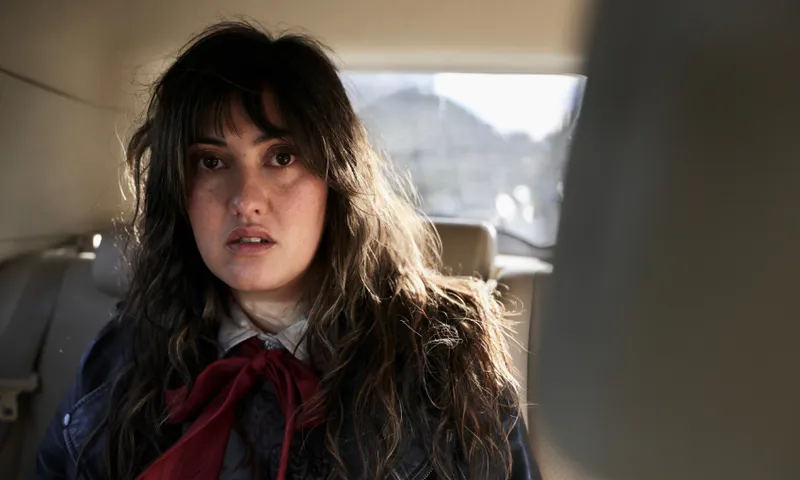
CM: Are you worried that people will think Flo’s story is yours, though? For example, how Flo’s Head Girl poem went viral. It’s your poem… but Flo isn’t you.
FDS: I’m definitely worried about it, and I think they definitely will. The thing that I need people to know is that my mum is a fucking angel.
CM: Ah yes this is important to clarify because Flo’s mother is pretty awful! I found that relationship difficult to watch.
FDS: It’s also true, it is a truth, it’s a big truth too – but it’s just not mine. My mum’s dad had bipolar as well and that impacted her. The way she is with me and my mental illness is incomparable to Flo’s experience … since I came out as depressed Mum’s been rock solid.
So I’m nervous because the thing is, the character in the show does bear a resemblance to my mum in that she’s very financially secure and my poems do upset her. But my mum cares deeply about me and is really proud of me as well. Flo’s mum is this beautiful, stylish, powerful lady, which is what my mum is like outwardly, so it is totally possible that even people who know me but who don’t know my mum that well, because she’s a private person, might think … but no! My mum is an exemplary mum of a bipolar person.
CM: I think the reason the mother-daughter relationship in the show disturbed me is that I worry when artistic kids have parents who force them down pathways that just don’t suit their kids and it’s a terrible, complex situation because it’s not done without love – it’s done out of fear.
FDS: Parental concern and fear is justifiable. I remember when the book first came out I did an interview with Lynn Freeman, and she said, I kind of feel for your mother.
CM: Wow.
FDS: I know. And it’s so complex.
CM: It’s hard to be an adult when you’re also always a child.
But can I swerve to the moment in the show here Flo googles “how many poems in a collection” because I want to know if you did that.
FDS: We have all done that. And there’s never a good answer. I remember asking Fergus at Te Herenga Waka University Press [publisher of Head Girl] and the ballpark he gave me was like ten ballparks and “it depends”.
The thing about the adaptation is that the inspiration wasn’t just from the poems but also from the way we talked about not just my experience of writing the poems but how I think of the book as a whole. These backstage things that I don’t talk to people about normally. I could lift the curtain slightly.
CM: Tell me more about what you mean by backstage?
FDS: So for example I think of the three sections of the book as manic, depressed and medicated.
CM: Ah, that’s a major insight. So how does the TV show make you feel about the book? Does looking at it through this adaptation make you feel differently?
FDS: I have really intense feelings about the book. Some of it makes me feel physically sick not because of the words – I’m proud of what I made, but it’s also so painful. It was a really, really dark, dark, dark, tough time in my life. The show has less made me think about the book differently and more made me think about myself and my life really differently, in a good kind of healthy way. It has made me think about other people’s experiences of my experience, because the show crystallises this intense situation.
Flo is so isolated, she barely has friends, she has no sister – and I have a sister … Before the show, I could only think of my own perspective of those times but now I can think about how it was for my family. I’m going to be sitting with that for a while.
CM: Do you think the TV show will lead people back to the book? I re-read it and it was an incredible experience all over again.
FDS: Yeah, that’s a fucking thing, like the poems were really important [to the making of the show] and stayed being important through the whole process. Yeah, and like, they’re poems!! Poems aren’t important to everyone! But I went [on set] and these actors were like “we love your book”, which was crazy. Tara and Jo got the entire cast and crew a copy at the top of the process so that, you know… boosted sales.
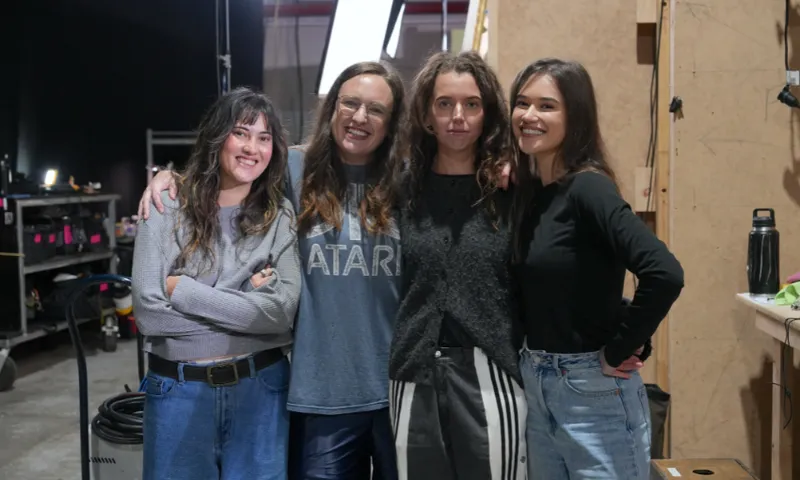
CM: My memories of Head Girl are of you performing the poems and having my mind blown. It made me wonder if you write as a performer?
FDS: It’s so important to me that they work on the page but it is also so important to me that I can say them out loud without cringing.
CM: Reading them back again though it’s so clear how powerful that voice is. It’s visionary to go from that to “TV show” …
FDS: Visionary.
CM: But what I loved about the adaptation is that it took that voice and the subject of mental illness within it seriously. And, Wellington! It was so good to see Wellington on screen and the home of this poetic, difficult, complex narrative. You don’t live here anymore (sad) – did the show make you nostalgic for Wellington?
FDS: I am obsessed with Wellington. I feel like the only other person I know who gets it is the journalist Henry Cooke – we went to school at the same time. Everyone else around us was like “can’t wait to get out of here” and we have always been like “can’t wait to go back”. It’s so special.
CM: Do you think Wellington helped you become a poet?
FDS: Yes. Over and over again. I was a creative kid and everyone around me, the adults were like “yaaaay!” and were giving me books and telling me about opportunities. I did creative writing stuff when I was a kid and as a teenager I had the best English teacher in the entire world. He rekindled my love of poetry. I met up with him recently in Melbourne, because he moved to Melbourne to teach, and he was saying to me he could never do that over here. He would do an entire term on, like, three poems – we did a whole term of Carol Ann Duffy in Year 12 and on Sylvia Plath in Year 13. Like, it was perfect timing. It was the coolest shit of my life, it was the best thing about school.
Wellington was where I built my creative life, and I will never let it go. Wellington gave birth to me.
CM: I cracked up at that full moon poetry chat bit in the show and how the poets were perceived as this elite group. Is that real? Is that chat real?
FDS: So funny. I have never felt on the outside of the poetry group so I assume nobody does, but I have recently heard that some people find the poets intimidating which is so funny because we’re just like, weird nerds. But the chat is … real but it’s not this exclusive “only the best poets”! I’m just in a chat with a bunch of poets and they actually do send pics of the full moon because, like everyone else, we’re obsessed with her, and it’s silly but also … the moon really does rock real hard.
I had to message the group and be like … um, so in the TV show …
CM: I was reading an interview with you and Eamonn Marra in Starling where you talk about improv and feeling the fear and unleashing anyway. The tone of the TV show has that I think – this dangerous, energised, lucid, fearless creativity.
But do poems come out like that for you? From what I know of your process you’re a very careful writer.
FDS: Some poems that come out really fast – in Head Girl the Backstreet Boys poems came out like that because they are the most psycho. But others are months and months and months of tweaking. It took five years to write Head Girl.
But to go back to the theatre thing, what really boosted me was Long Cloud Youth Theatre led by Willem Wassenaar. His influence will never end. I feel so lucky I got to experience the scripted work we did with him which has influenced every aspect of my creative practice – working with these meaty, huge, emotionally charged, significant scripts. It was so instrumental and we are all so lucky to have had Willem. And it … you know he was a beloved, needed person and you can be that and still be crushed by life.
CM: The world is not getting any easier. I think the show really delves into the fact that the pressure is extremely high. And it takes people seriously in this environment.
FDS: It really does. It’s not pissing around.
CM: They were also remarkable performances.
FDS: They’re all stars. I’ve known Nī Dekkers-Reihana for years and they’ve been a creative powerhouse the whole time. I didn’t know Tatum Warren Ngata [Sadie in the show] and I was like, holy shit, this is an incredible performance.
CM: That character added so much, too. She was phenomenal. I also adored Liv Parker [Dee in the show].
FDS: She’s so talented, and in this role that I think would be really freaking intense to inhabit, but she’s so natural. Also, that character is the most uncomfortably familiar … to me.
CM: I could see how they built her from the poems. And I loved the scene where she unleashes on that racist.
FDS: I have this sentence playing in my head: “they honoured my scream.” They didn’t just represent the scream, they honoured the scream.
CM: It’s a huge relief to see it. It feels totally justified and correct to be screaming.
FDS: We should all be screaming!
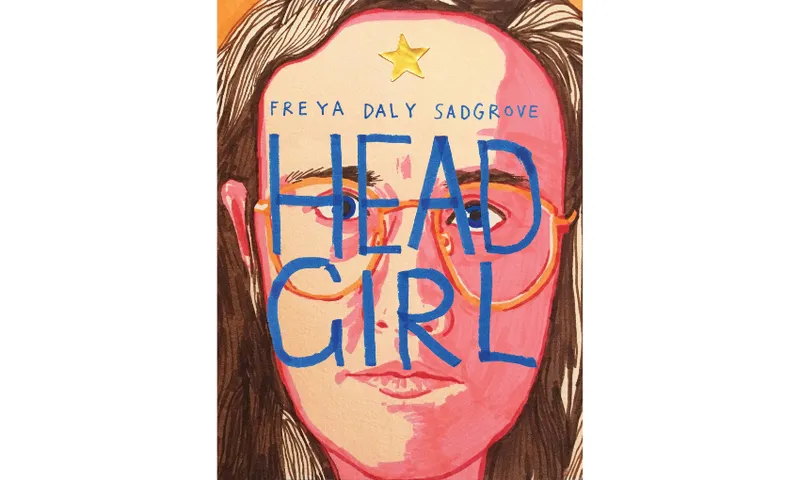
Head Girl by Freya Daly Sadgrove ($25, Te Herenga Waka University Press) is available to purchase at Unity Books. You can watch the TV adaptation over on Three Now.
The Spinoff Books section is proudly brought to you by Unity Books and Creative New Zealand. Visit Unity Books online today.

Claire Mabey
Claire Mabey is a children's author of The Raven's Eye Runaways, The Raven's Eye Rebellion, and a picture book Cass and the Beast illustrated by Jill Calder. For a long time Claire worked on literary festivals and is the founder of Verb Wellington. She lives in Te Whanganui-a-Tara with her partner and son.


