After Rod Drury, can we flip our awards systems upside down?

Maybe we could try giving other people a go for our awards (clockwise from bottom, Ron Brierley, Allan Hubbard, James Wallace, Rod Drury and Bob Jones)
It’s time for our awards to honour those at the bottom, not the top.
“Sir Rod Drury is helping shape a stronger future for Aotearoa,” said the Kiwibank New Zealander of the Year Office as it announced the tech founder and entrepreneur as its supreme winner for 2026.
“Whoops,” it said, in essence, in a convolutedly worded Facebook post a few months later. “After discussions with Sir Rod Drury, the New Zealander of the Year Awards Office confirms that as the recipient of the 2026 New Zealander of the Year Award he has returned the award.”
The news that Drury was vacating his post as our nation’s top-ranked person for 2026 came after four women accused him of inappropriate behaviour (Drury denies any wrongdoing). The office said it sought to honour those who reflected integrity and respect for others and “any matter that undermines or calls into question those values is not consistent with the standards and expectations we hold”.
It isn’t the first time a New Zealander of the Year nominee or winner has faced controversy. The awards’ 2019 supreme winner Mike King has been criticised over his conduct on social media and management of his mental health charities. Ecologist and 2025 semi-finalist Mike Joy caused some degree of consternation when he suggested that dairy executives should be hanged.
Nor are the issues confined to the Kiwibank-sponsored award. MMA fighter Israel Adesanya followed up his supreme Halberg award in 2020 by reportedly posting on social media “I’ll fucking rape you” at a rival fighter the following year. But no other group of people has brought awards into potential disrepute more frequently than those honoured for services to business and philanthropy.
Ron Brierley was given a knighthood in 1988 for services to business and philanthropy after a career spent hoovering up underperforming companies as a corporate raider. He forfeited it in 2021 after pleading guilty to three charges of possessing child sex abuse material.
James Wallace was knighted for services to the arts after using a portion of the $165 million fortune he made from his family’s meat empire to fund New Zealand’s creative sector. He too had to forfeit the honour after being found guilty of indecently assaulting three young men.
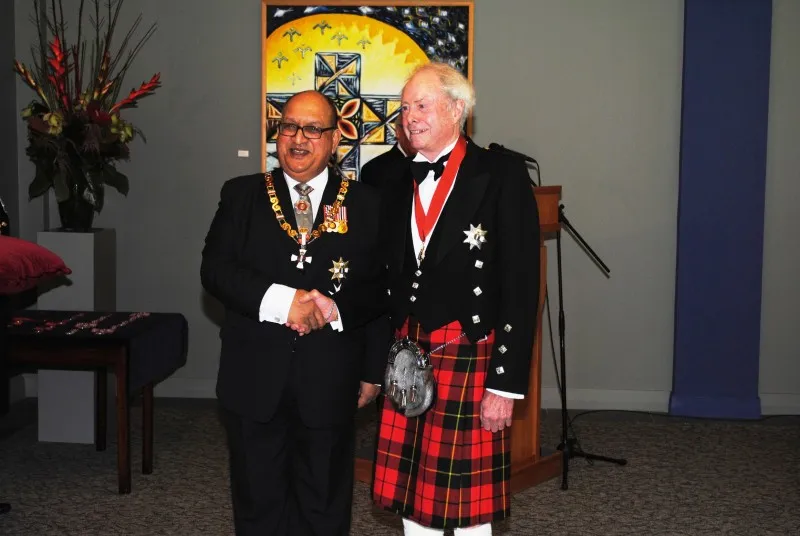
Though few have descended to those kinds of legal lows, being knighted or awarded for services to business and philanthropy remains a key indicator that you may soon be embroiled in some form of controversy. Allan Hubbard was made a member of the Queen’s Order of Merit in 2005, shortly before it was revealed he’d lit a billion dollars on fire at South Canterbury Finance. The late Sir Bob Jones was never far from an outpouring of condemnation, consternation or general outrage. He spent his latter years oscillating between being racist and suing people for calling him racist, dropping that case when it looked like he was going to lose. Sir Ray Avery, also a New Zealander of the Year award winner, has faced questions about the alleged gap between his promises about his products and their delivery.
The issue clearly isn’t confined to Drury. It’s almost as if, at times, the characteristics that help people ascend the corporate ladder or succeed in a highly competitive environment like elite sports come with a flip side of making them prone to bluster, overconfidence and high-profile failings. As it turns out, studies have shown the “dark triad” personality traits of narcissism, Machiavellianism and psychopathy are more prevalent in business leadership. The same may be true for top sportspeople. Some posit that psychopathy in particular may be up to 12 times more common among senior executives.
Scientifically speaking, the upper echelons of society are pockmarked with odd or maladjusted personalities. But even if that wasn’t the case, it would be hard to blame people for being a bit put out at seeing rich listers honoured for making a boatload of money while they try to scrounge together the cash for a block of pasty American butter in our economic doldrums.
After Drury returned his award, one of his accusers, Ally Naylor, made pretty much that point. “I think there’s just so many more deserving New Zealanders and he doesn’t represent the best of New Zealand,” she said.
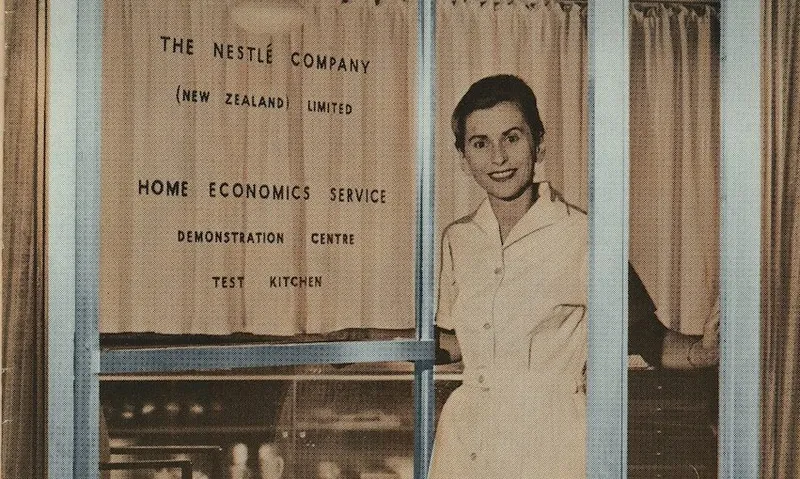
It’s hard to argue. New Zealand isn’t actually run by the chief executives, sports stars or titans of industry, all of whom belong to the small group of top earners that possess two-thirds of the nation’s net worth. It’s fuelled by people like the inventor of Kiwi onion dip Rosemary Dempsey, who still hasn’t been given a dime by Nestle for her nation-shaping culinary contribution and powered by entertainers like Suzy Cato or Jason Gunn, who manage to contribute to the arts without leaving a trail of human wreckage in their wake. Even putting those well-known potential nominees aside, just about every nurse in a hospice or rest home has worked as hard and done just as much to help people as many of those who currently occupy our honours lists.
When the nation shut down, it wasn’t the Rod Drurys of the world who got ordered into the office. It was bus drivers, checkout operators and cleaners who turned out to be the essential workers that keep society running. Though stalwarts of community service do sometimes show up in our awards lists, they deserve a time in the sun untainted by their fellow honourees’ scandals, criminal behaviour or weird newspaper columns suggesting a Māori gratitude day.
Perhaps, given recent events, it’s time to refocus our awards and honours on different, arguably more deserving groups of people. Instead of celebrating CEOs and luminaries, we could turn our focus toward the quiet and often unheralded people who prop them, and the rest of us, up.
Hayden Donnell
Hayden Donnell is a senior writer for The Spinoff. He previously worked at RNZ, TVNZ and the New Zealand Herald, alongside other media companies that have since closed down or been renamed. His primary passions are local politics and the Big Fresh animatronic fruit and veggies.


