The Michelin man should’ve made more room at the table

Photos: Lachlan Woods Davidson; design: The Spinoff
Around the world, Michelin’s Bib Gourmand shines a light on the most unassuming of eateries, those offering great food at great value. But in New Zealand, a golden opportunity to showcase our uniquely Kiwi approach to humble kai was missed.
The best meals are had at the cheapest of tables. The best conversations, too. Real sessions, streetside, or better yet, buried in the back of some dim place you’ve always walked past but never set foot in – that is until some fateful night that you remember for years to come. The kind of place that laminates the menu, laminates the table, laminates the walls, the kind of place you suddenly find yourself within when wandering around a new city, or stopping in an old town you usually take the highway to avoid.
These are the institutions that have been silently sustaining our nation for decades. Run by generational kin. Often immigrants, often not. People who – in the age of $25 cocktails, $35 burgers, small plates and record players – continue frying, scooping, wrapping in newspaper and stuffing into white paper bags, so that you might, one winter’s night, whipped an inch from defeat by a day behind the desk or under an engine bay or doing whatever it is you do to get by, grab a bite without blowing your entire pay packet.
Which is why I was baffled by Aotearoa’s inaugural Michelin awards. Like many disastrous ideas this world has endured, it’s an institution founded upon a meeting between two Frenchmen on a cobblestoned street. I imagine André and Édouard Michelin were sitting outside their family tyre shop one blue-skied morning in central France, espresso between left forefinger and thumb, cigarette between right, when they conjured up a way to, well, flog more tyres. The brothers wanted more of their compatriots on the road, so produced a guide of sorts to encourage tread-shedding.
Step forward 126 years, skip past a few iterations, expansions and commercial partnerships and you arrive at their latest stop on the itinerary: a small government in the bottom east corner of the South Pacific, shelling out $6.3 million for faceless shapeshifters to tell us where to eat. Actually, there’s another $1.7m covered by Tourism NZ. That’s eight big ones all up.
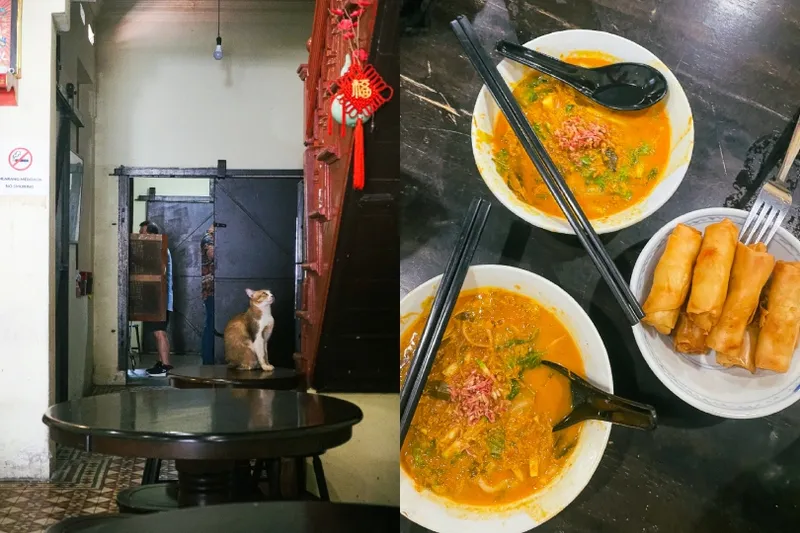
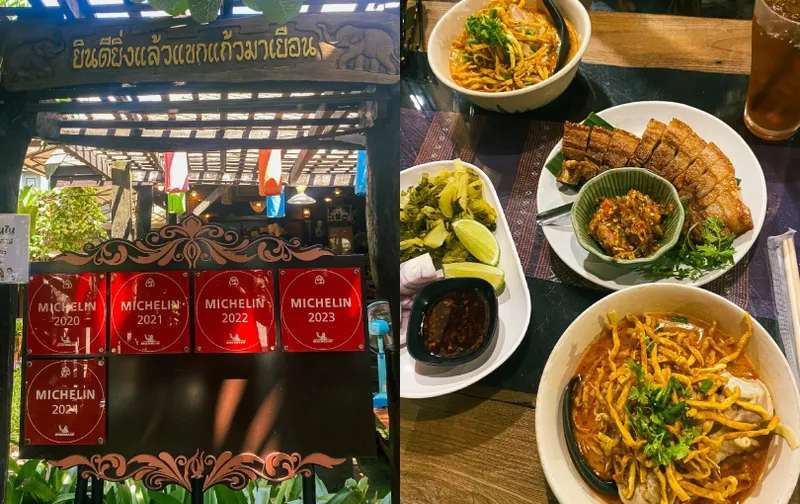
I can’t help but think of the great swathes of good eating left, as usual, in the wilderness, when finally there was a framework to represent them. I have enjoyed a handful of this year’s successful eateries on home soil, but I have also dined – though that might seem a touch formal – at the Bib Gourmand tier abroad: the places that are highlighted for showcasing “high-quality, thoughtful cooking at approachable prices”. At a family-run place on Lebuh Cannon in George Town, Malaysia, the asam laksa and spring rolls were worthy of the red and white stamp, as was a serene wee spot tucked between motorbike rental shops near the city walls of Chiang Mai across the border in Thailand. Throughout the region, I witnessed flocks of people standing before steel carts, holding heaped paper plates punctuated with that special Bib Gourmand sauce.
I’m not ignorant of purchasing power abroad, and acknowledge things are expensive here at home. But last month’s selection of Bib Gourmand recipients was obscene. Can somebody please tell me what I’m missing here? Despite Michelin’s official website doing so, I’ve never really thought of pairing “house-made duck liver parfait” with “wallet-friendly prices”. Isolated, maybe it is fairly priced. But abroad, the Bib Gourmand bar bottoms out where it should: at plastic stools and charcoal-fired carts. Ours bends only as far as a familiar line of economic exclusion – roughly where a starter costs the same as a reasonable main – and even then, at a stretch.
Though, as much as we gawk at recent revisions to the expense column across menus from Michelin-awarded to Maccas, there’s nothing a Michelin-listed restaurateur or head chef can do about submarines in Persia. Neither a grocer when he takes his van to the pump, nor a grower ordering fertiliser. This is not an attack on them. This is a case for making room at the table for the white-walled roadside boxes; state highway bakeries and midnight noodles we all know and love but rarely glimpse between glossy pages.
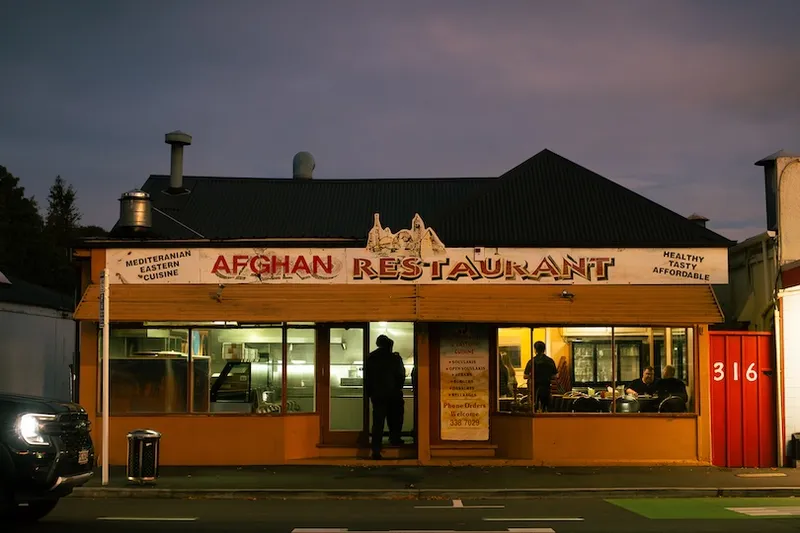
Some of the more famous of these spots have been chronicled before: a Christchurch restaurant seemingly teleported intact from Afghanistan, its sporadic opening hours surveilled by a community Facebook page, and a Hong-Kong-style diner in Wellington boasting 160 dishes. Others we have not steeped in mythos, and have lost as a result.
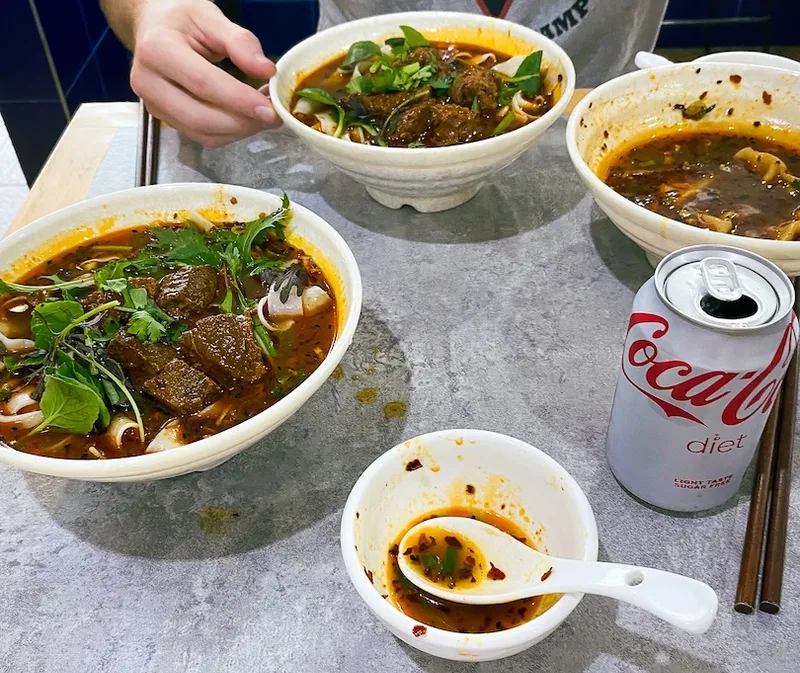
Near Khyber Pass in Auckland, there once lived a gleaming passageway to southwestern China where you could have tastebuds burnt off for an affordable price. For me, these were the best noodles in Auckland. That is until they shut their doors last year. Tianfu Noodles could soon be another loss to what is an extinction event for the hospitality sector of the Holocene Age.
You may argue that these three examples are not the antipodean equivalent to Penang’s streetside Bib Gourmands. Perhaps I agree. I suggest we take another step further into the gastronomic hinterland.
I’ve always said Danny’s Kiwi Bakery in Waiuku makes the very best butter chicken pies. At the edge of a rural town south-west of Auckland, a Cambodian immigrant crafts a Kiwi classic stuffed with an Indian dish designed for the British. Brian Tamaki, eat your heart out. Or better yet, cop a pie from Danny. If Malaysian laksa can earn a nod, why did our staple not get a look in?
For many, spending money at a place that opts for laminated tabletops over white linen (and isn’t a recognisable franchise) is already a detour. A detour of taste, environment, cuisines, company. A detour of preconceptions. Yes, the people at Michelin no longer need more tyres on the road. What our country needs, however, is more people burning rubber to reach a variety of establishments up and down state highways, near overpasses and at the edge of a steel yard at the back of some rural town. Of mortal, cultural and generational importance, we need fewer scorched-earth corner sections colonised by Tank and St Pierres.
Imagine the benefit to the entire class of venues such as Danny’s if only a few had been featured. It’s not simply about putting a single venue on the map, it’s about signalling to those hungry stomachs and fat wallets abroad – the ones who, like me in George Town, have purchasing power – as well as our nose-turners here at home, that there are in fact unlikely places worth not only a “stop”, or a “detour”, but, indeed, a “special journey”: These are Michelin’s own gradings, one star to three.
Along the alleys of Southeast Asia, street-side vendors that have achieved Michelin status entice hordes of hungry tourists to their territories. The inevitable overflow of patrons is pushed towards nearby competitors occupying a similar zone of taste. It happened to me. Does New Zealand’s list, as it stands, achieve this effect? Or are people going to look at booked out calendars and price increases and stay inside instead? Why waste a bill on something not Instagram-story-worthy?
Part of the allure is that Michelin stamped its stickered seal of “approval” on the awnings of spots once considered out of the Michelin mould. A similar effect could have been achieved here in Aotearoa, but a golden opportunity to showcase Kiwiana kai was missed. An opportunity to establish a lore of sorts that some of our more humble fare is both unique and cheap (for those with pounds, euros or yankee dollars) and that this fare can be found along the way to hidden waterfalls and commanding peaks. That we boast steak and cheese pies that could go 12 rounds with the spring rolls of Malaysia.
I accept that the guide was confined to Auckland, Wellington, Christchurch and Queenstown, and inspectors are contracted to those four cities, and only those four, for the full three years of the deal. This is despite the fact that it takes not long at all to get anywhere in Aotearoa, and the whole idea André and Édouard cooked up over cigarettes and baguettes was the road trip anyway. What I will never accept is that handing some tread merchants eight million bucks gives them special authority to point me towards a memorable dining experience.
Those who received their Michelin praise this year unequivocally deserved it. The more stars the better. We paid $500,000 for each, and how timely the flurry of bookings will be. But all I ask is that if you can’t get a seat at one of the big names until the new year, or if you’re sweating at having to remortgage the house to experience Aotearoa’s supposed very best food, you might enjoy as memorable an experience by putting the phone away, walking down the road and picking the first place that looks a quarter decent.
Yes, it is possible that the food might be inedible, let alone Michelin-worthy. But at least you’d have something to talk about. After all, the best conversations…

Lachlan Woods-Davidson
Lachlan Woods-Davidson is a keen writer, photographer and all-round enthusiast based in Christchurch/Ōtautahi.


