The BSA’s decision to take on The Platform is brave, principled – and indefensible

Image: The Spinoff
The Broadcasting Standards Authority has determined The Platform is within its remit. It’s a bold move. It’s also logically incoherent, writes Duncan Greive.
What just happened?
It’s less than six months since the Broadcasting Standards Authority (BSA) issued a landmark draft ruling declaring that the digital news and opinion brand The Platform was under its purview. As of yesterday, that draft ruling became concrete, with the BSA confirming “it has jurisdiction to consider a complaint about content transmitted by an online broadcaster”.
The BSA was created by the Broadcasting Act 1989 to uphold standards across radio and television. It neither mentions nor imagines the internet, content from which now dominates the attention and shapes the views of the vast bulk of New Zealanders under the age of 70.
The BSA had quietly opened the door to taking complaints about digital content that had the appearance of linear broadcasting in 2020, but it wasn’t until a complaint arrived from a Platform audience member, identified as “WK”, that the idea was properly tested. WK complained about “Mr Plunket so casually referring to all the customs and beliefs of Māori – tikanga – as ‘mumbo jumbo’ – a term with a historic racist beginning.”
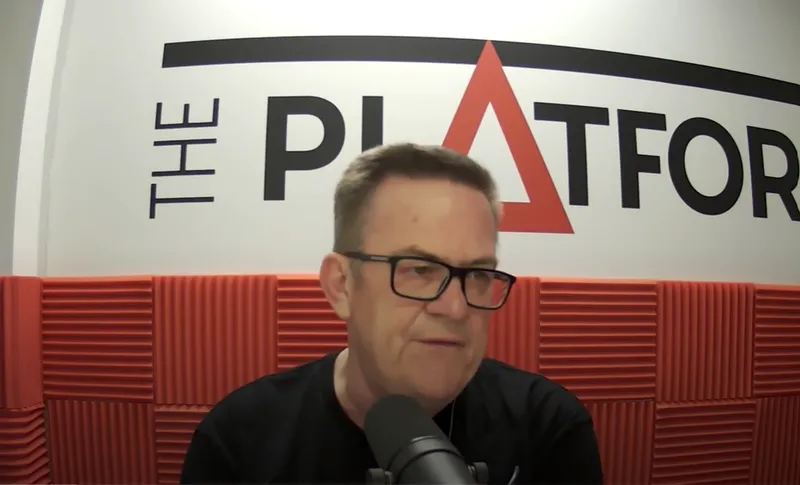
As required by the act, WK went initially to The Platform for a response, only to be told by its owner Sean Plunket, with characteristic restraint, “You plonker, we aren’t subject to the Broadcasting Standards Authority.” WK then went to the BSA, which ultimately issued its draft determination that the “exclusion of The Platform would be inconsistent with the objectives and purpose of the [Broadcasting] Act, which was designed to provide for the maintenance of programme standards in New Zealand broadcasting at a time of deregulation and rapidly evolving technology.”
What is broadcasting now?
The BSA noted with no small degree of understatement that “there is currently no code of broadcasting standards specifically addressing the online broadcasting context”, but that its interpretation of the act has now definitively ruled The Platform as subject to its scrutiny.
The BSA defines this new jurisdiction as covering “a company, holding itself out as a media outlet (described on its website as an ‘independent digital media site’) and deriving revenue from its operations, including via advertising”. This would seem to also take in Reality Check Radio, a similar operation that says (its own emphasis) “we WILL cover the issues the establishment won’t, and we WILL challenge the voices the mainstream media don’t.” It submitted to the BSA, arguing against the notion that it should be considered, alongside The Platform, within the BSA’s purview.
The Platform also challenged the idea, arguing there are fundamental differences to the way that audiences interact with content online. “Television and radio are one-way: while users have control of the frequency they select (and thereby indirect control of the content they consume) they do not select the content they receive. Publishing through the internet is two-way. The user chooses the content they consume. There are active steps needed to select and engage with it, beyond turning on the device.”
This seems a fairly thin argument – broadcast users still select a station or channel, talkback radio is very two-way, and many users of YouTube, TikTok and Instagram will passively consume what the algorithm serves just as linear radio and television consumers do. The more substantive arguments pivot on what the legislation really imagined – and more importantly, what the BSA has determined to still sit outside its scope.
What isn’t?
WK’s complaint describes The Platform as essentially “saying that things have moved on and with the internet anything goes – a free-fire zone of insults and threats”. This also neatly describes many user-generated content platforms and social media. The likes of Facebook, Instagram, TikTok and YouTube have many broadcast-like functions, and the aesthetics of broadcasting – a standardised backdrop, a professional-quality microphone, a host and guests going back-and-forth – now make up a significant proportion of social video.
Yet the BSA is at pains to point out that the new ruling is in fact extremely limited in scope. It does not cover “individuals sharing content online on an ad hoc basis – we consider the act was not directed at such individuals given its requirements with regard to the filing of annual returns and levies”. Interestingly, it does not imagine that The Platform or Reality Check Radio need to pay levies to be subject to BSA oversight.
This is the logical inconsistency at the heart of this ruling, and ultimately at the heart of the internet as a mass audience machine. The BSA’s decision makes some attempt to grapple with the changing ways that information is distributed and audiences are monetised, but it is slight to the point of being pointless.
A huge proportion of the content of sites like YouTube, Instagram and TikTok is created by individuals with something close to a regular broadcasting regime – they post or go live at specific times each day, and discuss issues and claim authority over news in ways that are functionally very similar to outlets like The Platform. They are monetised through subscriptions and advertising, just as The Platform is. And they collectively command far larger audiences. Yet they remain beyond scrutiny.
“If the technology is irrelevant, it is irrelevant for YouTube too. If clicking play on The Platform is not on demand [specifically excluded by the Broadcasting Act], what exactly is clicking play on Netflix? The gymnastics required to claim jurisdiction over some internet publishers but not others is, to borrow a phrase, mumbo jumbo,” as the Free Speech Union put it.
Most importantly, the decision continues to find big tech’s platforms invisible, despite their vast audiences and market power, and the algorithm being the functional equivalent of an editor. There is no suggestion that the BSA would ever try to grapple with Facebook or TikTok, thus leaving easily the most meaningful chunk of revenue and its audience alone to fend for itself, with no regulator to turn to in the case of harm.
Will the complaint stand?
In many ways, this is the most important question in the immediate term. From a political point of view, ruling The Platform in as a potential target but failing to uphold the complaint might be the best way of turning down the temperature. The vast bulk of the reaction against the BSA’s move has framed it as an attack on free speech, with Winston Peters typifying that view in telling (who else?) The Platform that the decision was borderline “fascist”.
Accordingly, the best way of disproving that thesis would be to decline to uphold what is on the face of it a fairly marginal complaint.
This is not certain. Calling tikanga “mumbo jumbo” could reasonably be read as contradicting the BSA’s standard four, pertaining to denigration and discrimination. However, there is restraint and tension, too. “This standard is not intended to prevent the broadcast of material that is: factual or a genuine expression of serious comment, analysis or opinion.” However you might feel about the statement, it’s hard to deny that it is Plunket’s honest opinion, and thus that it should be protected speech.
By entertaining the complaint but finding it wanting, the BSA could both assert its authority and underline that the bar remains appropriately high for successful complaints, undercutting the framing of this situation as an existential challenge to free speech in this country. That remains to be seen, as while it has accepted the complaint, it has not yet ruled on it.
Where will this end?
This is a fork-in-the-road moment, in many ways. It asks New Zealand to decide whether the standards of the broadcast era can be ported over to the internet. To do so would require, at a minimum, a large increase in the BSA’s budget, if not the creation of a whole new regulator, similar to the UK’s Ofcom, potentially funded out of levies or fines on digital advertising. If not, it invites a much more challenging outcome for the BSA itself.
That’s what Act is thinking. “The BSA has taken a law written for rabbit-ear TV and tried to stretch it over podcasts and livestreams on the internet. That’s not credible, and Kiwis won’t buy it. This decision makes it clear the BSA isn’t just out of date, it’s out of control,” said its MP Laura McClure, who is sponsoring the Broadcasting (Disestablishment of Broadcasting Standards Authority) Amendment Bill, which requires little imagination to discern its intent.
Aside from children, who already have phones banned in schools, and look likely to face a social media ban too, there has been little appetite from the current government to follow Australia’s much more muscular response to the challenges posed by big tech. On that basis, it seems plausible that by accepting this complaint, the BSA has started the clock on its own dissolution.

Duncan Greive
Duncan Greive is the founder of The Spinoff, along with the agency Daylight and music platform Lume. He also hosts The Fold, a podcast which features interviews and analysis about the media sphere in New Zealand.


