Three former TV political editors on the whole Maiki Sherman saga

Maiki Sherman
Is the level of media attention on TVNZ political editor Maiki Sherman warranted? Has the media done a good job of covering a story about one of its own? We asked three former political editors.
Ever since she presented her first poll as TVNZ political editor in April 2024, Maiki Sherman’s tenure leading the state broadcaster’s press gallery team has been controversial. Back then, prime minister Christopher Luxon accused her of “frothy” presentation of the poll, which saw the National party’s support falling. The attention over the last few weeks, however, has been in a different league as a cascade of overlapping controversies have kept her all over the news.
First came allegations, published on Substack by political commentator and former National Party press secretary Ani O’Brien, that Sherman had directed a slur at Stuff journalist Lloyd Burr during pre-Budget drinks hosted by finance minister Nicola Willis in May last year. Willis confirmed that offensive language had been used by an attendant and that she had ended the event.
It then emerged that Newstalk ZB had also been investigating the allegation and TVNZ had responded by sending a legal threat. It was an attempt to suppress the story, but this then became a story in itself. Days later, speaker Gerry Brownlee banned Sherman from Parliament for five days after the National Party complained that TVNZ staff had followed chief whip Stuart Smith into a corridor, where media interviews are not allowed, and aggressively knocked on his office door late at night while pursuing comment on a confidence vote on Christopher Luxon’s leadership. Sherman accepted the ruling.
The controversies arrived against a backdrop of existing tension between the National-led government and TVNZ, inter-media rivalry, the government’s declining popularity, the forthcoming election, and ongoing criticism of Sherman.
To give context to the media cyclone – it has at times felt like it’s been treated as the most important story in the country – we asked three former TV political editors what they thought of the coverage of a fellow political editor.
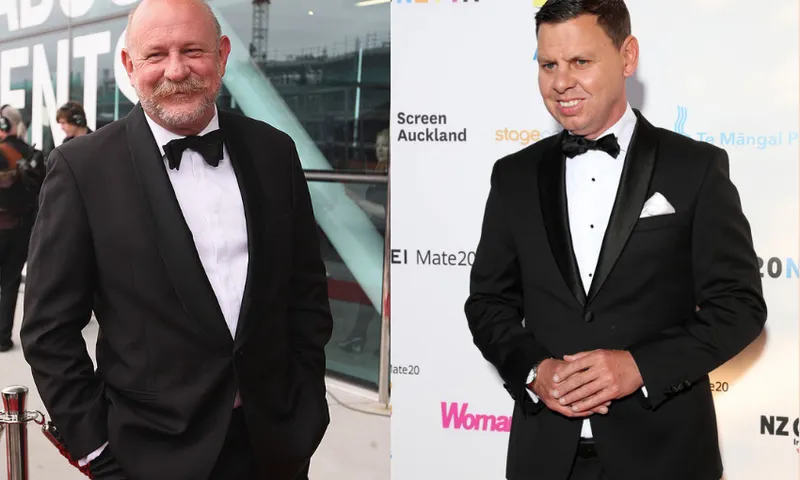
Mark Sainsbury, political editor, One News, 2000-2005
The first thing I said when the blog came out was, ‘Why has this thing come out now?’ With any political reporting, motivation is always just about the most important aspect. My understanding is the circumstances are a little bit more complicated than what has been put out — not to excuse calling someone a particularly nasty word, but I think there’s a little bit more to it than that, and there were people just waiting to jump on it.
It just seems a little bit disproportionate to my way of thinking…The media cares about this story a lot more than the general public do, to be perfectly honest. Some of the stuff people used to say to each other – things people would say at parties, drinking, working late at night – there was probably a lot more of that when I was there than there is now. The difference is: no cell phones, no camera phones, no recording.
On the basis of what I know of the circumstances around what happened, I don’t think it’s a hanging offence. And it would be a bit of toadying, to be quite honest, if they got rid of her. The first thing is they need to stand by Maiki. Because if they don’t, the chilling effect on the rest of the staff – ‘does anyone have my back?’ – that’s a real thing. But political compromises have been made in the past. There’s no reason to believe it couldn’t happen again.
Stephen Parker, political editor, 3 News, 2002-2007
It’s a legitimate story. I lean towards the opinion that it’s not something that should necessarily just be swept under a carpet or left unexamined. The political editor is a key, high-profile position, and a degree of transparency is important to trust in media organisations.
The story broke with Ani O’Brien, and then people tried to cover it. That’s not, perhaps, the perfect or best way for it to come out – a lot of journalistic coverage sometimes just starts in a small place and then expands. But I think it’s been reasonable coverage, and I don’t think it’s been undue. The ingredients are there for elevated coverage: you’ve got a controversial, high-profile role in the TVNZ political editor, an incident in the finance minister’s office, people in positions of responsibility. Those ingredients are fuel.
I’d be a bit suspicious about journalists drinking with ministers in a social setting – but the reality is that’s part and parcel of political reportage. There are many times you could go and have a drink, or even a cup of coffee, with a minister or someone senior, and they would talk to you about an issue in a non-attributable context. Journalistically, it’s valuable information, and it’s actually commonplace in parliament. Journalists might go on the Air Force 757 to cover an overseas trip, and at some point the prime minister will walk down the back of the plane while you’re all having a glass of wine and talk off the record. That’s an important part of the job. People should appreciate that context happens all the time and will happen again in the future. It’s just sometimes things get out of hand.
Paddy Gower, political editor, 3 News, 2012-2018
The first thing I thought was, there but for the grace of God go I. I’m not a religious person, but as someone who’s done the television political editor role – it’s a really unique job. Only people who have done it truly know how difficult it is. Parliament itself is just this pressure cooker. I find it very triggering just reading about what was going on, because I’ve been involved in things like that myself and I know how much heat is around them. And of course I know Maiki as a friend, and I know Lloyd as a friend, and they’re both good people and remarkable journalists.
One thing that’s really different from when I was there is the attitude from politicians towards the media has really changed. It was nothing like today – this really overt politicians-versus-media thing. When I was leaving in 2017-2018, the whole angle of the media versus Trump thing was only just starting, and it certainly had not arrived in New Zealand. But now there’s a real constituency of people that don’t trust the media, and politicians can exploit that. That would make it harder to be in those roles where you’re pushing things to the line with the politicians.
When a party is in some form of trouble and they don’t like polls and they don’t like the way they’re interpreted, they start fighting back. They decide to take a harder line against the media. Six months out from an election, they become even tougher – the stakes are high, and when they push back, they push back hard, with a take-no-prisoners approach. I remember when people at the top of the National cabinet approached the chief executive of MediaWorks about me. That filters down to you. Your personal relationships with them become aggressive. You become locked in a battle with them. And they are big, tough organisations with a lot at stake, and they actually do become, in some ways, desperate. My memory of it is that it can actually become a bit scary when they really come at you. As someone who’s done Maiki’s job, I feel for Maiki.
There is a golden rule, to my mind, for how a news organisation should operate: always back your political editor. Always back your pol ed! They need the full support of the news bosses and the organisation. That is the golden rule for a successful political editor – one that has the backing and support of the news bosses. Or else you literally can’t do the job. You won’t have the confidence to do the job. You need to be backed by the bosses, or you might as well pack up and go.

Henry Oliver
Henry Oliver writes The Bulletin. He was previously The Spinoff's music editor, the editor of Metro, a bar owner, intellectual property lawyer, and bass player.


