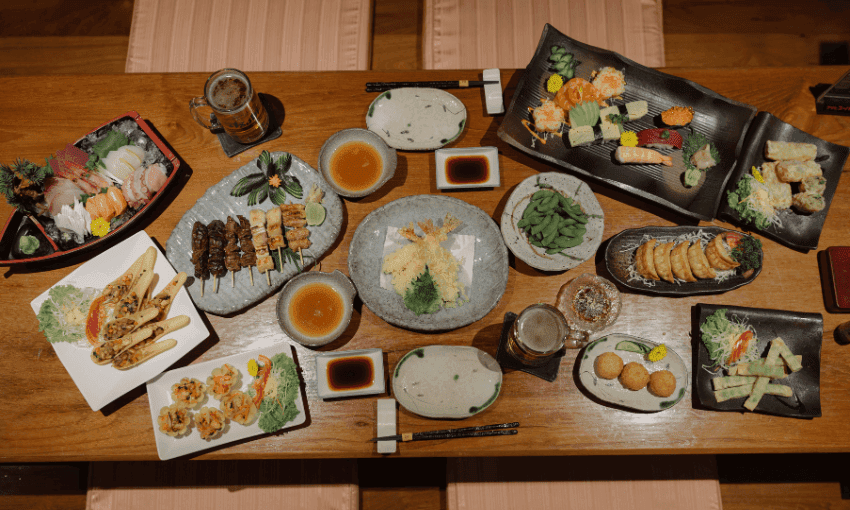



In the Chugoku region, local specialties reward curious eaters. Here’s what should be on the menu for your next trip.
Japan is a destination that rewards foodies at every turn. Sushi, matcha and ramen – they’re icons for good reason.
But maybe you’ve already toured the Tsukiji fish market in Tokyo, and splurged on kaiseki in Kyoto. Now you’re looking to tempt your tastebuds with a different experience. The Chugoku region in the west of Japan’s main island is home to the kind of food that’s packed with both flavour and a story – about place, seasons and local pride.
Across five prefectures, you’ll get to eat like the locals – crabs hauled straight from the sea in winter, wagashi (sweets) with legendary connections, and soba served on heated roof tiles.
Start planning your eating itinerary with these must-try dishes.
Oodles of noodles
Noodle culture is at the heart of Japanese cuisine. You’ll soon learn that slurping is polite, a welcome sign that you’re enjoying your meal. It’s even said to enhance the flavour.
Start the slurpfest with a rich bowl of Onomichi ramen, originating from a seaside town east of Hiroshima. This style of ramen is made with a shoyu (soy-based) broth incorporating seabura (pork back fat) and small fish from the Seto Inland Sea. It’s often served topped with chashu pork, bamboo and spring onions. You can find Onomichi-style ramen all around Hiroshima, or in Onomichi itself at classic, down-to-earth eateries like Ichibankan or Maruboshi. The latter was the inspo for the ramen shop in the video game Yakuza 6.

In Yamaguchi Prefecture, your noodle fix comes on an unusual serving platter. Kawara soba are infused with green tea, topped with beef and finely shredded omelette, and served on a heated roof tile. This meal presentation was first adopted by soldiers in 1877, who used old roof tiles as a hotplate for cooking over a campfire. It was later revived in 1962 by a ryokan innkeeper named Shinichi Takase in a small hot spring village called Kawatana Onsen. You can dine at specialist kawara soba eateries across Yamaguchi, or visit the original eatery, Ganso Kawara Soba Takase, which has expanded to a regional chain.
Find another famous soba variety in Shimane Prefecture. Izumo soba is made by grinding buckwheat grains with the husks still attached, giving the noodles a darker colour, nuttier flavour and chewier texture. They can be enjoyed warm kamaage style or chilled warigo style in a trio of stacked bowls, topped with sauce and condiments. When you’ve finished the top bowl, you transfer the remaining sauce to the next bowl, deepening the flavours as you eat your way down the stack. Individual eateries put their own spin on this signature dish, with plenty of options around Izumo Taisha, one of Japan’s most ancient Shinto shrines. Some spots have been in operation for yonks – Izumo Soba Arakiya set up shop in the 1780s.

Stacks on stacks on stacks
Speaking of stacks, don’t miss the unique Hiroshima take on okonomiyaki, the classic vegetable pancake. Rather than mixing veggies into the batter, Hiroshima okonomiyaki is prepared on a layer of noodles. The layer of noodles is loaded with cabbage, pork, a fried egg, and finished with okonomi sauce. In downtown Hiroshima, find Okonomimura – a multi-storey food court packed with more than 20 purveyors of okonomiyaki.
Another multi-layered feed comes from the castle town of Iwakuni in Yamaguchi Prefecture. Iwakuni zushi is a type of pressed sushi served in square slices, like a sushi lasagna or mille-feuille. To make it, sushi rice, fish, egg, shiitake mushroom and locally grown lotus root are layered into a large frame up to 60 centimetres square for pressing. It was originally invented as a battle food during feudal times, and is now enjoyed as a festive nibble – or you can enjoy it at several restaurants, particularly around the historic Kintai Bridge.

From the sea
With twin coasts, the Chugoku region boasts plenty of fresh seafood. Along the coast of the Sea of Japan in Tottori Prefecture, winter travellers can experience the sweet meat of the Matsuba snow crab. Locals celebrate Crab Day on the fourth Saturday of November each year, kicking off the crab season that lasts until March.
On the opposite coast, Hiroshima is Japan’s oyster capital, producing almost two-thirds of the country’s farmed oysters. You can take a boat tour to visit the oyster farms, where the shellfish are raised on rafts in the calm blue waters of the Seto Inland Sea. Or visit the port town of Miyajima in February for an oyster festival, with kaki (oysters) available in every preparation imaginable – raw, grilled, tempura, steamed, or cooked into a delicious hot-pot.
But the main attraction for many gastronomic adventurers in the Chugoku region is fugu (pufferfish/blowfish). This gourmet delicacy can only be prepared by registered chefs with special licences, since it can be poisonous if cut the wrong way. Shimonoseki is the home of fugu, and a full degustation might include sashimi, fried fugu, hot-pots and even a hot sake made with grilled fugu fin called hirezake. During peak pufferfish season (November to February), you’ll find this specialty on the menu at high-end restaurants and izakayas alike.

Sweet tooth
For those after a sweet treat, possibilities abound. Just off the coast of Hiroshima, on the island of Itsukushima (aka Miyajima), the local specialty is momiji manju, a buckwheat and rice cake shaped like a Japanese maple leaf, typically stuffed with red bean paste. Another must-try dessert is kibi dango, a soft mochi-like dumpling from Okayama Prefecture. These wagashi are linked to the folk hero Momotaro, the Peach Boy, who shared the treats with a dog, a pheasant and a monkey to enlist them as helpers on his quest. Okayama is also nicknamed the ‘Fruit Kingdom’ for its abundance of fruits, especially peaches and Muscat grapes. If you visit in the right season, enjoy fruit picking or skip straight to the parfaits.
In good spirits
The ‘City of Sake’ should be on the list for anyone who enjoys a good bevvie. The Saijo neighbourhood, in Higashi Hiroshima, has hosted sake breweries since 1675. Many retain their traditional look and feel, with red brick chimneys and namako-kabe tiled walls. Get into the spirit of hashigo (bar-hopping) culture and sample the local sake, sake brewing water and other sake-themed treats across this brewery district.
Where to dine
No matter where you go in Japan, good food isn’t confined to fine dining. It’s everywhere – izakayas (the Japanese equivalent of pubs) offer share plates and party vibes. Family-run eateries, train station shops and even konbini (convenience stores) all have quality and variety. Bring your appetite and your table manners and you’ll savour both a delicious bite, and a deeper acquaintance with Japan life.