New Zealand’s foreign buyer ban has been binned (kind of)

Image: The Spinoff
The prime minister has announced that big-spending overseas investors will soon be able to buy a home in Aotearoa. Here’s a recap of how we got to this point.
What’s all this then?
Holders of New Zealand’s “golden visa”, AKA the Active Investor Plus visa and its predecessors, Investor 1/Investor Plus and Investor 2, will now be able to buy or build a residential property here – as long as it’s worth at least $5 million.
That’s a pricey house!
Yes, but these are rich people, remember. That’s the whole point of an investor visa – to get one you have to have millions of bucks invested in Aotearoa. You also have to spend some time here. It depends how much money you put in, but if your visa is in the Growth category ($5m invested over three years), you’ve got to stay here for at least 21 days over that three-year period.
That’s not very long. Surely these people can afford a hotel for a week a year? A flash Airbnb, perhaps?
Surely, but that’s just the minimum requirement. Many of them want to hole up here for longer, and they want a damn nice pad to do it in. Not keen on renting, either.
Fair enough, I suppose. Remind me, why have they not been able to enter our cooked housing market to date?
In a controversial move intended to alleviate said cooked housing market, in 2018, the then Labour-NZ First government banned most foreigners who weren’t considered “ordinarily resident” in New Zealand – ie had a residence class visa, had lived here for at least 12 months and had been physically present in the country for at least half of that – from buying residential property. They did this by amending the Overseas Investment Act.
Were there any exemptions to this so-called ban?
Yep, Australian and Singaporean citizens, thanks to trade deals with those countries. Other foreigners have also been able to apply for Overseas Investment Office approval if they could prove their property purchase would add to housing supply.
National has wanted to overturn the ban for a while, haven’t they?
Yep – they opposed it when it was brought in and during the 2023 election campaign, pledged to repeal the ban on foreign buyers for homes of $2m or more and chuck a 15% tax on such sales, with the resulting revenue to be used in part to pay for tax cuts. But the coalition deal with NZ First – whose leader Winston Peters had long campaigned against foreign buyers – scuppered that plan.
So Winston has now changed his tune?
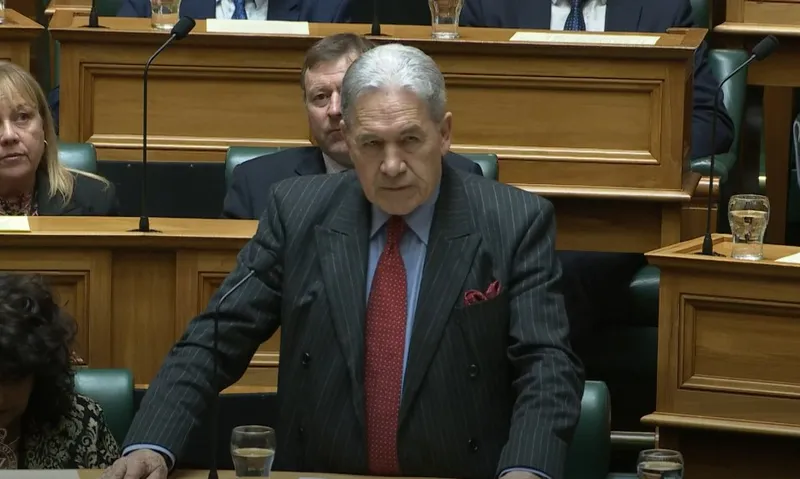
If you ask him, he’d say no way, sunshine, that’s bulldust and only a moron would suggest otherwise (or something along those lines). But there have been signs of Peters’ stance softening – at least where big investors were concerned – since 2024. This year it seemed increasingly certain that the ban would be binned, though talks among coalition partners have dragged on. “This change navigates a path between those who do not want foreign ownership opened up, and the desire to attract high-net-worth investors by deepening their connection to our country to help grow the economy,” said prime minister Christopher Luxon when he announced the change yesterday.
Did the foreign buyer ban actually work to cool down our housing market?
There was never much evidence that foreign buyers were pushing up prices in the first place. The housing market actually got worse for a few years after foreign buyers were banned, though now prices have dropped from their 2021-22 peak for various reasons – none obviously related to the foreign buyer ban. There are a few people who reckon it worked, however.
So how was this partial overturn received yesterday?
Predictably, Labour and the Greens aren’t stoked. “Today’s announcement shows how out of touch Christopher Luxon is,” said Labour housing spokesperson Kieran McAnulty in a press release. “Many Kiwis are already struggling to buy a home, and he has just made it worse. More pressure at the top end pulls up house prices for the average Kiwi. New Zealanders should be at the top of the priority list for houses.”
Green Party housing spokesperson Tamatha Paul, meanwhile, said, “Making it easier for offshore interests to buy up our housing will make housing more expensive. Real estate agents will have every incentive to boost prices to $5m in order to sell to this new wealthy market, further shunting struggling renters and home-buyers out of contention.”
Is anyone pleased?
The real estate industry welcomed the change, with Bayleys’ Johnny Sinclair saying while it wouldn’t completely solve the market slowdown [ie house prices dropping], “it will help to restore overall confidence”.
Robbie Paul of venture capital firm Icehouse Ventures said allowing high-calibre investors to buy homes in New Zealand would attract more of them to come here – and to stick around. “Enabling home ownership creates a much more emotional attachment to New Zealand… I can imagine many AIPs [Active Investors Plus] will invite their friends down to show off their houses in Dalefield or Waiheke,” he said in a press release. “And no one would send invites to visit their New Zealand portfolio of financial assets.”
So what can five million bucks buy you these days?
Luxon reckoned $5m-plus houses made up about 1% of the market, meaning about 10,000 houses across the country would currently be eligible for purchase, 80% of them in Auckland and 10% in Queenstown. Searching for homes in this price bracket on Trade Me, and excluding large sections for development, returns around 350 results, ranging from two-bedroom Parnell penthouses to sprawling Queenstown lakefront estates to beachfront apartments in the Mount to a Cape Cod-style property in Karori (AKA the Cape Cod of Wellington.)
If I was a hypothetical foreign investor and wanted to hypothetically snap up all four, would that be cool?
No, don’t be greedy. The new rule allows the purchase of one home and one home only.
What about a city bolthole and a rural retreat?
Not allowed, sorry.
Surely I would be permitted a sprawling suburban mansion and a beachfront Waiheke holiday home?
Absolutely not.
Jeez, fine. So do wealthy foreigners actually want to buy homes here?
According to Bloomberg, rich Americans are ready to swoop. Last month, a Bayleys agent told the Robb Report he’d recently shown an apartment to “the sixth- or seventh-richest man in America”, a tech company head who wanted to get his kids into good Auckland schools. (Google co-founder Larry Page, who was granted an Investor Plus visa in 2021, has school-aged children and happens to be the sixth-richest person in the US.)
Interesting. And when will such high-net-worth overseas individuals actually be allowed to ascend Aotearoa’s property ladder?
The necessary legislative changes are expected to be done and dusted by the end of the year.

Alice Neville
Alice Neville is The Spinoff's deputy editor. Her interests include politics, food and data-driven deep dives of all kinds.


