Windbag: Abolishing Thursdays, bulldozing the Johnsonville mall, and other notes from the campaign trail

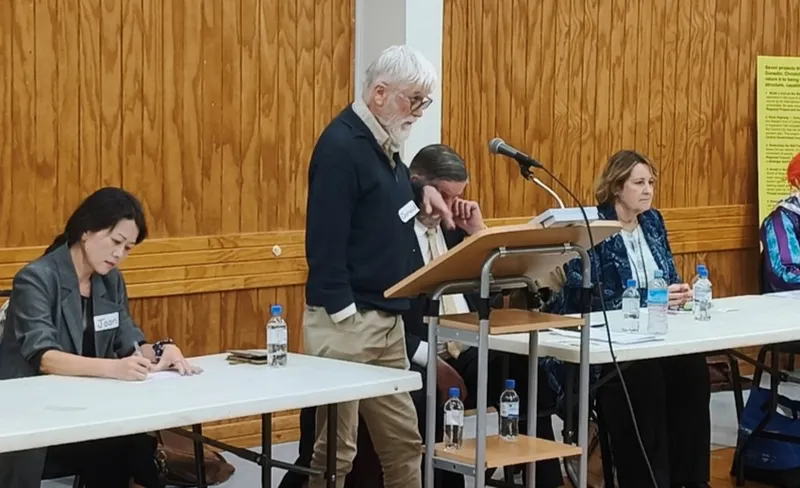
Pennywize the Rewilding Clown at the Johnsonville mayoral candidates forum. Photo: Joel MacManus
The Wellington mayoral campaign is in full swing, and things are getting weird.
The first thing to note about the Wellington City Council elections is that there are waaaaaaaaaaaaaaay too many debates. The capital is full of overly eager political types, and every residents’ association, community organisation or random group of friends with a Facebook page thinks they need to host their own “meet the candidates” event. I’ve seen Andrew Little’s schedule, and it includes 30 debates. It’s gruelling, but candidates are locked into a peculiar standoff where it’s a bad look not to show, even though there are very few votes to be won at these events.
I’m planning to spend a lot of time at candidate debates over the coming weeks, but I cannot promise to cover them all, for I am only one man who is barely sane as it is. Over the past seven days, I attended two mayoral debates – one hosted by the Johnsonville Community Association and another by the Urban Development Institute of New Zealand – as well as two campaign launches, for Alex Baker’s mayoral bid and Tory Whanau in the Māori ward. Here are my highlights:
- Don McDonald, a perennial candidate, local legend and eccentric genius, debuted a new campaign slogan at the Johnsonville debate: “Vote Don McDonald, go to heaven”. His policies include giving everyone over the age of 16 a government allowance for talk, text and data, and changing the system of time, because “the current calendar is no good” – he wants to switch to a system of six days per week, five weeks a month, and get rid of Thursdays. Later in the debate, McDonald hit us with a profound explanation for all the world’s problems: “You don’t want computer. You want community.”
- I asked Diane Calvert where she stood on McDonald’s idea of abolishing Thursdays – she said she was keen, because Thursdays are usually council meeting days.
- I’m always a little sceptical about joke candidates because they’re often not as funny as they think they are, but Pennywize the Rewilding Clown is starting strong. He pledged to demolish the Johnsonville mall and plant a grove of rātā trees, replace the William Wakefield memorial with a monument to bureaucrats who have “kept Wellington afloat for more than a century”, and save the council $700m by cancelling all road maintenance. He gave a surprisingly strong defence of Māori wards, mocking a questioner who complained about them being undemocratic – “A person casting a vote to elect a representative is apparently against the principle of one person one vote?”
- Andrew Little seems bored. I feel sorry for him. A few short years ago, he was a high-ranking cabinet minister being chauffeured around in a Crown limo, and now he’s spending his days in dusty community halls listening to the most punishing people in the city. He seems to be working on the assumption that you can’t win votes at these events, only lose them. So his strategy is to keep it dry: outline his policies, reassure left-leaning voters he’s not that bad, reassure conservatives he’s not that scary, and move on.
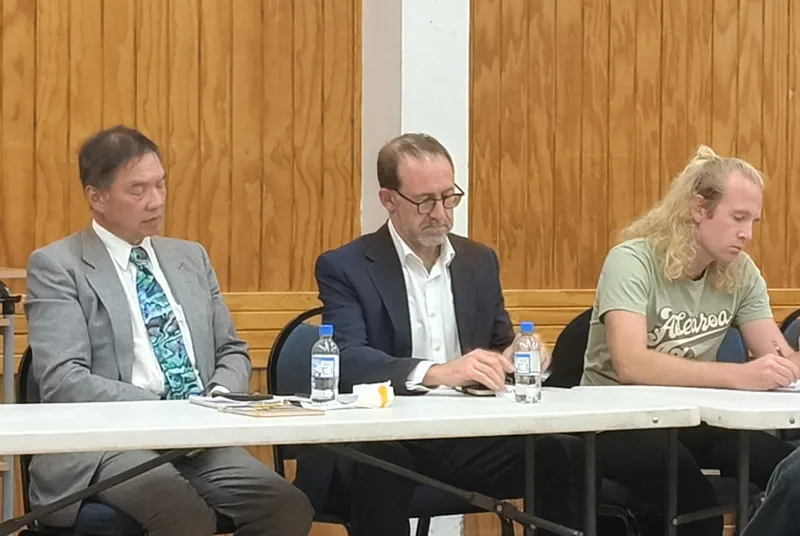
- Rob Goulden connected with the voters of Johnsonville by telling them that he “lived in this suburb in 1968 when the Wahine struck” and answered a question about Māori wards by saying, “Barry, I went to school with your sister”.
- Ray Chung wasn’t invited to participate in the UDINZ debate, but showed up anyway in an attempt to pressure them to let him on stage. The organisers stood their ground and he sat in the second row, glowering. His phone went off partway through, revealing that his ringtone is a recording of his dogs barking. He had a better reception at the Johnsonville debate, aided by his campaign managers from Better Wellington, Alistair Boyce and Glenn Inwood, clapping like seals every time he opened his mouth. He had a particularly entertaining Freudian slip when describing his campaign ticket, Independent Together. After weeks of insisting it’s not a political party, he announced: “The Independent Together Party, um, I mean group, has a policy of zero rates increases.”
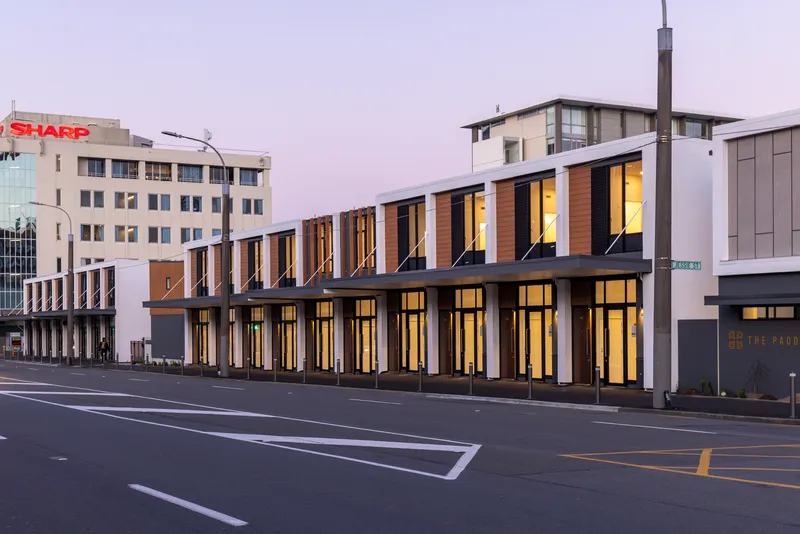
- Karl Tiefenbacher, when asked if he supported lowering the voting age to 16, dodged the question with some verbal jujitsu, saying he didn’t think people “under the age of 16” were mature enough to vote. Later, he complained about the cost of DEI initiatives, saying, “I don’t understand why we have a diversity division on council. We’re the most diverse city in the world.” (That’s not even close to accurate – Wellington City doesn’t even beat the New Zealand national average for ethnic diversity.) When asked about how to encourage more housing development, he said he was “not sure the way we’ve gone, making people build over three storeys in the centre of town, is making things any better”. Tiefenbacher is apparently the only person in Wellington who wants more developments like The Paddington.
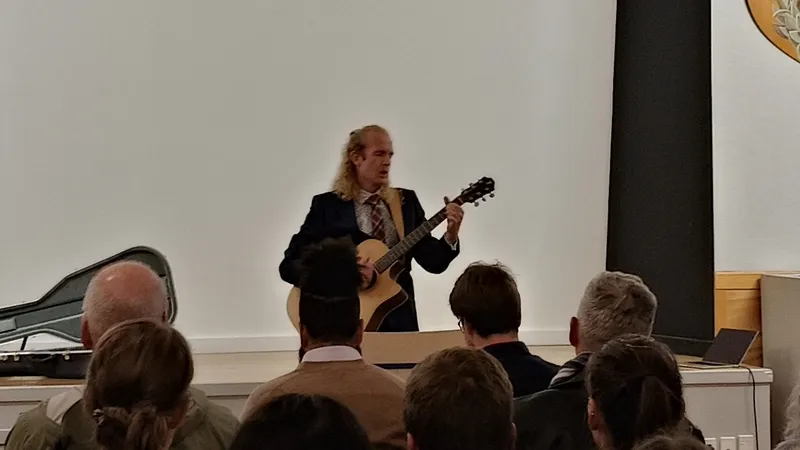
- The opening act at Alex Baker’s campaign launch at the Tararua Tramping Club was Alex Baker giving a disarmingly earnest guitar performance of ‘Nau Mai Rā’/’Welcome Home’ by Dave Dobbyn. He wore a suit, which seemed unnatural; you could tell it wasn’t his usual wardrobe. He’s since ditched it and has shown up to other debates in a T-shirt. Baker has a habit of doing maths out loud as he speaks, calculating the rate of council debt repayments or the level of government investment in Wellington relative to other cities – it’s an unusual strategy, but audiences seem to respond well to it. Or, at least, they think he sounds smart. It does lead to some strange moments, though, like when he and Calvert got into a brief argument about whether his debt calculations included principal repayments, which made everyone’s eyes glaze over.
- Tory Whanau used her campaign launch for the Māori ward seat to take a pretty extraordinary swing at candidates who spread rumours about her personal life: “Ray Chung, Nicola Young, Maurice Williamson in Auckland. Any candidate associated with Better Wellington. This government. Vote them out. They don’t deserve to represent you.” She also made a bold but confusing promise that “There will be no AI art here in Pōneke”. A noble cause, but probably outside the council’s sphere of influence.

Joel MacManus
Joel MacManus is a senior writer for The Spinoff. He previously worked at RNZ and Stuff, and began his career at Critic Te Ārohi. His writing explores the political, economic and cultural systems that underpin modern New Zealand. He won the 2025 Voyager Media Award for Best Columnist, Opinion or Critique.


