Farmers should be paid to use methane-busting tools – agritech leaders

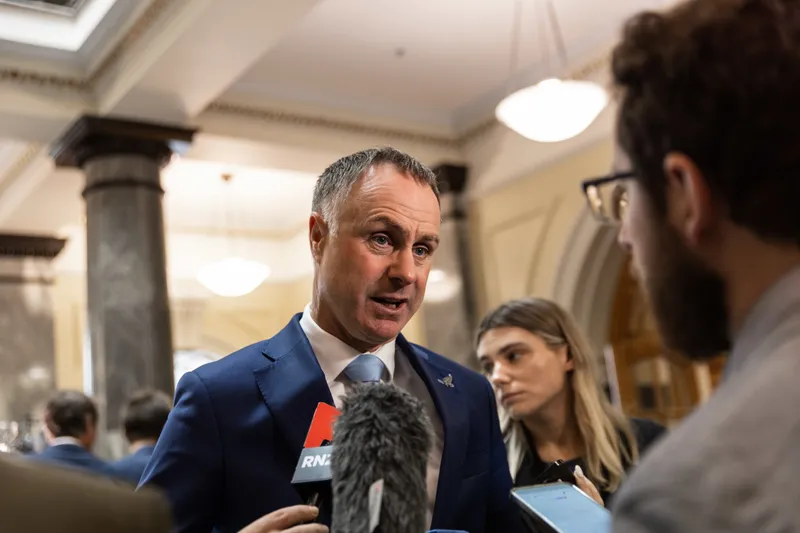
Climate change minister Simon Watts (left) and parliamentary commissioner for the environment Simon Upton
Agri-tech leaders say incentives would be required to ensure uptake of any new technologies, with current projections labelled as ‘ambitious’.
This story was first published on RNZ
Farmers need to be paid to start using methane-busting technology in their herds and on their land, agri-climate leaders say. Their comments follow earlier warnings from industry and the parliamentary commissioner for the environment that, without penalties or incentives, there are few reasons for farmers to invest in some of the tools.
Climate change minister Simon Watts said the government would work with farmers to “maximise the emissions reduction innovation under way” but would not be drawn on whether the government was looking at subsidies or other incentives.
Last year, the government scrapped its previous plans to put a tax on agricultural methane by 2030 and weakened the country’s 2050 methane emissions reduction target. Instead, it opted for a market- and industry-led approach, with Watts saying that widespread uptake of the new mitigation tools would be “critical”.
The government-industry partnership AgriZeroNZ had so far invested $78 million into developing methane-inhibiting technologies such as vaccines and genetics. Some, such as low-methane sheep genetic selection and effluent pond treatments, were available now, while others are still in much earlier stages of development. Overall, the government has committed $400m to accelerate development and commercialisation.
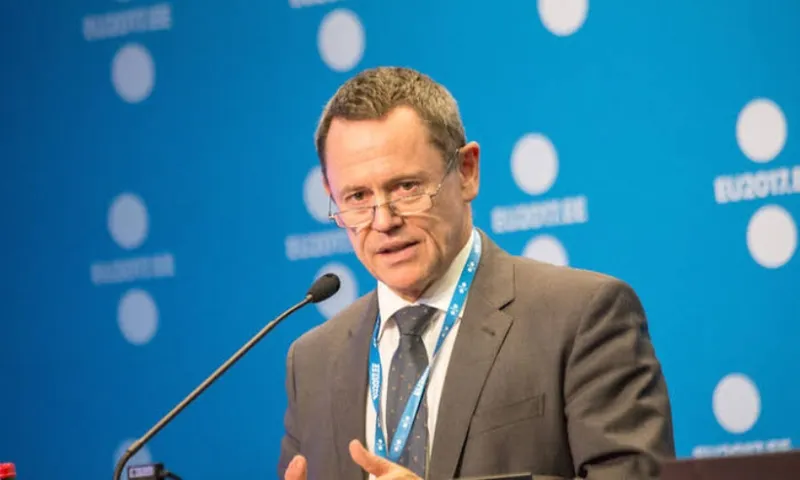
At the annual Agriculture and Climate Change conference in Wellington last week, AgriZeroNZ chief executive Wayne McNee said some of the technologies had a commercial benefit because they also improved animal productivity. However, many – including a methane-inhibiting capsule or “bolus” being developed by New Zealand company Ruminant Biotech – did not. “In the absence of productivity improvement, which is often quite hard to prove, there will need to be an incentive,” he said.
Speaking to RNZ afterwards, he said there were already some industry incentives available for the lowest-emitting dairy farmers. “But to get broader-scale adoption, there’ll need to be a reason for farmers to use them,” McNee said. “If there’s a productivity improvement, great, that”ll be a key driver. If there’s not, there’ll need to be some sort of payment to the farmer to take the technology up.”
Other countries had used direct subsidies, or made use of voluntary carbon markets. AgriZeroNZ was “looking at all options”.
“It’s part of our role to get the tools available, but also part of our role to work with farmers and others to get them used.”
Methane – which is a short-lived gas but has a huge warming effect while it exists in the atmosphere – makes up roughly half of New Zealand’s emissions. Almost all of it comes from farms, especially the burps and breaths of ruminant animals like cows and sheep.
Only 40% would use methane vaccine – survey
A 2025 survey of farmers by the Bioeconomy Science Institute (formerly Manaaki Whenua Landcare) found only 7% of dairy farmers who responded said reducing their emissions would be a major focus in the next two years. Only 40% of respondents planned to use a methane vaccine, if it became available.
Ruminant Biotech market access director George Reeves told the conference that New Zealand risked losing its global competitiveness unless it developed a “robust, long-term, scalable incentive for methane abatement”. He told RNZ that did not necessarily have to be taxpayer-funded. Instead, New Zealand could use voluntary carbon markets, or set up a scheme similar to one being developed in Australia, where farmers could earn carbon units by reducing their emissions intensity.
Ruminant Biotech planned to launch its bolus for certain types of beef cattle later this year and expected that “early adoption is going to be OK,” Reeves said. However, he wanted to see a broader incentive scheme in place by 2028.
AUT industry fellow and climate economist David Hall said a direct government subsidy scheme for deployment of some tools would make sense while they were still new and did not have general buy-in. “In the economics of innovation, that’s recognised as a justified and reasonable cost.” Once the tools had a market foothold, that direct support could be withdrawn, and a low-level price on emissions introduced to keep driving uptake, he said.
Incentive to use potential methane vaccine removed
In a speech to a DairyNZ forum in March, parliamentary commissioner for the environment (and former minister for the environment) Simon Upton raised concerns about both the timeframe and uptake of some promised technologies. He pointed out that the government’s baseline emissions projections relied on at least 37% of dairy cattle receiving a methane vaccine – which were still at ‘proof-of-concept’ stage – by 2030. “I personally find this assumption heroic,” he said. “Not only do we not yet have such a vaccine, but the government’s decision to abandon a price on methane removes the incentive to use one should it materialise.”
Significant taxpayer funding was being invested into vaccines and other technologies. “Taxpayers are entitled to ask why this outlay should continue if the vaccines are not going to be adopted,” he said. Subsidies could be a pragmatic approach, “but the quid pro quo has to be uptake”.
In a submission on the amended emissions reduction plan last year, industry group DairyNZ also called the assumptions about uptake “ambitious”. “DairyNZ has consistently encouraged government to be cautious when making assumptions on technology availability, efficacy and uptake.” Incentives were essential, but the tools also needed to be practical to implement, and must not affect food safety or threaten overseas trade, the organisation said.
In a written statement, Watts said the government had “increasing confidence in the technology pipeline” and expected to see the first tools that AgriZero had invested in available this year. “While emission predictions inherently carry some uncertainty, the government is committed to working with the agriculture sector to boost productivity while lowering emissions,” he said. There would be ” range of opinions” on any new technology, he said.
“However, I have heard from many in the sector who support the development of new methane inhibitors and other incentives that increase production while reducing emissions.” He did not answer questions about whether any policy work had been commissioned on an incentive or offset scheme, or what would drive uptake in the absence of any productivity gains.
– RNZ


