A 25-year-old tries to figure out what the Alliance party is – without using Wikipedia

Who were they? What do they want now? (Image: The Spinoff/Wikipedia)
After a long hibernation, the Alliance is running a candidate in this year’s Christchurch local elections. Shanti Mathias, who was a toddler when the party was last a major political contender, tries to figure out what they’re all about.
As a journalist covering this year’s local body elections in Christchurch, I was intrigued by the announcement that the Alliance had decided to stand a candidate, its first in many years in either local or national politics. The problem was, I didn’t know what the Alliance was. This is because I am 25 years old and didn’t start paying attention to New Zealand politics until about 2019 – and I haven’t managed to learn the entire history of the topic just yet.
The obvious solution was to read the Wikipedia page for the Alliance. But Wikipedia’s source of truth is usually any old person who’s read a few articles. And articles have information in them because journalists ask people questions. I had to skip the middleman and get to the real source of truth: asking people who might know what the Alliance is.
Here’s what I knew about the Alliance: it was at least somewhat left-wing. The candidate standing in Christchurch Central, Tom Roud, had some really nice posters and had a launch event early in July, featuring several cool bands and one band that really annoys me.
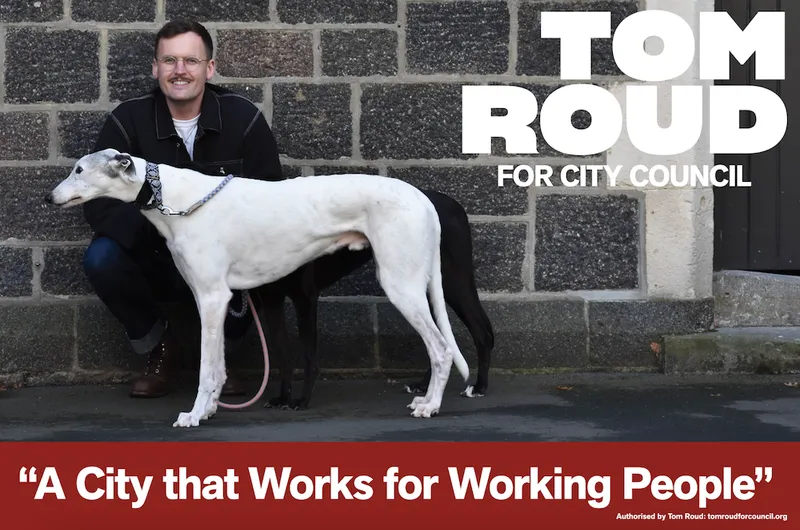
What did the Alliance stand for? Why were they returning now? Was it really a return? Who is doing the graphic design for Tom Roud?
Burdened with questions like this, I decided to start close to home. I asked my flatmate, Brogan, what she knew about the Alliance. Brogan studies psychology and has a degree in indigenous development. She has worked in a plant nursery and sometimes goes hunting. Her myriad experiences did not help her here. “I don’t know anything about the Alliance party,” she told me, as she ate breakfast. “They must have been allied… with something?”
Perhaps my problem was that I was going too young. I needed someone older than, say, 35. My friend Nathan seemed like a good call. “I was born in the mid-80s, and started paying attention to politics in the mid-90s,” he said. “The Labour MPs who felt the [Rogernomics] reforms hadn’t gone far enough left to join the Act Party. The ones who felt that it had gone too far became the Alliance Party – this was in the late 80s and early 90s.” Finally we were getting somewhere! I had a timeline for the Alliance, and a rough idea of its ideological origins.
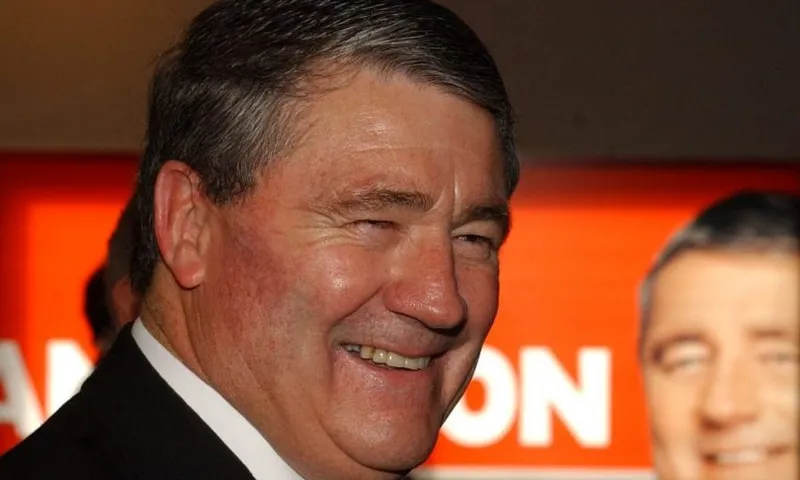
Nathan also gave me a name: Jim Anderton, who had been his local MP in Wigram. Anderton had been a key figure in the Labour Party, but had split from it when the Alliance was formed, then splitting from the Alliance in the early 2000s to form the Progressive Party.
I now had some broad details about the Alliance, but I needed specifics. Perhaps I was casting the net too wide, trying to find relatively normal people who remembered what the Alliance was. I needed to find the real freaks, someone whose knowledge of small parties was greater than their desire to live a peaceful life.
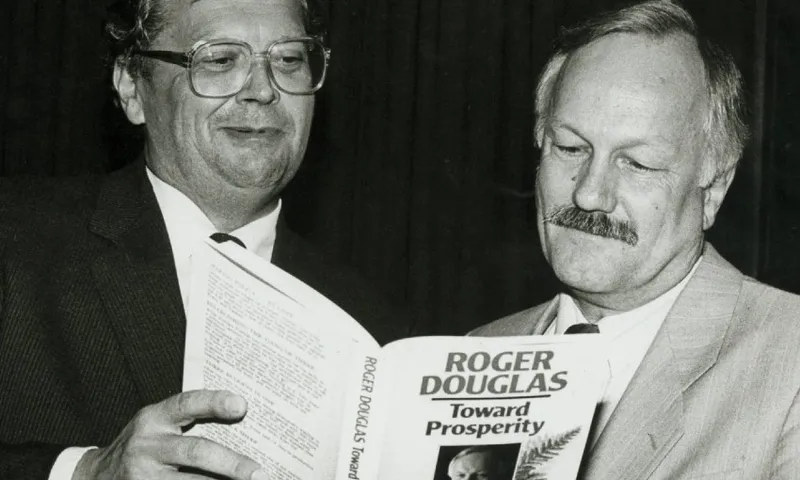
I reached out, obviously, to Alex Braae, executive producer of TVNZ’s Q+A and former editor of The Bulletin for The Spinoff. What Nathan had told me was broadly right, Braae said, but there were some missing details. The Alliance was, as Brogan had suspected, an alliance: a group of parties, including NewLabour, Social Credit and the Greens, which rallied around each other, officially coming into being at the end of 1991 in order to have a broad base in the 1993 election.
“It was a first-past-the-post election, which meant that you wanted to clump together with enough like-minded parties to have a hope of winning the election against Labour and National,” said Braae. The Alliance didn’t win in 1993, but it did get a significant chunk of the vote – 18%. That didn’t mean much in the pre-MMP world, though, and the party secured just two seats in parliament – not because of that 18%, but because Anderton and fellow Alliance candidate Sandra Lee won their electorates. By 1996, the first MMP election, a decent party vote share meant the Alliance had many more MPs – 13 – even though it had received a lower percentage of votes (10%) than in 1993.
It didn’t last. In the 1999 election the Green Party stood separately, and the Alliance’s vote share dropped to 8%. Anderton, however, secured the role of deputy prime minister as part of a Labour-Alliance coalition. But by 2002, the Alliance was a shadow of its former self. “The only MPs left in the wreckage were Jim Anderton and – what was his name? Matt Robson?” Braae said. The pair called themselves the Progressive Coalition, then the Progressive Party.
I now knew enough not to completely embarrass myself before a true Alliance expert. I called Quentin Findlay, who had been in the proverbial room where it happened: he was a founding member of NewLabour and the Alliance, standing for the party in the 1999 and 2005 general elections – and has a PhD studying the origins of the Labour Party. He and other Alliance members had felt a little surprised that a group of young people in Christchurch asked to run under the party’s banner in the 2025 local elections. “I was pleased,” he said. “I always felt that there was space for a party like the Alliance for younger people.”
Findlay gave me some more context on the origins of the Alliance. “I was very disenchanted with the fourth Labour government – there didn’t seem much difference between Labour and National, when both supported neoliberalism,” Findlay said. He said the peak of the Alliance was in the early 1990s; the party formed in 1992, participating in the local elections, then making a big push to get 18% of the voter share in 1993.
According to Findlay, the existence of the Alliance “helped drag the Labour Party back to the left” after Rogernomics and Ruth Richardson. But Anderton, feeling that “one day in government was worth a thousand in opposition”, went along with the policies of Helen Clark’s government, said Findlay. As deputy prime minister he did get some big wins – he was the key architect of Kiwibank, for example – but “there wasn’t any scope for [the Alliance] to have its own policies independent of Labour”. This led to a rift in the party, and Anderton’s support of New Zealand’s involvement in the invasion of Afghanistan was “the straw that broke the camel’s back”, said Findlay. The party split.
In 2002, the Alliance ran separately to Anderton’s Progressives, with Laila Harré as leader (she would later be the leader of Kim Dotcom’s Internet Party in 2014). It failed to win any seats. While the Alliance continued to run candidates in single electorates (Dunedin and Napier) until the 2014 election, Findlay said it was essentially in “abeyance”. Now, a version of the party has returned. “It’s an interesting brand to revive now, especially in Christchurch, where Jim Anderton was such a big political figure,” Braae had said. The current revival uses the brand of the Alliance, but has a quite different set of people involved. “It’s no longer an alliance of five parties,” said Findlay.“It’s a lot freer, in a way, not to be so caught up with the past.”
This was very interesting but the problem with phone calls is that no one’s name is underlined in blue, hinting at more tantalising pages full of minutiae, colour-coded tables and random images from the public domain. It was time to read the Wikipedia page for the Alliance, which revealed an unimportant detail no one had thought to mention: the original Alliance colours were a festive red and green.

Shanti Mathias
Shanti is a contributing writer at The Spinoff with a focus on Christchurch and the South Island. Email her at shanti@thespinoff.co.nz


