Nope, no way, we haven’t already zoned for enough housing in Auckland

Image: The Spinoff
Critics are saying the government is bullying Auckland Council into allowing unnecessary new housing intensification. They fail to mention that dense housing remains banned in the places where it makes the most sense.
Christine Fletcher’s voice took on a tinge of exasperation as she explained her thoughts on housing development to Ingrid Hipkiss last week. The Auckland councillor insisted she wasn’t a zealot. She just wanted a good, lengthy, potentially infinite process of deliberation. “I’m not opposed to intensification,” she said. “I’m very much in favour of it, because it should be along our transport routes, but this is being done with indecent haste and really needs to be thought through.”
Her moderate stance might have been a surprise to those who attended Auckland Council’s planning committee meeting in November 2021, where Fletcher likened legislation aimed at making the council allow for housing intensification to “gang rape”. Now here she was on RNZ’s Morning Report on Thursday to talk about a column she’d penned for the Herald with Troy Churton, an Ōrākei local board member best known for complaining about the police Eagle helicopter 169 times in eight months and also comparing development to rape. They were opposing the government’s updated housing legislation, which will force the council to allow for hundreds of thousands of new homes and businesses, primarily around train stations and rapid busways.
The column eschews comparisons between desperately needed housing and violent sexual assault to argue the new legislation is unnecessary and harmful to Auckland’s character and community spirit. It’s riddled with statistics, which might make it seem factual and dispassionate. The council, it explains, has already zoned for 900,000 new homes through its Unitary Plan.
That sounds impressive, but these sorts of numbers can be deceiving. Technically the entire world’s population could fit in a square box with 1km-long sides in the middle of Manhattan. Build The Cube, urbanists like to say. Their more serious point is that planners could just zone for The Cube and say they’ve released enough housing capacity for the next few millennia.

Auckland has its own version of The Cube. Fletcher and Churton are right that its Unitary Plan allows for thousands of new houses, but they fail to mention that most of them are in far-flung and slightly dystopian places like Milldale, Millwater, or even Howick. Development is cut off in many of the most accessible, desirable and wealthy parts of the isthmus. The Unitary Plan locks 41% of all land within 5km of the city centre under so-called “character protections” designed to preserve the city’s heavily renovated and eye-wateringly expensive villas in amber.
In some suburbs, like Grey Lynn central and Ponsonby west, dense housing is banned on more than 90% of the land. Despite councillors like Fletcher raising the prospect of sprawl into places with inadequate infrastructure if they’re forced to allow for intensification, the most meaningful restrictions on development in Auckland right now are in places with good access to jobs, where pipes, roading networks and busy public transport routes are already in place.
Auckland’s planners and politicians like to keep this sort of stuff under wraps. They talk about the “compact city”, pretending the Unitary Plan upzoned primarily around town centres and public transit. An elaborate system has been set up to maintain the ruse. When planners send councillors reports on development patterns, they use a flattering 1,500-metre walking catchment, meaning anything within 1,500m of the rapid transit network, to determine which homes have been built in the places that make the most sense. That measure has the upside of taking in huge amounts of the city, meaning lots of development that isn’t that well-connected gets tractor-beamed into the council’s self-aggrandising statistics.
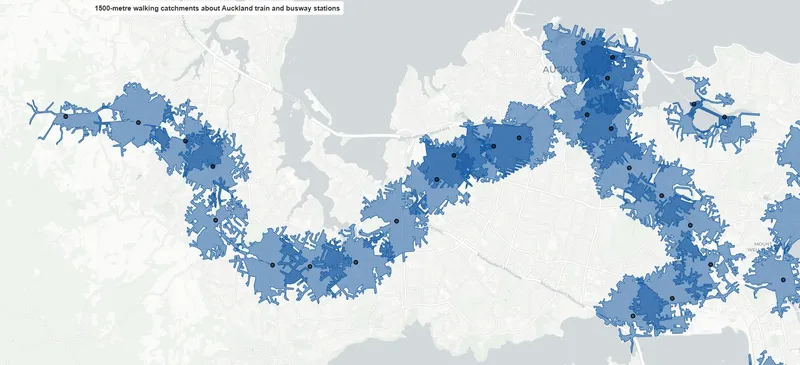
Lately though, the government has been asking the council to please stop taking the piss and actually allowing dense housing near the new train stations and rail lines it’s spent billions of dollars upgrading. Housing minister Chris Bishop has demanded that councillors like Fletcher allow at least 15-storey developments around stations like Kingsland and Maungawhau. Faced with the distressing prospect of actually following through on its compact city goals, the council has decided that outside of the city centre, the walking catchment for rapid transit is actually 800m.
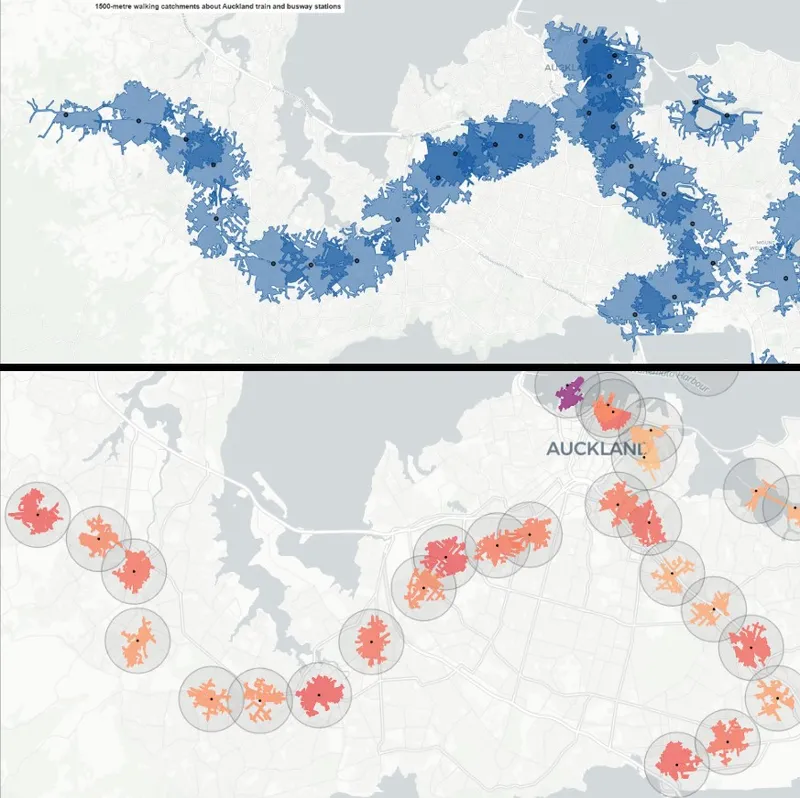
Even with that reduction in place, Fletcher, Churton and their supporters still aren’t happy. They worry about an “oversupply” of housing and make shows of concern about a collapse of our “suburban and cultural diversity”. But if the government is able to force Auckland Council to zone for an abundance of new housing, the most noticeable change to the city will be that its wealthiest, most well-connected suburbs are no longer an exclusive enclave for Fletcher, whose property holdings are so valuable she once famously told her colleagues she pays $5,000 per month in rates, or her similarly well-to-do constituents. That’s not a collapse of its cultural diversity. It’s an expansion. It’s not creating an oversupply of housing. It’s finally allowing it to be built in the places where people want to live. Underneath all this apparent altruistic concern for the fabric of the city, you can hear the faint but unmistakable sound of a familiar refrain: not in my backyard.
Hayden Donnell
Hayden Donnell is a senior writer for The Spinoff. He previously worked at RNZ, TVNZ and the New Zealand Herald, alongside other media companies that have since closed down or been renamed. His primary passions are local politics and the Big Fresh animatronic fruit and veggies.


