The little shits are coming from inside the House

Our classrooms aren’t the only places being disrupted by bad behaviour. (Image: Tina Tiller/The Spinoff)
Act wants to deal with the little shits in the classroom. Perhaps they should clean up the ones on their own turf first.
Paul Henry was typically blunt over what he saw as a pressing problem facing schools, as Act announced its plan to let teachers use “reasonable force” on students. “Let’s be honest, there are a lot of little shits in classrooms, and we need to address that if we’re going to lift education standards,” said the party’s new celebrity candidate.
Henry’s argument was that literally removing bad behaviour from classes would help our less faecally oriented children learn better. But the Post-Primary Teachers Association was confused. Its president Chris Abercrombie told RNZ he was “struggling to see what the problem they are trying to solve is”. He continued: “In my 20 years of being a teacher, and three and a half years as president of the PPTA, not one teacher has said to me, ‘You know what we need, Chris? The ability to drag a kid out of the classroom’. It’s not going to do a thing, it’s actually going to make it worse.”
Maybe Henry’s complaint was misdirected, but there is at least one important section of society where little shittery is rampant, destructive and harmful to the environment of the workplace. It’s actively impeding the ability of well-behaved people to perform well and limiting productivity.
I’m talking, of course, about parliament. The highest office in this land is riddled with disruptive behaviour and little appears to be being done to rein it in. Perhaps that’s what attracted Henry. The former broadcaster is no stranger to little shittery: he’s famous for mocking the former Delhi chief minister over her name on live TV, repeatedly mispronouncing it as “dick shit”, while adding that it was “so appropriate because she’s Indian, so she would be dick in shit walking the streets”. He also asked former prime minister John Key whether New Zealand-born governor-general Anand Satyanand was “even a New Zealander”.
That sort of behaviour would earn a child a trip to the principal’s office in even the most Steiner of schools and a good long suspension in most others. But in politics, it’s seen Henry lauded as a character and entertainer, albeit one with a little bit of an appetite for linguistic risk. “You can dislike his politics, you can envy his money, you can be appalled at some of his misjudgments as a broadcaster, but he is so damned likeable,” said the Herald’s Audrey Young in her analysis.
Henry is hardly the only aspiring parliamentarian to insult an ethnic minority or two, and he’s certainly not the most high-ranking. Just last week the foreign minister and former deputy prime minister Winston Peters told Green MP Lawrence Xu-Nan to “go home”, by which he presumably meant China rather than the actual home he’s lived in since 1994, New Zealand.
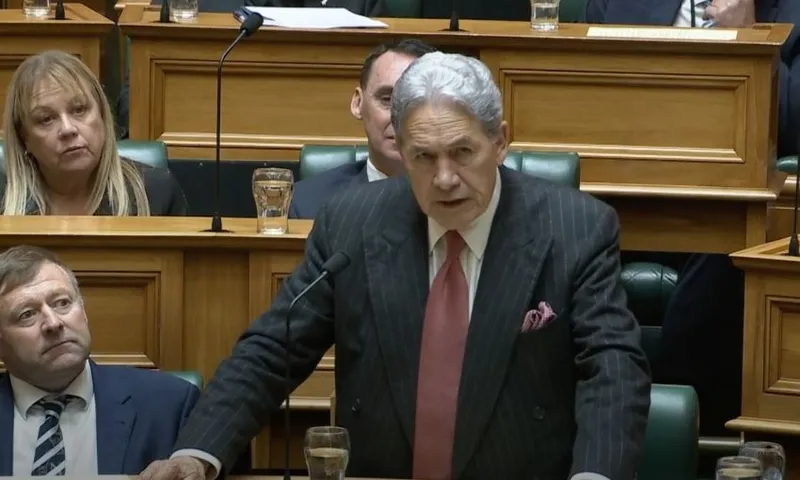
Not only did that disrupt the classroom, otherwise known as the parliamentary debating chamber, it caused a rift in our government and put the country’s relationship with its single biggest trading partner at risk. Peters’ racist comments – to use the words of literally every party besides NZ First – were not the extent of his little shit behaviour last week, but they were in keeping with a lengthening tradition. Last year, his deputy leader Shane Jones yelled “send the Mexicans home” at Green MPs Ricardo Menendez March and Francisco Hernandez, which must have been particularly confusing for the latter given he’s Filipino. In 2015, NZ First MP Ron Mark yelled “go back to Korea” at National’s Melissa Lee.
It’s enough to make you want to empower a teacher to physically remove them from the space so others can learn. But Peters and Jones are assured a trip back to parliament on current polling and Mark is trying to get back there after a self-imposed exile in local government. Thankfully Trevor Mallard has retired so it’s less likely he’ll get in another punch up with the former Labour MP, who was made speaker after the fight as a reward for his calm demeanour.
These are just notable incidents. Every single parliamentary debate is awash in insults, screaming and recriminations. A few years ago, then prime minister Jacinda Ardern was called a “stupid little girl” in the chamber by an MP who refused to fess up. A quick trip to the principal’s office may have shamed forth a confession but, sadly, a little shit removal policy wasn’t in place.
Sometimes the action moves out onto parliament’s steps and beyond, such as when Jones described potential Indian immigrants as a “butter chicken tsunami” on Reality Check Radio. But as schools always say, if you’re wearing the uniform, your behaviour reflects on them and you’re liable to face the consequences. Maybe the Beehive could learn a thing or two about those, too.
Of course this isn’t fair. The students who Act wants to physically remove from schools are children. They’re often subject to a variety of challenges at home, all of which are made worse by a languishing economy, high unemployment, out-of-control cost of living and the generally poor standard of our housing stock. They have reasons for behaving badly. Our politicians have no such excuses. They’re well-paid adults with access to what’s likely the most generous housing scheme on offer at any workplace. Act is telling us we need to deal with all the little shits in our classrooms. Perhaps they should look at cleaning up the ones on their own turf first.

Hayden Donnell
Hayden Donnell is a senior writer for The Spinoff. He previously worked at RNZ, TVNZ and the New Zealand Herald, alongside other media companies that have since closed down or been renamed. His primary passions are local politics and the Big Fresh animatronic fruit and veggies.


