From Peeni to the protest that wasn’t: The five political fires burning at Waitangi

Rawiri Waititi, Christopher Luxon and Peeni Henare (Images: Getty/NZ Herald)
The PM’s return was overshadowed by rumours swirling around a departing Labour MP, and a scaled-down protest revealed conflict between tangata whenua. There was no big scandal, but tension simmered below the surface at Waitangi.
Compared to the tensions inflamed last year by the treaty principles bill, this year’s Waitangi eve was a relatively tame affair – save for these five fires that may just keep burning until New Zealanders head to the polls in nine months’ time.
The Peeni Henare problem
Celebrations kicked off this week with news that shocked many, especially those who call Northland home: the resignation of Labour MP Peeni Henare. The former minister and his whānau are widely respected throughout Māoridom, particularly in the north. But in the wake of his loss in the Tāmaki Makaurau byelection last September, Henare said in a statement that he needed time to “focus on my family, my wellbeing and my whānau”.
With Labour hoping to end Te Pāti Māori’s hold over the Māori electorates, the loss of Henare could put a dampener on the red team’s hopes. Some Māori voters may question whether the party could have done more to retain its Māori talent, why its messaging wasn’t enough to attract voters in the byelection, and whether the party’s campaign focus on “jobs, health and homes” is geared enough towards uplifting Māori.
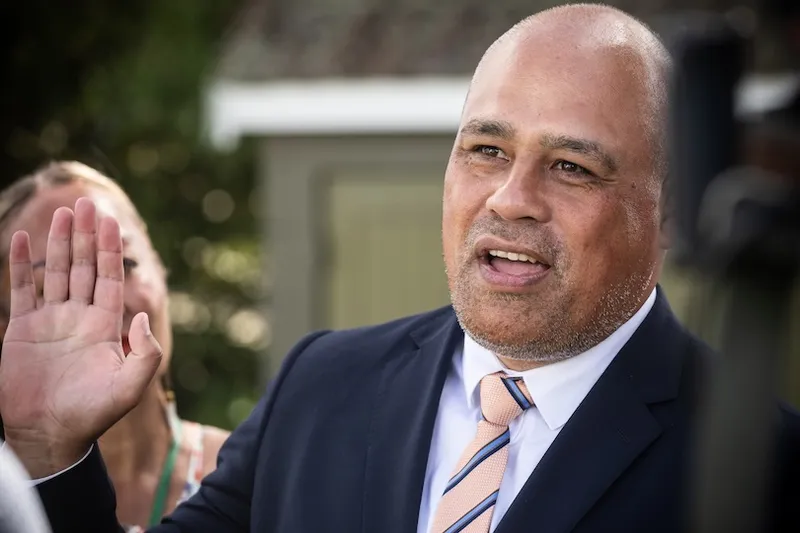
The Spinoff understands – by way of the kūmara vine – that tensions between Henare and the party’s senior leadership may have led to the former’s decision to move on from parliament. In late November, Henare was rumoured to be holding coalition talks with New Zealand First, something Labour Party leader Chris Hipkins denied. On Thursday, Hipkins continued to shrug off suggestions of a rift. “This was Peeni’s decision,” Hipkins told a media scrum of his MP’s departure. “Unless your heart’s in it, there’s no point in talking someone into running.”
On the flip side, Henare’s departure brings an opportunity for Labour to introduce some fresh talent into the fold. And the party has already been shopping around; during an interview with Herald Now last week, activist and retired boxer Dave Letele said he had received a call from Labour MP Willie Jackson asking if he would stand as a candidate in Tāmaki Makaurau this year.
A Labour-Greens alliance strikes back
Henare’s sudden retirement wasn’t the only Labour move that raised eyebrows this week. Party leader Chris Hipkins went hand-in-hand with Green Party co-leaders Chlöe Swarbrick and Marama Davidson on a press stand-up and walkabout on Tuesday. But there was one notable absence from this family portrait: Te Pāti Māori.
Despite the Greens arguably enduring more political scandals this term than Te Pāti Māori, Labour has made a clear statement about who they’d rather form a government with. But one area where there will be no playing nice is in the race for the Māori seats.
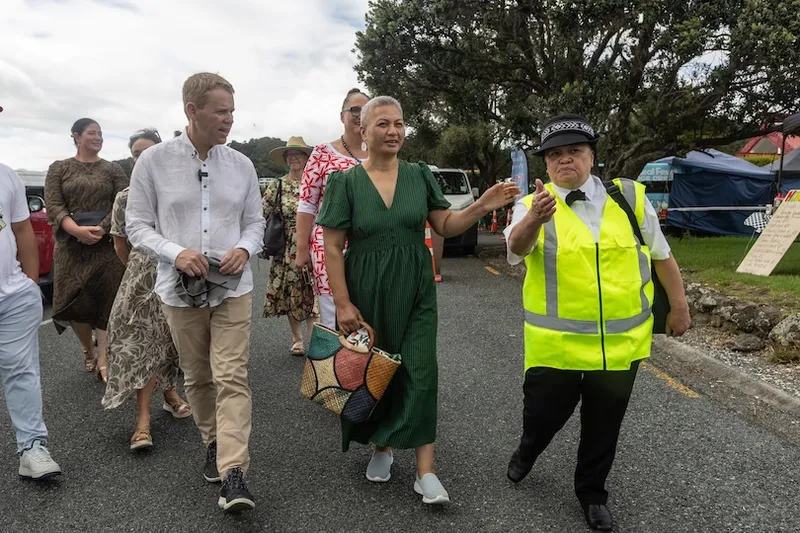
The Greens have laid out their intentions to run activist and former Te Pāti Māori lawyer Tania Waikato in Waiariki (Te Pāti Māori co-leader Rawiri Waititi’s seat), former Te Pāti Māori candidate Heather Te Au-Skipworth in Ikaroa-Rāwhiti (the only Māori seat currently held by a Labour MP, Cushla Tangaere-Manuel), and, again, current Green list MP Hūhana Lyndon in Te Tai Tokerau (held by sort-of-former Te Pāti Māori MP Mariameno Kapa-Kingi). All of those will be hard seats to flip, but the races will make for great entertainment.
Later on Tuesday, Te Pāti Māori co-leader Debbie Ngarewa-Packer shared a pointed post to her Instagram: “any govt that claims to work for Māori, should want to work with the only truly indigenous, truly Tiriti-centric party … not against it.” Waititi also addressed the apparent division on the left at the parliamentary pōwhiri, reminding his frenemies in red and green that polling has predicted they won’t be able to form a government without the help of Te Pāti Māori. Or perhaps another minor party could take the opportunity.
The prime minister returns
It might have been overshadowed by all the heckling, but prime minister Christopher Luxon’s return to the Waitangi Treaty Grounds this year was a significant move. Despite suggesting late last year that he would spend Waitangi Day elsewhere in the country, the high stakes of an election year – and after missing Rātana last month to visit weather-hit communities – seemed to be enough to bring Luxon back to Te Whare Rūnanga.
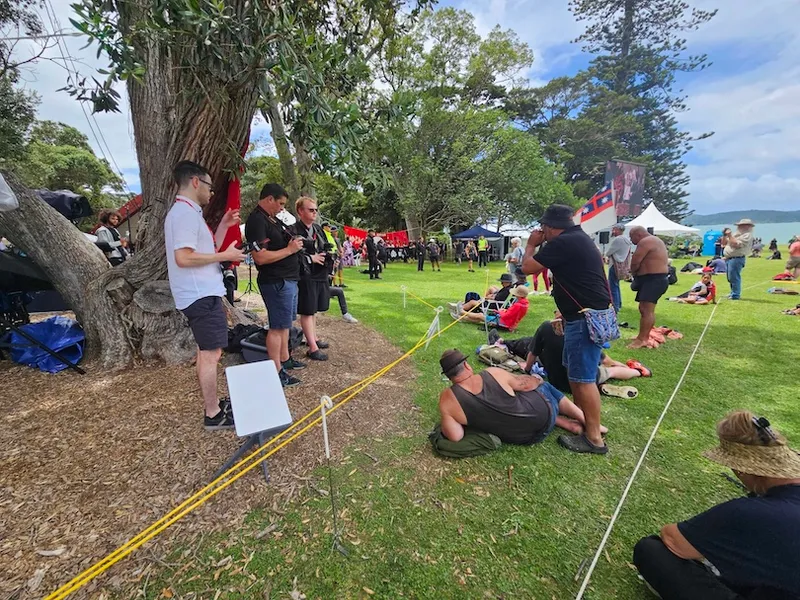
But those hoping to hear Luxon speak candidly on the state of Māori-Crown relations would have been disappointed. Rather than directly address concerns from haukainga speakers like Eru Kapa-Kingi who said Māori have felt “stabbed in the front” and unloved by the government, Luxon’s speech instead chose to highlight the treaty’s articles and remind the crowd of what each one says, just in case anyone forgot.
It was a lesson in treaty history, but not the one the crowd was hoping for. Despite amping up strides made in education and justice to improve Māori outcomes, glossing over points of hurt this parliamentary term – like the treaty principles bill, disestablishment of the Māori Health Authority, removal of treaty clauses from certain laws and cuts to Māori media and other institutions – would have been viewed by many mana whenua as ignorant and dismissive.
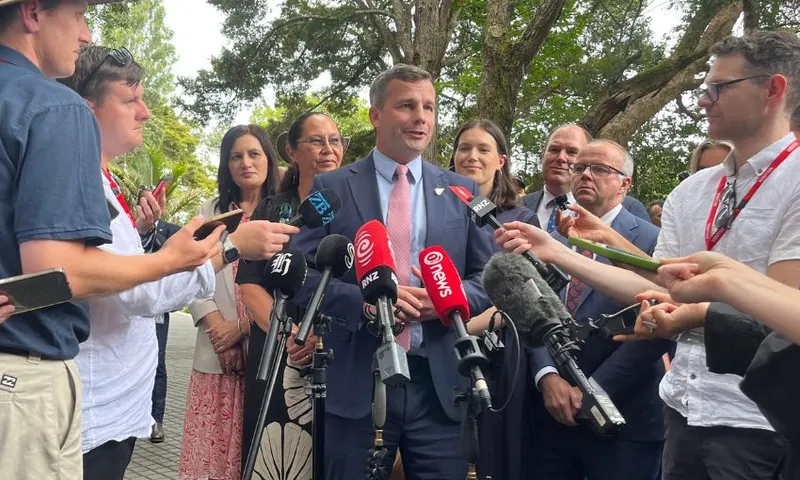
And comments made afterwards by Luxon’s deputy prime minister, Act Party leader David Seymour, wouldn’t have done much to change that perspective. “The whole government was there, listening respectfully to the Māori language and Māori custom, and one guy said we have no time for Māori,” Seymour said. “If they want to claim that we are somehow not respectful or have no love for Māori, well, I say give us a break.”
A botched protest
What was supposed to be a human-made chain blocking coalition MPs from entering Te Whare Rūnanga ended up being a standoff with mana whenua on Thursday. Protest action planned by activist Wikatana Popata and promoted by the Aotearoa Liberation League sparked some short-lived excitement before being shutdown by haukainga, who had to remind demonstrators who actually has the mandate to decide who does or doesn’t belong on the marae.
Protesters still showed up to the pōwhiri, only to be blocked by Ngāpuhi security, one of whom wielded an axe. The stunt raises an interesting predicament: how do Māori move forward together in the face of adversity?
Where some may see an opportunity for honest kōrero, others argue the mamae caused by the coalition requires Māori in leadership positions to take a stand to shut out the government. But sometimes breaking off a relationship to prove a point only leads to the other party relishing in their newfound freedom, never wanting to get back together.
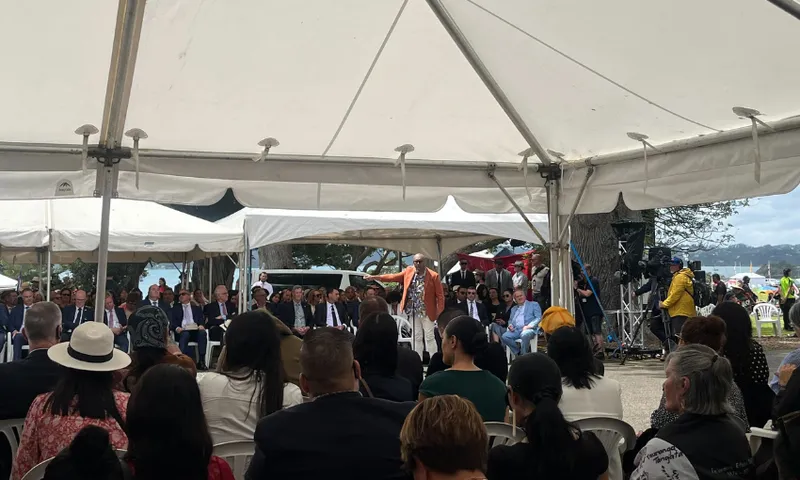
Māori-Crown – and Māori-Māori – relations remain tense
At the end of the day, relations between Māori and the Crown are as strained as ever. And the same can be said of the relations some Māori on the treaty grounds have with each other.
Te Pāti Māori – which was actually just Waititi, with Ngarewa-Packer, Oriini Kaipara and Hana-Rawhiti Maipi-Clarke missing in action – in particular stuck out like a sore thumb in the heart of Tai Tokerau, where their former MP Mariameno Kapa-Kingi serves as the local MP. Kapa-Kingi exercised her power on the paepae during a haka performed by Waititi and staffers, which saw Te Pāti Māori general manager Kiri Tamihere – Waititi’s wife and the daughter of party president John Tamihere – get right into the face of her son Eru Kapa-Kingi, prompting the older Kapa-Kingi to warn her to back off.
Earlier, Eru Kapa-Kingi had accused Te Pāti Māori of the same thing he accused Labour of: “milking mana Māori”. But with Seymour promising a return of the treaty principles bill, and Luxon equating equal outcomes to “socialism” (in, like, a bad way), there may be bigger problems this year for Māori to reckon with than inter-whānau issues. With a significant divide in Māori political opinion arising, it could just be another three years of the same old shit.


Lyric Waiwiri-Smith
Lyric is an award-nominated politics reporter at The Spinoff. She covers parliament from the press gallery, pens the weekly column One MP, One Pint and is endlessly curious about what makes our decision-makers tick. Off the clock, Lyric loves a live gig, a cold brew, and being a Wellingtonian (on a good day).


