Pacific profiles: Keeping I-Kiribati culture alive in Aotearoa

Photo: Geoffery Matautia
Made with the support of
The Pacific profiles series shines a light on Pacific people in Aotearoa doing interesting and important work in their communities, as nominated by members of the public. Today, we talk with Susan Afoa from the Auckland Kiribati Society.
All photos by Geoffery Matautia.
With fewer than 5,000 people of I-Kiribati heritage calling Aotearoa home, the community may be small – but it is vibrant, growing and engaged. The Auckland Kiribati Society Incorporated (AKSI) brings I-Kiribati people together through culture, dance, music, and the simple joys of hanging out. I caught up with Susan Afoa, a project coordinator at AKSI, to learn more about the group’s beginnings, its activities, and the connections bridging generations.
Mauri! Please introduce yourself and tell me about your cultural background.
My name is Susan Afoa, I’m a New Zealand-born I-Kiribati and Samoan woman. My mum came to Aotearoa in 1985, under one of the early seasonal worker schemes from Kiribati. She worked at Carter Holt Harvey, where she met my Samoan father. They fell in love, got married, and here I am! I’ve been part of the Auckland Kiribati Society Incorporated (AKSI) since childhood – that community has been at the centre of all my cultural learning. Currently, I’m the project coordinator for the group and a youth representative for the national Kiribati council.
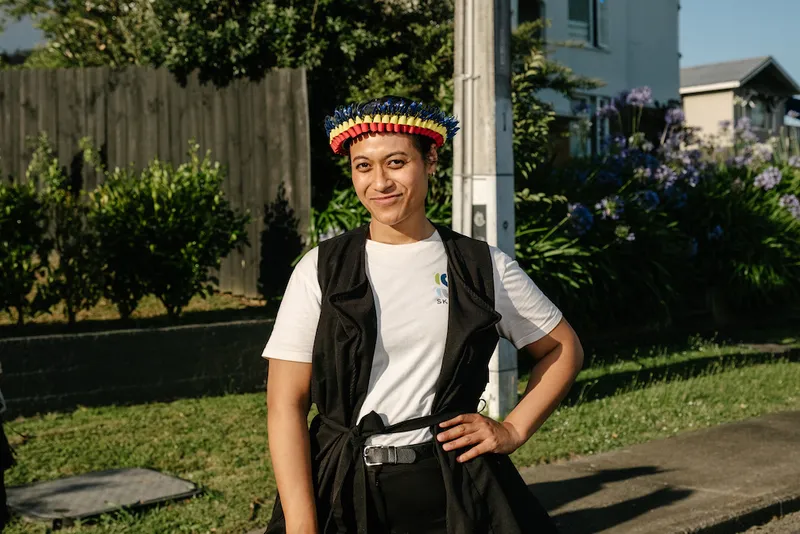
Tell me about AKSI – how did you get involved?
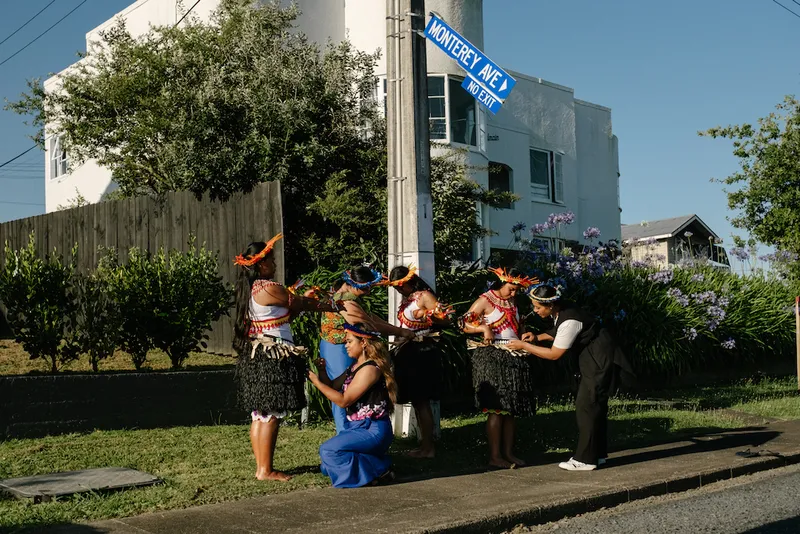
AKSI is a community organisation established in 2001. Its purpose is to maintain and uphold Kiribati culture among its members throughout Aotearoa, promoting the sharing and practice of Kiribati cultural values, traditional customs, and contemporary developments. I’ve been part of AKSI since its inception. Our hub originated in a garage under three units in Otāhuhu. I-Kiribati families rented the units, so there was always a base for people when they arrived in New Zealand. We’d all gather, sleep over, hang out, and run events. It was great because everyone was always speaking the language. There were only 10 families involved back then. I remember how excited we’d be for Kiribati Independence Day (12 July). We’d sing songs, perform dances and do so many activities. That was our hub for just over a decade. I have so many great memories from back then. Now, we’ve got over 100 members. There’s our main AKSI committee, and our youth committee – which was created so our youth could have some independence in organising and running their own events. We don’t have a permanent site anymore and will often meet in people’s homes or rent out a community hall for events and practices.
It goes without saying that AKSI plays a vital role in supporting the I-Kiribati community in Tāmaki Makaurau. But, from your perspective, what do you see as its success?
This group gives our people a sense of identity. My mum was, and still is, very staunch in her culture and wanted that pride to be instilled in me. It’s so easy nowadays for us to lose our cultural values, especially with our young people. There are so many things taking their attention. Through the group, I’ve seen a significant difference in my kids’ enthusiasm for speaking the language and learning about their culture. If we don’t keep them active and consistently engaged, then the traditions will be lost. As someone who has grown up through AKSI, being on the committee has helped me gain the trust of other I-Kiribati parents of my generation to also get involved and bring their children and families along.
What kind of activities does AKSI run?
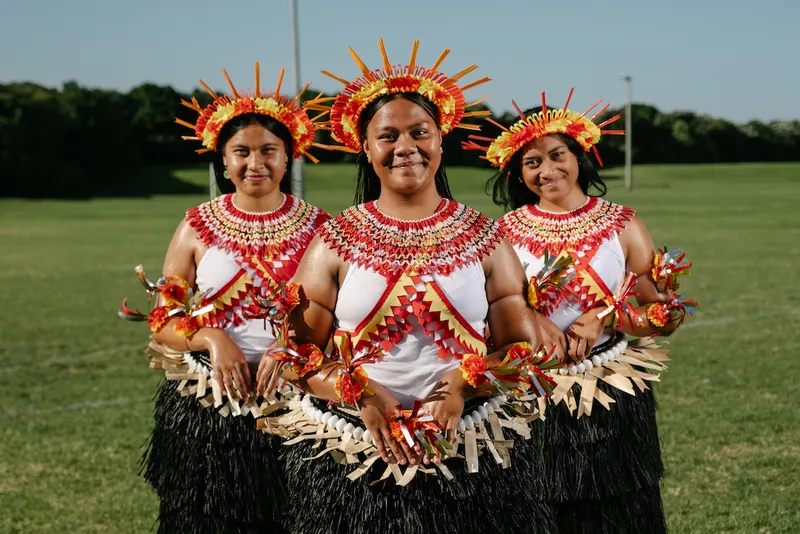
We have been on a bit of a hiatus since Covid and only rekindled in 2024. A highlight was in 2025 when we were invited to be part of the WIPCE (World Indigenous Peoples Conference on Education), and our youth performed in the nations parade. This was our first exposure on such an international scale. Our young people got to meet many Indigenous communities from overseas and share their I-Kiribati culture with great pride. Throughout the year, we also do cultural performances, youth days, picnics, and annual volleyball and basketball tournaments. We also host weekly social sporting events to keep the community regularly engaged. Looking forward, I’m keen to organise more workshops to get our youth work-ready; such as inviting I-Kiribati guest speakers from different career paths, hosting work-ready workshops, and governance workshops. I’ve noticed that people – both old and young – are getting much more comfortable attending our events, and that regular bonding is building such a strong community. As our elder generation holds a lot of our culture and traditions, we would really like to incorporate more workshops and teachings, and create the link between both our elders and youth, where knowledge can be shared and passed on for future generations to come.
I suspect there’d be many people in Aotearoa – even those of Pacific Island heritage – who mightn’t know a lot about I-Kiribati culture? What is something you’d like to share or a myth you want to dispel?
We’re a small Pacific island nation, we’re humble, but we have so much to offer. As some may know, climate change is a huge issue heavily affecting our island. Despite this, our I-Kiribati people show a lot of resilience and maintain their strong sense of humour and warmth. Another thing I would like to remind people is the pronunciation of our island Kiribati – it is not pronounced the way you see it. It is pronounced “Kiri-bas”, as the ti is like the letter s in the alphabet.
Could you discuss the intergenerational dynamics of AKSI?
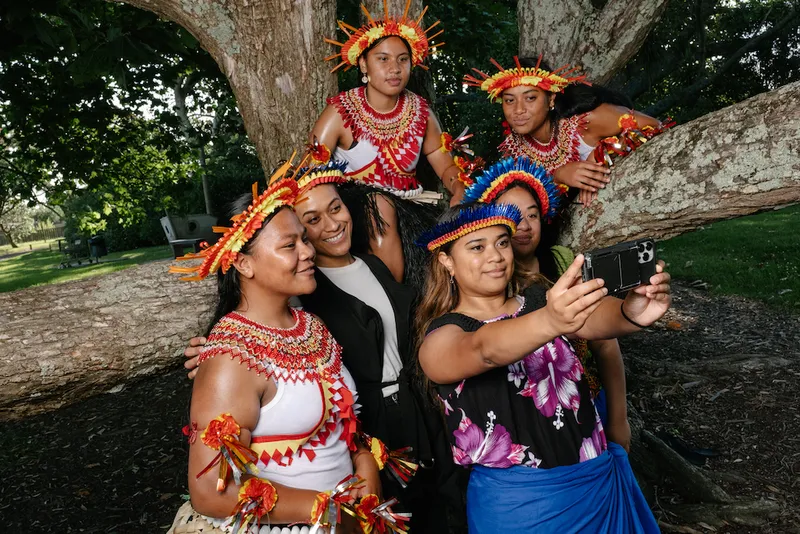
We never know when our elders will leave this earth, so it’s vital for our young people to be in community with them as much as they can. The intergenerational approach is hugely beneficial because our elders have the wisdom as many were born on the island. I’m always thinking about how we can best archive their memories, knowledge, and experiences to have as a resource. Because once it’s gone, it’s gone. Even though we’re a small population, each of our islands/villages are distinct with their own knowledge, culture and traditions. For example, the island I’m from, Tabiteuea, there’s things we do that my cousins from another village don’t. Additionally, some knowledge is protected and can only be passed down through a family line.
You mentioned that AKSI has a youth sub-committee so they could take a greater role in leading their own events. What inspired this?
The youth are our future and will be the ones retaining our cultural values and language. The younger generation are really good at fighting for what they believe in. Our role is to empower them to do that. And sometimes that can be hard in a cultural context when there’s such an overwhelming culture of respect – you know, elders speak, young ones listen. But what happens when there’s a clash? For me, my role is to help bridge those intergenerational dynamics and help them vocalise in a way that makes sense to the elders.
How can people get involved with AKSI?
If you’re I-Kiribati and would like to get involved in the community, or for those who are non-Kiribati and want to learn more about who we are or want to connect, please feel free to look us up on our community social media platforms and get in contact. A good start is to come to our annual independence day event. It’s lots of fun and that is where you will meet so many I-Kiribati from around New Zealand who gather to celebrate our culture, traditions and language. We have around more than 10 Kiribati communities nationwide and every community runs their own little events here and there.
This is Public Interest Journalism funded by NZ On Air.

Litia Tuiburelevu
Litia Tuiburelevu is a professional teaching fellow at the University of Auckland’s Faculty of Law, overseeing the Pacific law students’ academic programme. She teaches an elective course titled “Pacific Peoples and the Law: Critical Perspectives” and is also interested in film and photography.


