


Inside the race to win over the region that boasts the lowest rates increase, but a pretty high rate of local election blunders.
Why is Whanganui the best place in the world?
We now cross live to my colleague Hayden Donnell, who very recently was goading me on Slack to add Whanganui to my summer roadie. “It has all the things you need: a huge, slightly unsettling playground on the riverfront for kids, a rugged surf beach, and most importantly an elevator inside a hill that you can ride up and down for $2.50. Getting around is easy. The terrain is almost totally flat, meaning biking is an option for all but the most emaciated of legs. The new bus service, Te Ngaru The Tide, delivers regular crosstown trips. There are just enough great cafes and bars that you never have to search for something nice to eat or drink, but not so many that you’re paralysed by choice. The city is home to a thriving community of artists, whose creative juices are fuelled by a heady mix of cheap rent and cool venues and galleries.”
What is the contest?
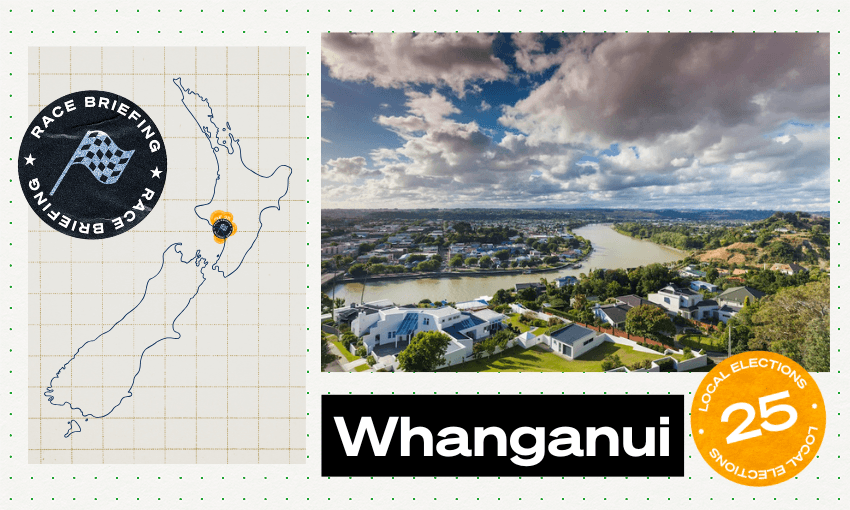
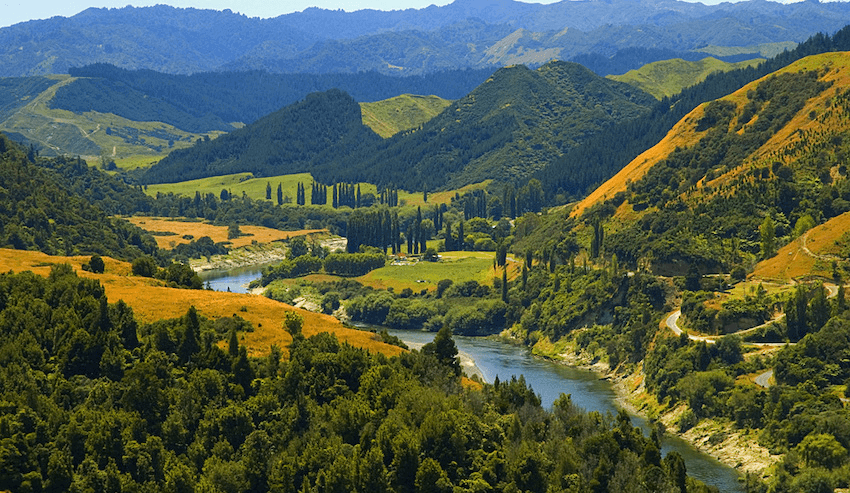
Boasting a current population of 48,900 (which is predicted to grow to over 52,000 by 2034), the Whanganui district stretches across nearly 2,400 square kilometres on the west coast of the North Island. The boundaries of the district are Ruapehu to the north, Rangitikei to the east and Taranaki to the west, with the Tasman Sea to its south. The lifeblood of Whanganui is the 290km Te Awa Tupua o Whanganui, the third longest river in the country and the first river in the world to be granted the same rights and powers as a legal person.
There are currently 23 people standing for the 10 spots in the Whanganui General Ward, including nine councillors looking to retain their seats. For the first time, people can vote in the Whanganui Māori Ward, which has two seats and five people standing. Four people are contesting the mayoralty including incumbent Andrew Tripe. There are also three community boards – Whanganui Community, Kai Iwi and Kaitoke – although two of them have the same number of candidates as there are seats, so not much excitement there. As with 41 other council elections, a referendum on the future of the Māori ward is also being held.
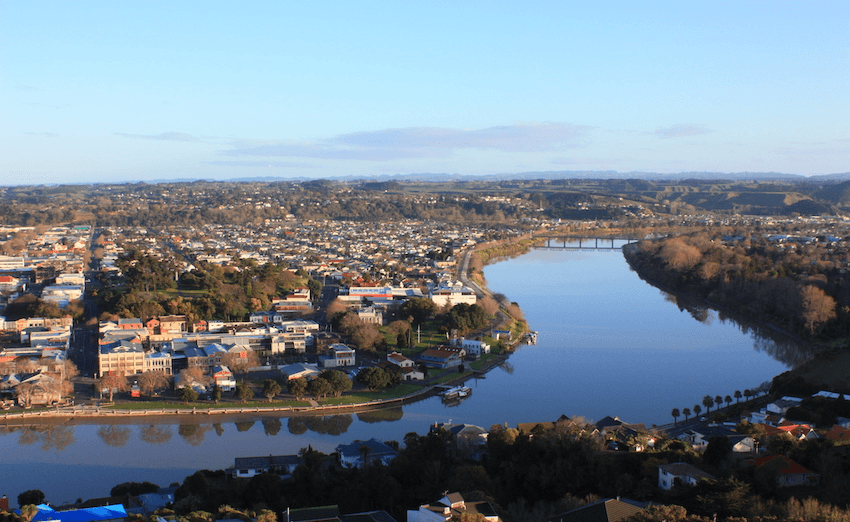
Overlapping with the district council is Horizons Regional Council, whose purview encompasses nearly 250,000 people and extends over 22,200km² of land – Ruapehu in the north, Horowhenua in the south, Whanganui in the west and Tararua in the east. There are two Whanganui seats on the Horizons Regional Council and four challengers vying for them.
Who is in the race?
Andrew Tripe, first elected mayor in 2022, is campaigning for another term. Most recently he made headlines for a “poorly judged” appearance at a Charlie Kirk vigil, in which he told the 150-strong crowd that the right-wing American influencer’s murder was “our call to act on what Charlie Kirk was doing, boldly”. He later apologised for the speech, claiming he knew little about Kirk’s views. “I went naively to an event I got invited to. I regret going,” he said.
Controversies aside, Tripe’s other big headline-grabber from his first term is Whanganui achieving the lowest rates increase in the country. “[It] didn’t happen by accident – it’s the result of a deliberate strategy to keep costs under control,” Tripe told RNZ in July. “Many of the savings are structural and will flow through to future years.” This sentiment is reflected in his re-election campaign: “We’ve made great progress. Let’s keep Whanganui moving forward.”
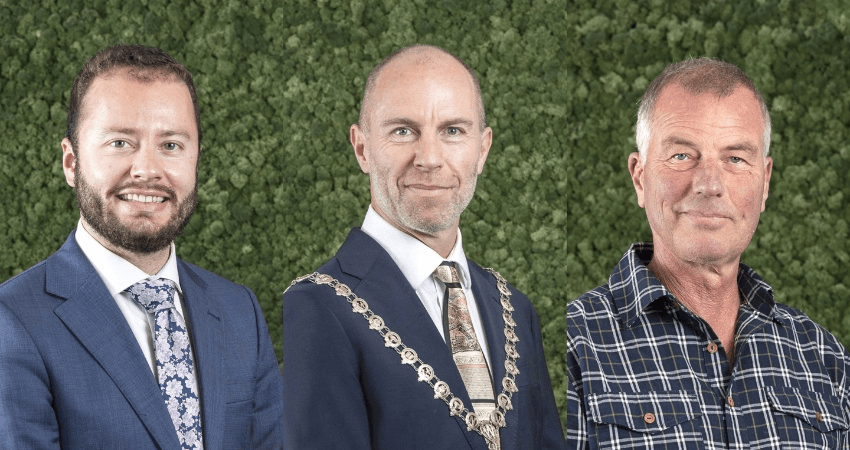
As for Tripe’s competition, there are a couple of current councillors in the mix. Three-term councillor Josh Chandulal-Mackay is campaigning on policies including establishing a youth hub in the central city, a Whanganui to Christchurch airline route, and an upgrade of the lower Victoria Ave block and riverfront. He told the Whanganui Chronicle he offers “decisive leadership” and that too many issues had been “discussed, debated, then relitigated later on” by the current council.
First-term councillor Peter Oskam, meanwhile, claims there is too much of a gap between elected members and council officers. “I want a much better relationship between the two and, if we’re all in the same waka, we can really move ahead,” he said at his campaign launch. Among his many, many policies, he told the Whanganui Chronicle he would have “happily supported” doubling the rates increase to bring down council debt, rather than paying off an additional $590,000 a year.
Rounding out the mayoral race is property investor and former firefighter Greg McPhee, whose interests are in “people, infrastructure, getting the youth to stay here and looking after the elderly”. Unlike Oskam, he wants to keep driving rates down. “I reckon I can get [the increase] to zero or better,” he told the Whanganui Chronicle. Curiously, McPhee hasn’t attended any meet the candidates events or put up any hoardings: “no billboards, no bulls***, let’s get on with it.”
McPhee is also running for one of 10 council spots, along with 22 other hopefuls (nine of whom are already sitting councillors). Long-serving councillors Jenny Duncan and Helen Craig, who have both been deputy mayors, are bowing out completely, with Duncan referencing “out of hand” social media abuse as part of the reason. As for Craig, she told the Whanganui Chronicle that after 12 years, “I no longer have the desire to continue.”
As for the rest of those in the running for council, there’s a really handy collection of summaries here along with short introductory videos from each candidate. We would be remiss not to mention the surprise appearance of Michael Organ, subject of many a Spinoff investigation and the subsequent David Farrier documentary Mr Organ. Despite being known for his militant car clamping, Organ is campaigning on free parking and the lowering of parking meter fees.
Despite the botching of the Māori ward candidate information being provided to voters, there is plenty to get stuck into about the five candidates online (also some great summary videos here). Activist Phil ‘Bear’ Reweti has been fighting for a place on council for over a decade and, if elected, says his priorities are infrastructure, protecting the awa and housing. Hayden Potaka’s priority is protecting the Māori ward. “This is about making sure decisions reflect the lived realities, aspirations and tikanga of our people,” he told the Chronicle.
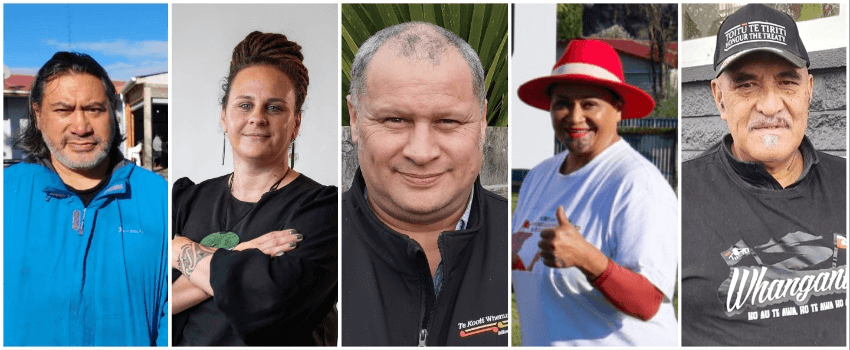
Kiritahi Firmin, leader of Kimiora Trust, is on her third attempt at getting elected in Whanganui. “We need to have champions to bring our people’s voices to the council table,” she told the Chronicle. Also championing representation is director of Tukua Storytelling Studio Julie Herewini, who told Awa FM that she is running “to do my part in progressing the wellbeing aspirations laid down by our tūpuna”. Geoff Hipango, kaitiaki of Te Ao Hou Marae, is campaigning on community empowerment, housing and genuine partnership with Māori.
What is at stake?
According to the latest Community Views Survey, Whanganui seems chuffed enough with itself. Satisfaction with local waste and recycling services increased from 41% to 62% following the introduction of kerbside recycling in 2024. Also on the rise is the attitude in Whanganui towards open public spaces, with 88% of residents having visited a park or playground in the last year and 75% of residents being satisfied with the overall maintenance and presentation.
That said, the survey found there remains room for improvement in relation to the cleanliness of public spaces and toilets, as well as concerns around safety and accessibility in the CBD. While 90% of people reported that they felt safe in the Whanganui CBD during the day, only 59% felt safe in the evening. People with disabilities and those aged over 40 were “significantly more likely to feel unsafe” in the CBD, with feedback including a rise in anti-social behaviour.
Housing is another urgent issue facing the region. A recent report found that Whanganui ranked 14th in the country for housing deprivation rates, with 2.6% of the population, or 1,212 people, considered severely deprived of housing. As outlined in the 2025 pre-election report, the region’s population is expected to grow to over 52,000 by 2034. To meet demand, the council has estimated that at least 1,000 new houses are needed over the next 10 years.
The region’s comparatively small rates increase has also been a huge focus this election. Incumbent mayor Tripe told RNZ that he expects “there will be opportunities to reduce the 2026/27 rates increase as well”. As mentioned above, his cordial challengers have diametrically opposed views to the issue, with Oskam happy to double the rates and McPhee reckoning he could achieve a rates increase of zero.
With the enormous $79.4m Sarjeant Gallery overhaul now completed – various challenges sent it $19.67m over budget – another big project on the boil is Te Pūwaha, the Whanganui Port Revitalisation Project, creating “a modern, purpose-built marine precinct” that appears to still be within its $50 million budget. The council is also currently working on a business case for replacing the Dublin Street Bridge, which connects Whanganui East and central Whanganui, although that could take two years to complete.
The race in a sentence?
Rates dominate the debate.
The nitty gritty
The Whanganui election is voted under the single transferable vote system. Voting papers were delivered between September 9 and 22; if your voting papers have not arrived you will need to do a special vote. The last day to enrol (for a special vote) is October 10. Your vote needs to be received by midday on Saturday October 11. Read more race briefings and other Spinoff coverage of the local elections here.