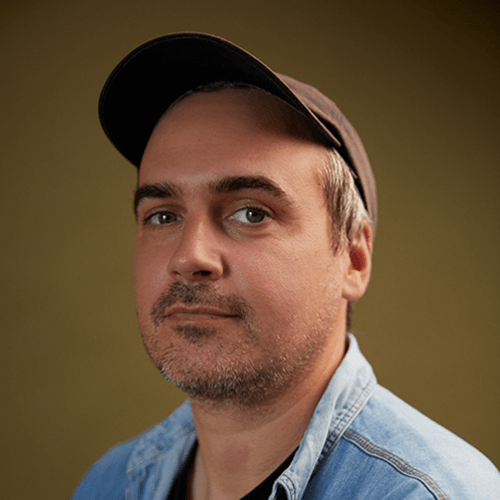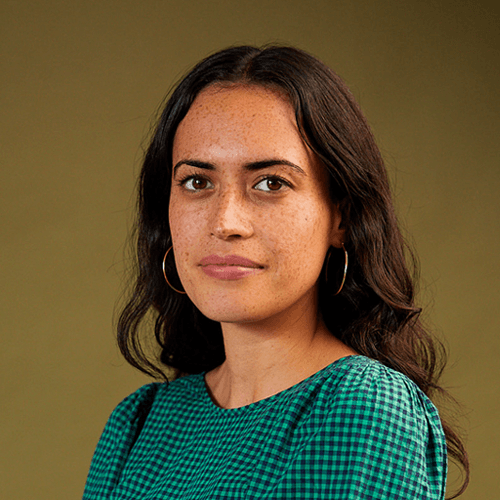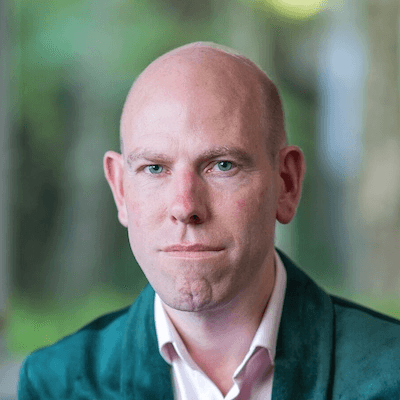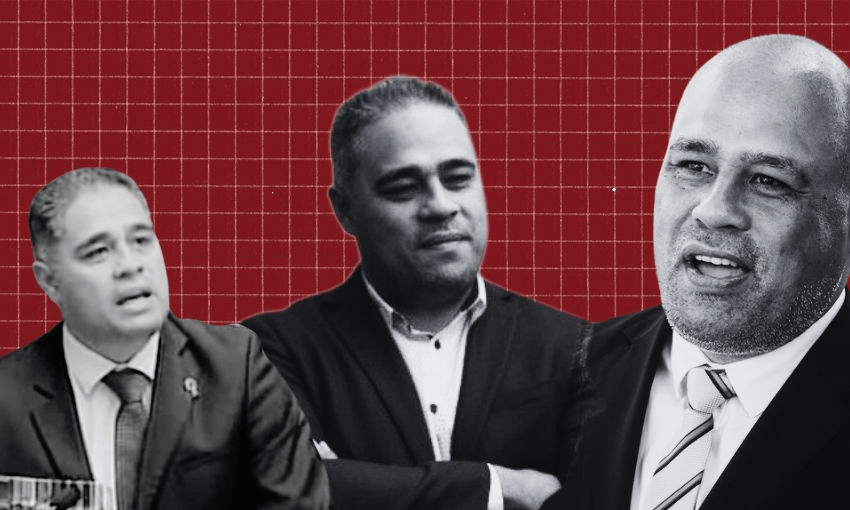



As Labour’s most senior Māori MP bows out of parliament, The Spinoff retraces the life and legacy of former minister Peeni Henare.
After 12 years as a member of parliament – half of which he spent as a minister – Peeni Henare is hitting the road. Today marks the final day in parliament for the man whose life was never destined to be ordinary. Before he was even born, Henare’s whakapapa set him on the path to a life of service and leadership.
Erima Henare, Peeni’s father, was a well-respected public servant and Ngāti Hine leader whose own father was Māori Battalion commander and National candidate James Henare. Sir James stood unsuccessfully in the Northern Māori seat five times between 1946 and 1963, and it was in the 1963 byelection that he lost by just 412 votes to his nephew, Labour’s Matiu Rata. Peeni honoured his grandfather’s legacy in his maiden speech as such: It “was the closest that the National Party ever came to winning a Māori seat, and long may that tradition continue.”
And before James there was his father, Taurekareka, who held the Northern Māori seat with the Reform Party from 1914 until 1936, and remained in parliament from 1936-1938 after the party merged with the United Party to form National. Taurekareka was also known as Tau; not to be confused with former NZ First minister and National MP Tau Henare, who is Peeni’s cousin.
For Peeni, coming from a lineage of great Māori leaders meant a childhood spent hui hopping with his father and twin brother, Tatai. As a toddler, Peeni attended a kōhanga reo run by his grandmothers in Ōrākei, the same place where he watched his mother, Te Hemoata Henare, learn how to weave. She later became a renowned master weaver, and Peeni became one of the first MPs of the kōhanga reo generation.
Even after the Henare whānau moved to Los Angeles in 1984, when Erima was made consul-general, the family home remained rooted in te ao Māori and they only spoke te reo there. Peeni was thrown into American culture through his schooling in Brentwood, though, and his early LA roots are why he is “such a tragic Lakers fan”.
After the whānau returned to Aotearoa later in the decade, Erima became the first chief executive of the newly established Māori Language Commission. In 1989, James Henare died, and Peeni recalls as a nine-year-old watching “thousands and thousands descend on Ōtiria and Motatau marae” to honour his grandfather. His legacy was a “really tough shadow” in Henare’s early life – “it didn’t help that your teachers were like, you should know better, your grandfather [is] Sir James Henare”.
Peeni inherited the public service streak, joining the Ministry of Social Development in 2001 and staying there until he ran for parliament in 2014. Between 2008 and 2011, he worked as a commentator for Māori Television, providing te reo Māori commentary for the 2011 Rugby World Cup. He also served as the chairman of Ruapekapeka Pā Trust and Ngāti Hine Forestry Trust by the time he put his hand up to run for Tāmaki Makaurau 2014.
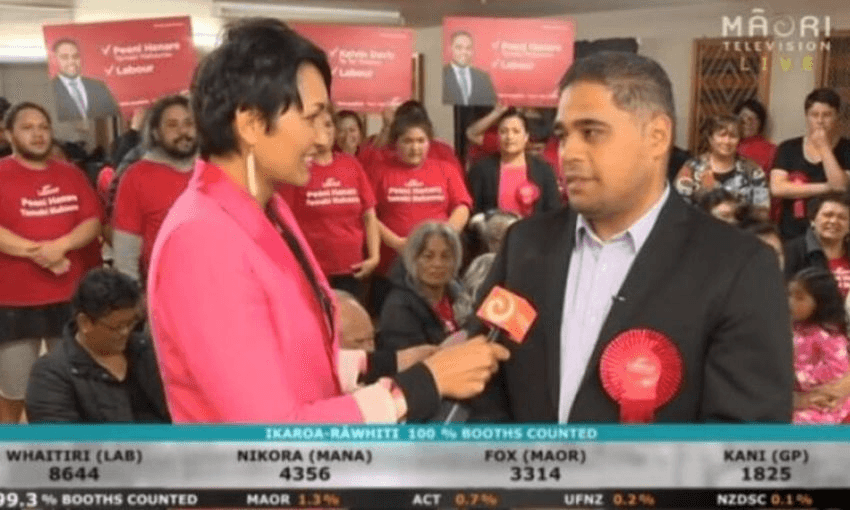
Peeni Henare had previously considered a political career up north, but Tāmaki Makaurau was his true home. The seat’s incumbent, then-Māori Affairs minister Pita Sharples, had stepped down as co-leader of the Māori Party a year earlier amid conflict over his leadership and it was time for new Māori leaders to enter parliament, he thought. The Māori Party had tried to poach Henare in the past, but advice from his father to listen to his heart took him to Labour. Some whānau members who stayed true to the family’s National roots “choked on their tea” upon hearing the news.
Henare’s race against Māori Party candidate Rangi McLean was tight, with the two polling neck-and-neck in the lead-up to the September election. It ended up a monumentally bad year for Labour, which crashed to its worst defeat since 1922, but a great one for Henare, who won Tāmaki Makaurau back for Labour after three terms of Sharples (Labour’s John Tamihere held the seat for a single term after it was created in 2002).
‘I had fewer knives in my back’
Peeni Henare was sworn into parliament that October, but he missed the ceremony to see his father, who had recently suffered a heart attack, in hospital. When Henare delivered his maiden speech in the House a week later, he looked up to see his father had discharged himself from the hospital to watch the moment from parliament’s public gallery.
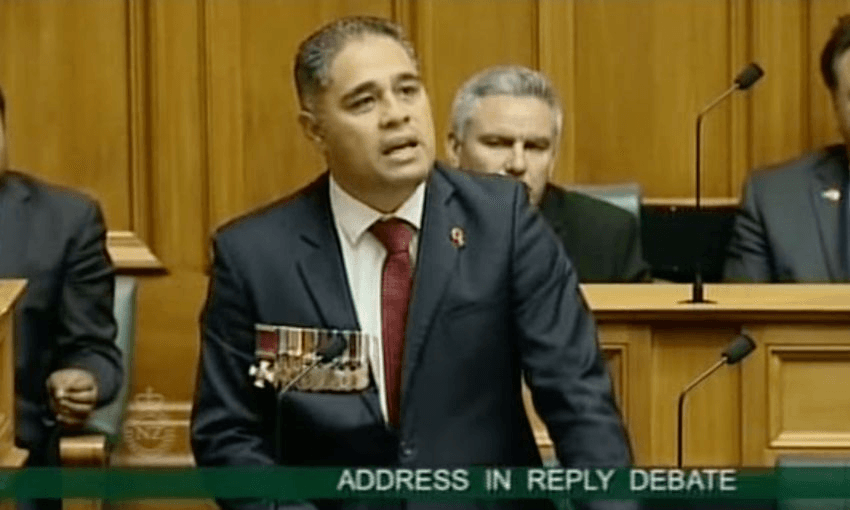
Back then, in his mid 30s, Henare “had hair, I was about 12kg lighter, I had fewer knives in my back”, he said in an interview with The Hui over the weekend. His maiden speech retraced the steps his tīpuna had already made in parliament, his hopes for Tāmaki Makaurau and his wish to “free te reo Māori from the shackles of institutional racism”. After that first week on the job, he drove up north from Auckland and debriefed his father, who reckoned his son was prime minister material, on how it all went.
In those early days as a backbencher, when your only job was “not to make a fool of yourself”, Henare struck up a friendship with the other youngest member in the caucus: Jacinda Ardern. The duo were only two months apart in age, and they “laughed, we joked … I struck a really good relationship, one that I carry on and continue with today”. He wouldn’t have imagined his friend would be prime minister in three years time: “She caught lightning in a bottle.”
Less than seven months after Henare was sworn into parliament, his father passed away in May 2015, at age 62. After his father’s tangi at Ōtiria marae, attended by hundreds, Henare returned to his work desk to find a copy of the Hansard on his desk, highlighted at every mention of Erima’s name by then-prime minister John Key. “He wrote a note and he said, ‘Let this be a testament to your father’s legacy and contribution to this country. Aroha nui, John Key.’”
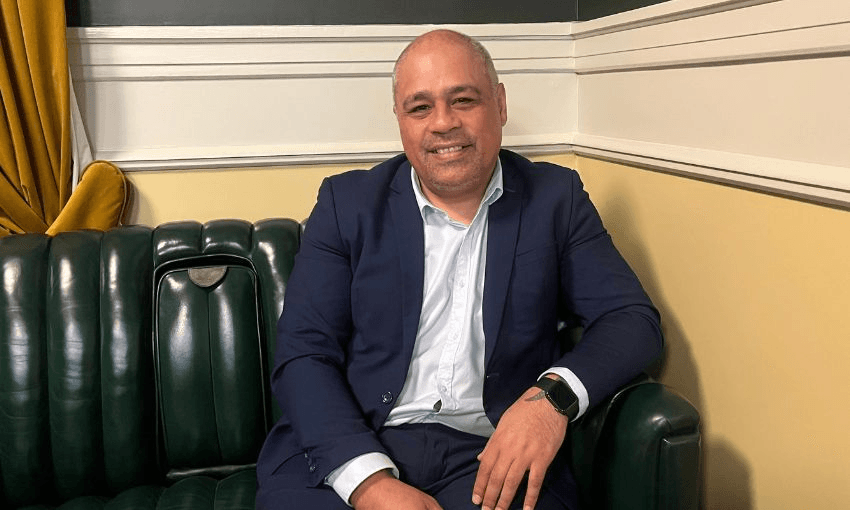
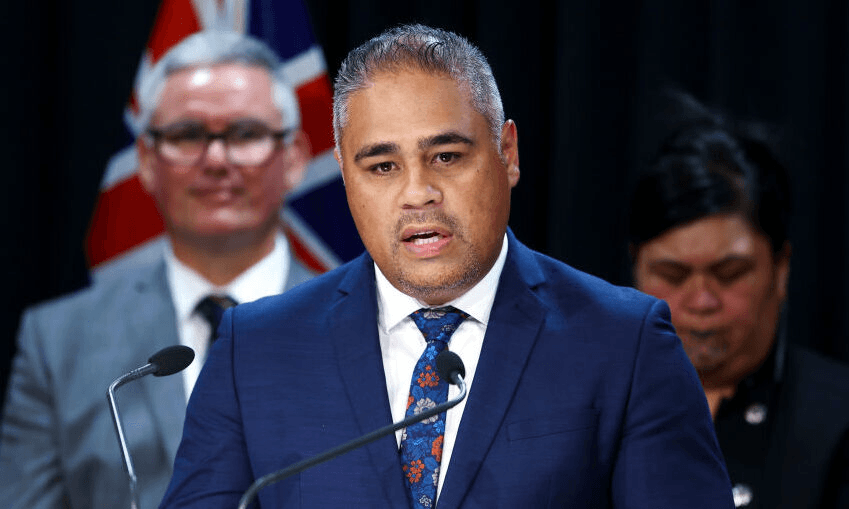
Peeni Henare was always an easy-going MP. He enjoyed a manu in the parliament pool, a run around on the field with the parliamentary rugby team (he was once “cut in half” by former All Black Rodney So’oialo) and kina left in his fridge by security guards. In his second term in 2017, while still a relatively junior MP, Henare was made a minister outside cabinet with the Whānau Ora portfolio. “We looked towards breaking barriers across silos in public sectors to make sure that, when somebody needed help, their entirety was served,” he’d later say of the role.
The rising star picked up the civil defence portfolio in 2019, and was in the role for all of six months before the Whakaari/White Island eruption. Henare was at the airport, having just visited flooded communities on the West Coast, when he checked his phone, and saw the island had blown. He turned to talk to his private secretary Stefan Weir, who had dashed onto the airstrip to stop an airforce plane, convinced the pilot to pick them up, then the prime minister in Wellington, and head to Whakatāne to visit the island.
After riding the red wave of the 2020 general election, Henare was made defence minister. His grandfather’s connection to the Māori Battalion gave him a “particular fondness” for the army. But it was his role as associate health minister – with a particular focus on Māori health – that Henare was best known for, and remains most proud of.
It became a major focus as the pandemic arrived and vaccines needed to be rolled out, particularly for Māori communities. Henare also worked towards building Te Aka Whai Ora (the Māori Health Authority), and “yes, I feel sad, but I don’t hold any grudges” about its disestablishment by the current government, and his former family doctor, then-health minister Shane Reti.
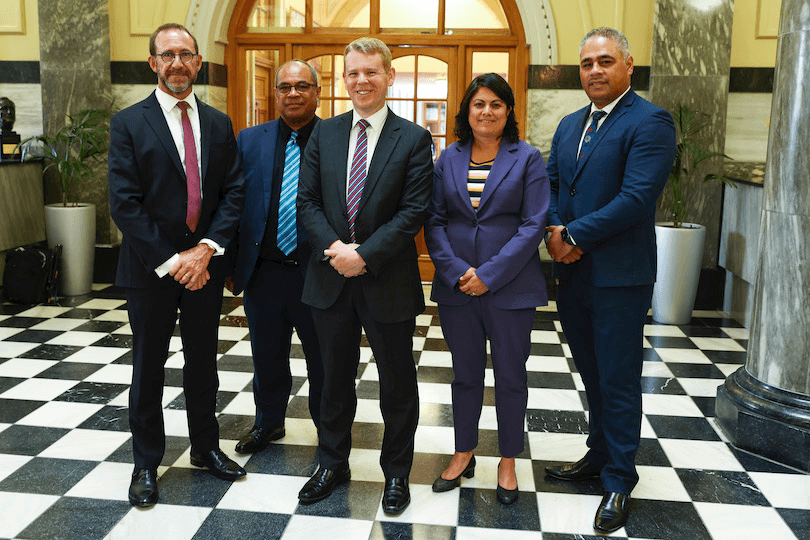
By 2023, the tide had changed. Ardern departed – “I only found out hours before the announcement” – and Henare lost his defence portfolio to Andrew Little. There were talks among Labour’s Māori caucus, which boasted big names like Kelvin Davis and Kiri Allan, to put one of their MPs up for the big job, but they eventually threw their support behind current leader Chris Hipkins. Despite pressure from friends and family to go for the top job, Henare doesn’t regret “not putting my hand up”.
At the general election that year, Labour got a “hiding”, Henare lost the Tāmaki Makaurau seat to Te Pāti Māori MP Takutai Kemp, and Labour was back on the opposition benches. The spotlight was on Henare again in 2025, following Kemp’s passing in June and a subsequent byelection in which he battled it out with broadcaster-turned-candidate (for Te Pāti Māori) Oriini Kaipara.
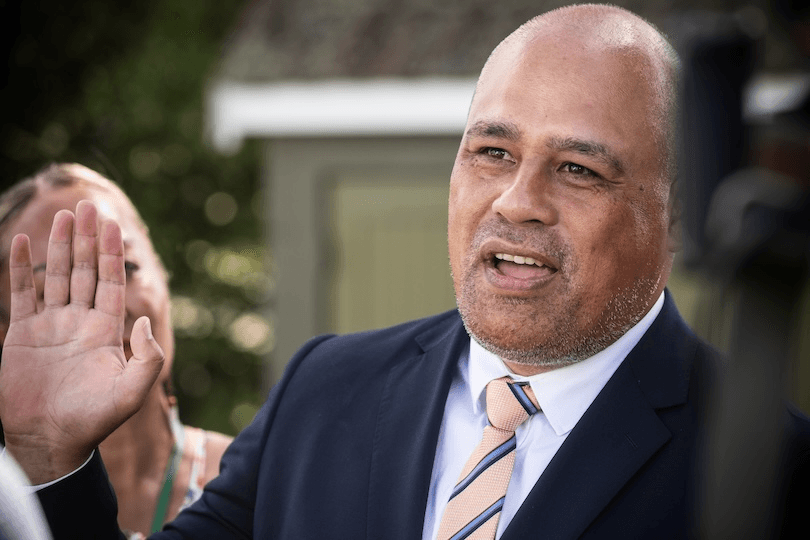
Despite a “bro and sis” camaraderie between Henare and Kaipara, the race was marred by a few ugly moments. Te Pāti Māori had criticised media treatment of Kaipara, their messaging of being the only party deserving of a Māori seat seemed to stick and MP Tākuta Ferris fell out with his co-leaders after criticising an image of Labour Party volunteers. In the end, Kaipara won, and conversations behind closed doors supposedly shifted from Henare leading Tāmaki Makaurau to leading Labour.
That December, Hipkins was forced to deny rumours of Henare having secret coalition discussions with NZ First. By the time parliamentarians returned from the summer break and headed up north to celebrate Waitangi Day, Henare announced he’d be throwing in the towel, to focus on “my wellbeing and my whānau”. Rumours from the kūmara vine suggested rifts between Henare and the party’s senior leadership also played a role in his decision to leave.
‘I suspect that I won’t be the last Henare to stand in this House’
When Henare delivered his valedictory speech on Wednesday, it was to a crowd of some of the crème de la crème of Ngāpuhi, including Pita Tipene, Waihoroi Shortland, Julian Wilcox and Eru Kapa-Kingi. Henare was tearful as he remembered his father and acknowledged his wife: “For too long, my dreams have been your dreams. It is now time for your dreams to be our dreams.”
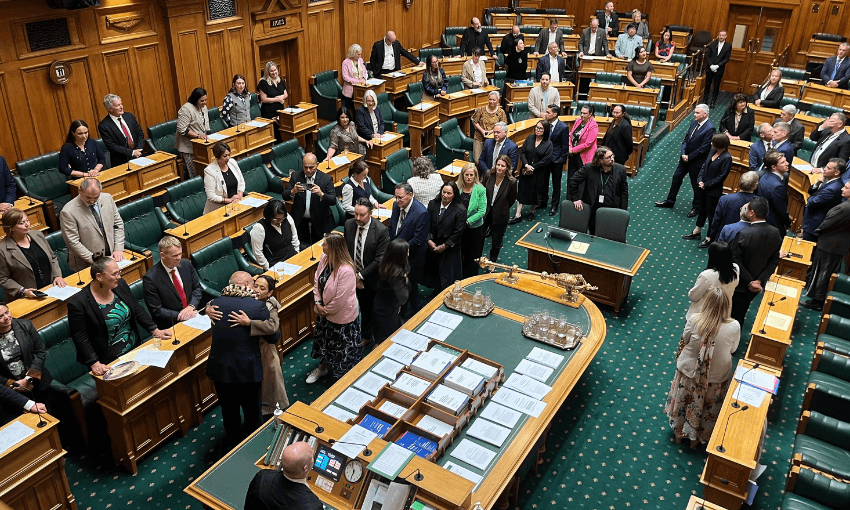
Where to next? Henare has made no secret of his desire to see Ngāpuhi reach a treaty settlement, and while he’s refrained from prematurely assigning himself the chief negotiator role in those talks, he’s keen to do whatever Ngāpuhi needs of him. “Let’s get my feet back on the ground up home, let’s hear what the people have to say,” Henare said. “Service leadership.”
For now, he’s “riding the rollercoaster of emotions” and looking forward to waking up on Monday at a reasonable time, and not looking at the news. Once he gets through the hangover of his leaving drinks, of course. And while batting away suggestions from reporters that he’d be back, Henare laid down the one thing that might make him consider a return – if Copperfields, the parliament cafe, changes its menu.