Clean drinking water is an essential need. Will the new RMA put it at risk?

When the tap opens, do you trust what comes out? (Image: The Spinoff)
A decade ago, failures led to thousands getting sick from contaminated drinking water in Hawke’s Bay. Now some fear the forthcoming replacement for the Resource Management Act is ‘loosening the safety net’.
Drinking water is a fundamental requirement for good health; everyone drinks water, every single day. In New Zealand, that drinking water comes out of the tap, and the expectation is that it will be free of parasites, bacteria or chemicals that could make you sick.
The cleanliness of drinking water is regulated by Taumata Arowai, the Water Services Authority, which monitors and reports on drinking water standards. Beneath that, councils are responsible for providing clean water, which comes from lakes, streams and rivers or groundwater, before it is treated. Water policy is also affected by the Ministry for the Environment and the Ministry of Health. Some people, especially those in rural areas, get water through private suppliers using a well or bore.
Among the numerous pieces of legislation regulating water quality are rules around consenting for commercial activities. Does a particular activity – construction, mining, new farms – impact the source of freshwater that ends up in our taps?
A team of researchers at the Public Health Communications Centre at Otago University recently published a briefing examining the language in the two bills proposed as replacements for the soon-to-be-repealed Resource Management Act (RMA). “There are many intersections between the health of water and the health of people,” says Marnie Prickett, a research fellow and co-author of the briefing. “There’s so much upheaval that people might not see the holes in drinking water provision.”
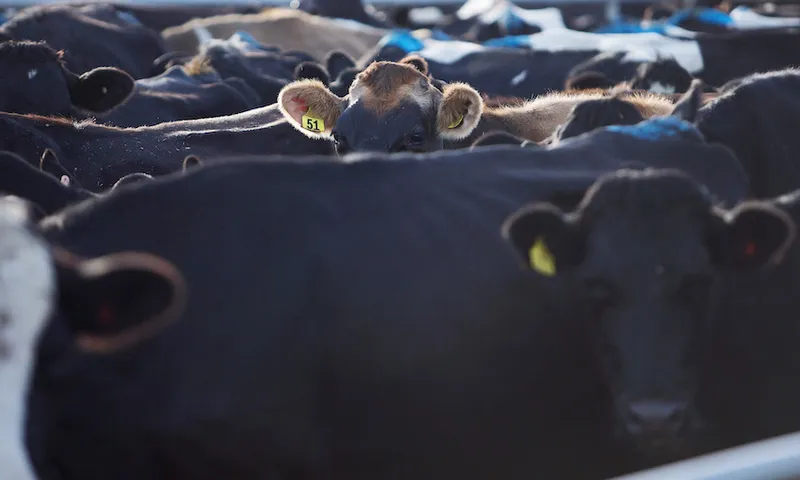
When drinking water is contaminated, the results can be disastrous. In 2016, 5,500 of Havelock North’s 14,000 people got sick with campylobacteriosis from unsafe drinking water, with two bores contaminated by sheep faeces the likely cause. Forty-five people were hospitalised, and three died. A subsequent inquiry emphasised that water sources – like lakes and rivers – need to be safe. “The water we draw out of the environment needs to be at a high standard, so treatment facilities aren’t the only barrier between people’s health and the wider environment,” Prickett says.
A particular line in the inquiry’s report stood out to her: “Protection of the source of drinking water provides the first, and most significant, barrier against drinking water contamination and illness.” As she and colleagues pored through the hundreds of pages of the Natural Environment Bill and the Planning Bill, the two bills set to replace the RMA, they looked for language about drinking water.
The 2020 National Policy Statement on Freshwater Management (NPS-FM), which sits under the RMA, is underpinned by the concept of Te Mana o te Wai. This sets out a clear hierarchy of requirements around freshwater, where ecosystem and human health have to be placed before commercial activities affecting water. “Every regional council must give effect to Te Mana o te Wai,” it states. The new bills weaken the language, Prickett says. Instead of “must give effect”, the consenting authorities “must have regard to” how the proposed activity could impact drinking water. “To me, what it’s doing is loosening the safety net, which means pollution can get through,” Prickett says.
Minister responsible for RMA reform Chris Bishop has told RNZ that “claims that the reforms represent a backtrack on drinking water protection overlook the fact that the policy landscape has changed significantly since the Havelock North outbreak; many of the recommendations of the Inquiry have already been implemented, most notably through the establishment of the regulator Taumata Arowai”. Prickett, however, remains concerned that the monitoring provided by Taumata Arowai is not equivalent to true protection of water sources.
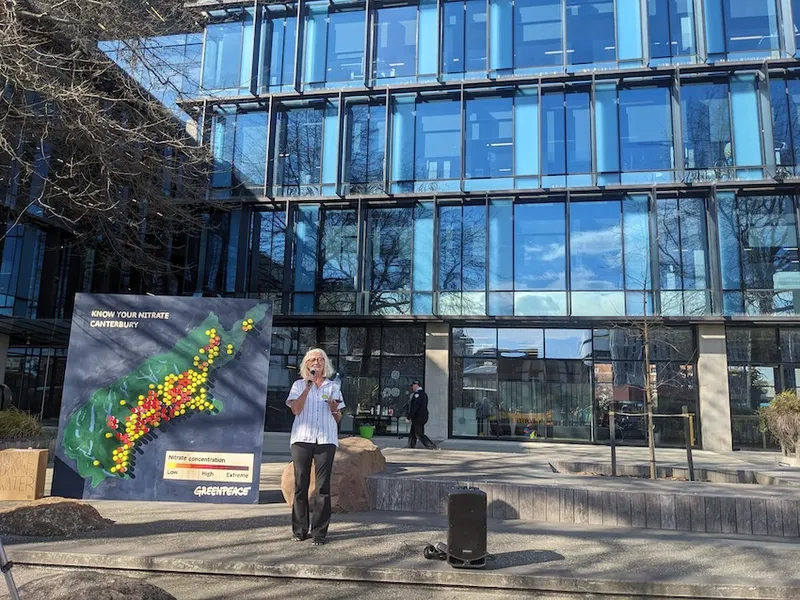
New Zealanders are already experiencing commercial activities being prioritised over the safety of drinking water, Prickett says. Research by Earth Sciences New Zealand analysed drinking water sources in rural New Zealand between 2022 and 2024. It found that 5% of samples exceeded the highest allowable amount of nitrates; 43% of samples had at least half the maximum nitrate levels.
The highest rates were in Canterbury, Southland and Waikato. “In Canterbury, irrigation is a commercial interest – it raises land values and allows different kinds of farming,” Prickett says. Canterbury is also a hotspot of nitrate contamination of groundwater, primarily as a result of intensive dairy farming: 15,000 more cows were approved in Canterbury in the six months to July 2025 after provisions in the NPS-FM that effectively blocked dairy conversions were lifted. Environment Canterbury officially declared a “nitrate emergency” in September 2025.
The question of making drinking water safe is particularly urgent because of how many councils are struggling to manage their water assets already, Prickett says. The current absolute failure of the Wellington Moa Point sewage treatment plant and recent discharges of sewage into Lyttelton Harbour emphasise that. “For generations we haven’t invested in wastewater, and that has implications for drinking water,” she says. While the wastewater and drinking water pipes shouldn’t be confused, the systems are connected.
For instance, the 2023 cryptosporidium outbreak in Queenstown was likely caused by human faecal matter in the source water of Lake Wakatipu, although it couldn’t be ascertained whether the source was a boat, a failure in the wastewater network, or from swimmers or other lake users. At least 62 people got sick and a boil water notice was in place for several days.
As well as the proposed RMA replacements, drinking water sources will also be affected by other changes to local government. The responsibilities of regional councils will be folded into city and district councils by 2027. “This is an urgent issue to solve now, but there’s all this messy legislation and confused responsibilities,” Prickett says. There was a warning in the Havelock North inquiry: “As time passes, knowledge of the circumstances of the August 2016 outbreak will fade and its immediate impact will be lost. The inquiry views express recognition as essential so that the protection of drinking water sources remains front and centre and visible in future.” A decade later, Prickett is concerned that urgency has been lost.
What won’t change is the fact that every day, every person in New Zealand needs clean water. “There is nothing that will limit your day-to-day life more than not having access to drinking water,” Prickett says. “It should support our lives, not be something we always have to worry about in the back of our minds.”

Shanti Mathias
Shanti is a contributing writer at The Spinoff with a focus on Christchurch and the South Island. Email her at shanti@thespinoff.co.nz


