Why 1997 is a good year for Christopher Luxon

Jenny Shipley and Winston Peters in parliament in August 1998, with the coalition on the brink. Photo: The Dominion/AFP/Getty
One of the most compelling reasons for National to resist temptations to roll their leader ahead of the election has its object lesson 28 years ago, writes Toby Manhire.
Do you hear echoes in politics today from the early 90s? Christopher Luxon does. At the end of 2024, the prime minister said: “This generation of political leadership has had to relearn the lessons of 35 years ago, which is, if you let government spending get out of control … then [you] drive into domestic inflation, then drive up interest rates, then put the economy into recession for the last three years.”
As a student of political history he may find crumbs of solace in those years. After all, even after the pain of the cuts contained in the 1990 mini-budget and the 1991 mother of all budgets – cuts more severe than anything Luxon’s coalition has enacted – Bolger’s government was re-elected, albeit with the landslide of 1990 reduced to a grain of sand in 1993.
And Bolger – so warmly eulogised following his death last month – was, as one of his nine children observed at the funeral, “for periods, a deeply unpopular politician”. So unpopular that, 15 months into office, he was polling so poorly a Labour MP applied to have his preferred prime minister polling – just 7% – entered into the Guinness Book of Records as a world low. Fortunately for Bolger, Radio New Zealand found a lower example, in Japan. Unfortunately for Bolger, another poll would later put him at 6%.
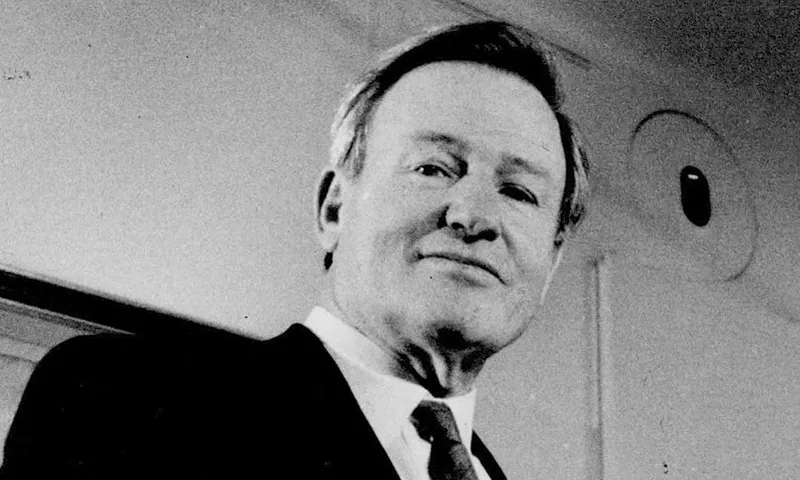
In any case, it all makes Luxon’s ratings, if hardly something to brag about, look OK; he’s never sunk south of 19%.
But as he faces bursts of speculation around the chances of a leadership spill, there is another lesson from the fourth National government that offers Luxon succour. It comes from a later episode, in the third term. And, oddly enough, this example from history might even make his relative weakness a strength.
Let me explain. The last time a prime minister was rolled by their own caucus in New Zealand – and the only time it has happened since MMP was introduced – was in 1997. As detailed in the podcast Juggernaut 2: The Story of the Fourth National Government, Jenny Shipley and a small team of supporters expertly plotted out Jim Bolger’s off-ramp under the guise of what they called “the Te Puke Bypass Committee”, adroitly named to attract zero curiosity.
For the most part, the coup was smooth – on return from a European trip, Bolger was informed that the numbers were there, that the fait was accompli. A transition was negotiated that would see him stand down after attending Apec and he would go on to an appointment as New Zealand’s ambassador in Washington DC.
The bump in the road came from another quarter: Winston Peters and New Zealand First, the support party in New Zealand’s first MMP coalition. Peters had been notified at the 11th hour, rather than consulted in any meaningful way. He was “very, very unhappy”, Bolger told us earlier this year when we spoke to him for the new season of the podcast.
The leadership of a party, of course, is a matter for that party. Then as now, there is no formal role, let alone power of veto, for coalition partners. As a member of the negotiating team in 1996, Jenny Shipley was alert to the importance of that principle. “I made sure, in that process, that individual political parties had total autonomy around how they would determine who their leaders were and how that voting process would occur and who they needed to consult,” she told me earlier this year. “Not only on who was the leader, but who would be appointed cabinet ministers from those coalition parties.”
Peters nevertheless thought it was a breach, at a minimum, of the spirit of coalition. At the time he said: “We are in a new environment of MMP, and these matters would be appropriate for discussion with both or all coalition partners in that environment. That’s what happens abroad. That should have happened here as well.”
After some days discussing internally how to respond, New Zealand First recommitted to the coalition, but the wheels began to wobble almost immediately. Peters clearly felt this was not what he had signed up to. Before long, the coalition broke apart after Peters walked out of cabinet over the sale of Wellington airport shares. Shipley cobbled together a government that held until 1999, but it hardly helped efforts at re-election.
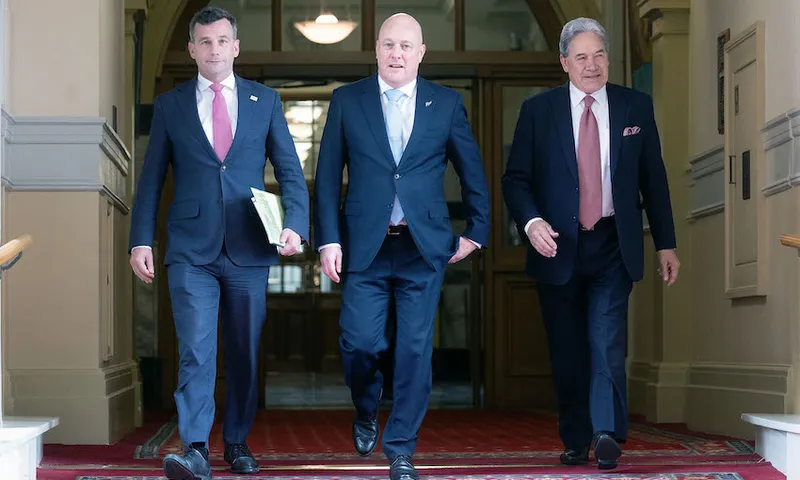
In 2025, senior MPs in the National Party must know all this. The assertive energy of their two – two! – coalition partners at the cabinet table is obvious enough. The leader of the New Zealand First Party in 2025 seems remarkably similar to the gentleman leading the New Zealand First Party in 1997. And the leader of the Act Party is hardly docile. It would be brave to the point of foolhardy for the National Party to move to replace its leader and accordingly the prime minister without securing air cover from Messrs Peters and Seymour.
And here there’s another wrinkle. Both Winston Peters and David Seymour have achieved something remarkable, almost unheard of, in MMP governing coalitions: both of their parties are gliding comfortably above the 5% threshold with a year to the next election. That could be because they’re running the permanent campaign. It could be because they’ve worked out precisely where their constituencies sit. But it could also be something to do with the relative unpopularity of the prime minister.
If Luxon were replaced by someone new and it didn’t work, their prospects of returning to power would likely fall. If, on the other hand, it did work, and a new prime minister delivered a polling surge – both personally and for the National Party – that could be at the smaller partners’ expense. Not to mention the risk that a different leader might be less indulgent of their need to regularly flex their political muscles. Given all of that, how would it be to their advantage to mess with the status quo?
So while there are a number of reasons that rolling Luxon ahead of the election is unlikely – including the risks of instability and the lack of an obvious (and obviously popular) challenger – another, equally compelling argument against a coup has its object lesson in 1997: just how would the tail – no, make that the tails – of the coalition thump?

Toby Manhire
Toby Manhire is editor-at-large at The Spinoff. He loves to cast a pod, whether it's Gone By Lunchtime, At Large or Juggernaut. He is a former editor of The Spinoff and has worked as a journalist in NZ and the UK since the last millennium.


