The rate of online abuse directed at public-facing women is taking a human toll. Alex Casey talks to an Auckland tech expert claiming to have the solution.
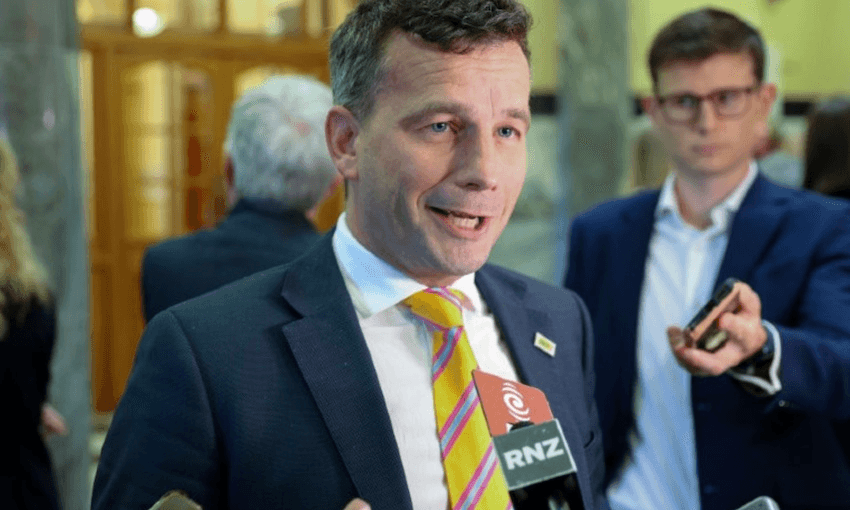
Towards the end of her term as Wellington mayor, Tory Whanau had experienced so much online abuse that she found it difficult to leave the house. It wasn’t just the onslaught of gendered insults like “bitch”, “slut”, “tart” and “slag” – largely fuelled by false rumours spread by her own colleagues – but the use of racist slurs like “hori” “jungle bunny” and “waka blonde” that took a significant toll. “My mental and physical health had reached a low point,” she tells The Spinoff. “In the lead up to the [2025] election, I was vomiting from stress.” Whanau wasn’t seeking reelection as mayor in that election, but stood unsuccessfully in the Te Whanganui-a-Tara Māori Ward.
Auckland-based technologist Jacqueline Comer has been working at the intersection of politics, tech and gender violence for over a decade. In 2020 she launched Parity Bot in New Zealand, a form of AI programmed to respond to toxic tweets sent to women candidates during elections, created by her Areto co-founders by Kasey Machin and Lana Cuthbertson. “Any time they were tweeted something horrible, our bot replied with something positive,” she says. During New Zealand’s 2020 election, Parity Bot picked up over 200,000 abusive tweets aimed at women candidates.
Jacqueline Comer, co-founder of Areto
While Parity Bot helped raise awareness of online abuse towards women in the public sphere, it also highlighted the pre-existing biases in the technology. “We realised it was missing a lot of gender microaggressions, because it hadn’t been trained to find them,” Comer says. “And that’s because the people who were training the AI were not looking for it, which means we’re just going to keep repeating those biases.” Examples included more subtle microaggressions like calling Jacinda Ardern “Cindy” or Canadian MP Catherine McKenna “climate Barbie”.
After examining and refining the systems of Parity Bot, Comer then joined as a co-founder of Areto, a content moderation system that connects directly with social media platforms including Facebook, Instagram, Youtube and TikTok. “As soon as your account receives a comment on anything that you’ve posted, our system grabs it, analyses it, and then makes a decision on it based on how you’ve set up your own community standards,” she explains. If the comment is deemed unacceptable, it will then be “hidden” from everyone except the person who posted it.
Launching in 2020, Areto has since been used by people in politics, sport and entertainment around the world as a safeguard against online abuse. One such user is Tory Whanau, who ran Areto on her social media accounts during her campaign for the Māori Ward in 2025. Over a single month, the platform flagged 71.5% of her Facebook comments as abusive, arriving at a rate of one abusive comment every 10 minutes. “It’s a shocking percentage,” says Comer. “Especially for those New Zealanders who still think our political discourse is still relatively kind and tame.”
On Tory Whanau’s Facebook, 71.5% of the comments were abusive
For Whanau, it wasn’t just about removing “a significant layer of stress” for herself while campaigning, but also protecting her staff members. During the worst of her online abuse, she says her staffers “bore a significant burden” in having to moderate the abusive comments manually. In 2025, a social media content creator for Golriz Ghahraman and Tory Whanau wrote about how nothing could have prepared him for the online abuse: “I began to feel physically ill. Shaken by what I was reading, wrung out by the threats of violence I was seeing.”
Comer says the “dangerous” rate of online abuse is becoming untenable for human moderation. “It is at a point where a person actually can’t keep up – never mind that they shouldn’t because of the damage to their mental health – but the volume means they actually can’t.” Her concern is that it will continue to chase women and gender diverse people out of the politics. “We are losing politicians who don’t want to run again, which means that we’re losing experience,” she says. “It will be weird if the only ones left with institutional knowledge are the white men.”
Reflecting on two and a half years of sustained “violent, racist, misogynistic, and defamatory” abuse, Whanau says there is no doubt her online experience influenced her decision to leave politics. “At the time, I felt worn down by it. But ultimately, it has had a significantly positive impact on my resilience and strengthened my commitment to systemic change,” she says. “Online abuse is not inevitable. It is a design problem, which means it can be redesigned. And if we want diverse leadership, we have to make participation safe.”























SocietyApril 20, 2026
Social media is a hellscape for public-facing women. Could AI hold the solution?
The rate of online abuse directed at public-facing women is taking a human toll. Alex Casey talks to an Auckland tech expert claiming to have the solution.
Towards the end of her term as Wellington mayor, Tory Whanau had experienced so much online abuse that she found it difficult to leave the house. It wasn’t just the onslaught of gendered insults like “bitch”, “slut”, “tart” and “slag” – largely fuelled by false rumours spread by her own colleagues – but the use of racist slurs like “hori” “jungle bunny” and “waka blonde” that took a significant toll. “My mental and physical health had reached a low point,” she tells The Spinoff. “In the lead up to the [2025] election, I was vomiting from stress.” Whanau wasn’t seeking reelection as mayor in that election, but stood unsuccessfully in the Te Whanganui-a-Tara Māori Ward.
Whanau’s experience isn’t an isolated one. Last month, Brooke Van Velden revealed she had received messages so threatening that she had reported them to the police. Following Golriz Ghahraman’s resignation from politics in 2024, then-Green party leader James Shaw revealed that Ghahraman had received “continuous threats of sexual violence, physical violence, death threats” while in parliament. Analysis of the online vitriol towards Jacinda Ardern showed that she faced between 50 and 90 times more abuse than any other high-profile figure.
Auckland-based technologist Jacqueline Comer has been working at the intersection of politics, tech and gender violence for over a decade. In 2020 she launched Parity Bot in New Zealand, a form of AI programmed to respond to toxic tweets sent to women candidates during elections, created by her Areto co-founders by Kasey Machin and Lana Cuthbertson. “Any time they were tweeted something horrible, our bot replied with something positive,” she says. During New Zealand’s 2020 election, Parity Bot picked up over 200,000 abusive tweets aimed at women candidates.
While Parity Bot helped raise awareness of online abuse towards women in the public sphere, it also highlighted the pre-existing biases in the technology. “We realised it was missing a lot of gender microaggressions, because it hadn’t been trained to find them,” Comer says. “And that’s because the people who were training the AI were not looking for it, which means we’re just going to keep repeating those biases.” Examples included more subtle microaggressions like calling Jacinda Ardern “Cindy” or Canadian MP Catherine McKenna “climate Barbie”.
After examining and refining the systems of Parity Bot, Comer then joined as a co-founder of Areto, a content moderation system that connects directly with social media platforms including Facebook, Instagram, Youtube and TikTok. “As soon as your account receives a comment on anything that you’ve posted, our system grabs it, analyses it, and then makes a decision on it based on how you’ve set up your own community standards,” she explains. If the comment is deemed unacceptable, it will then be “hidden” from everyone except the person who posted it.
Launching in 2020, Areto has since been used by people in politics, sport and entertainment around the world as a safeguard against online abuse. One such user is Tory Whanau, who ran Areto on her social media accounts during her campaign for the Māori Ward in 2025. Over a single month, the platform flagged 71.5% of her Facebook comments as abusive, arriving at a rate of one abusive comment every 10 minutes. “It’s a shocking percentage,” says Comer. “Especially for those New Zealanders who still think our political discourse is still relatively kind and tame.”
For Whanau, it wasn’t just about removing “a significant layer of stress” for herself while campaigning, but also protecting her staff members. During the worst of her online abuse, she says her staffers “bore a significant burden” in having to moderate the abusive comments manually. In 2025, a social media content creator for Golriz Ghahraman and Tory Whanau wrote about how nothing could have prepared him for the online abuse: “I began to feel physically ill. Shaken by what I was reading, wrung out by the threats of violence I was seeing.”
Comer says the “dangerous” rate of online abuse is becoming untenable for human moderation. “It is at a point where a person actually can’t keep up – never mind that they shouldn’t because of the damage to their mental health – but the volume means they actually can’t.” Her concern is that it will continue to chase women and gender diverse people out of the politics. “We are losing politicians who don’t want to run again, which means that we’re losing experience,” she says. “It will be weird if the only ones left with institutional knowledge are the white men.”
Reflecting on two and a half years of sustained “violent, racist, misogynistic, and defamatory” abuse, Whanau says there is no doubt her online experience influenced her decision to leave politics. “At the time, I felt worn down by it. But ultimately, it has had a significantly positive impact on my resilience and strengthened my commitment to systemic change,” she says. “Online abuse is not inevitable. It is a design problem, which means it can be redesigned. And if we want diverse leadership, we have to make participation safe.”
More Reading