Who decides the New Zealand government?

The deciders.
The answer is far more complex and multi-faceted than you might imagine.
It’s commonly held that governments are elected by the people. In a direct, literal sense, that’s true. But in a deeper sense, it’s hogwash believed only by dunces and blockheads. By the time voters arrive at the ballot box, they’ve already been subjected to an array of influences, all of which have colonised their brains like parasites entering a zombie snail through its eyestalks.
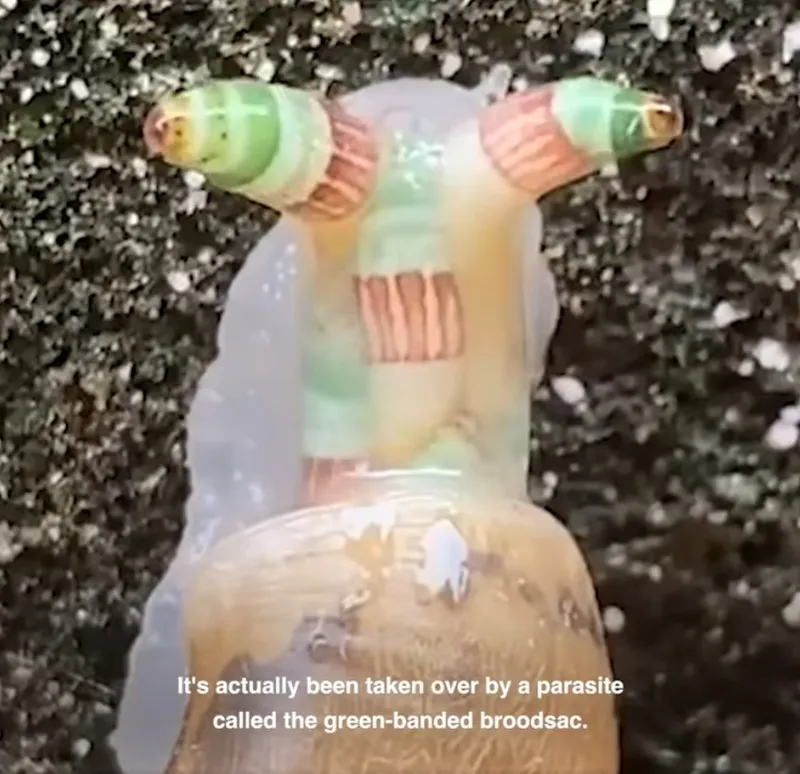
Invisible hands interlock with theirs as they reach down to place a tick next to what they believe to be the party of their choosing.
Voters: 10%
MMP is meant to be a simple system. People cast a party vote and parliament gets arranged according to their preferences. The system appears to have a simple power behind it: voters. They do have a role in deciding the government, but it’s small. Just as with Kiwi onion dip, MMP’s simplicity belies its complexity, starting with how the system delivers disproportionate power to a single ageless golem who draws his lifeforce from the electoral corpses of the enemies he’s outlasted.
Winston Peters: 15%
There’s only been one majority government under MMP, and it spent its entire time in office freaking out about the situation.
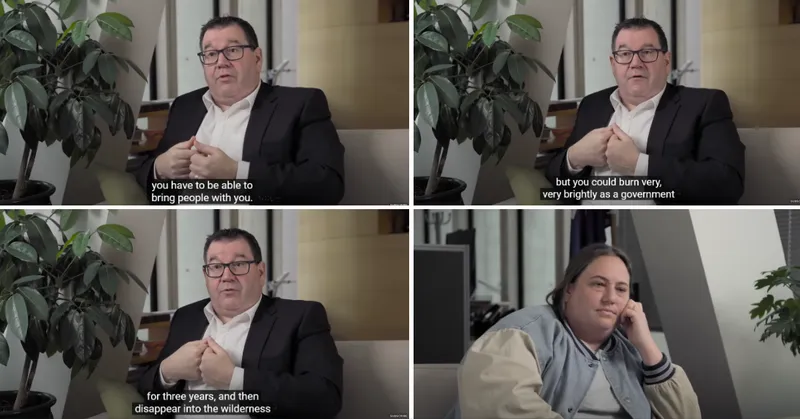
All the others have been cobbled-together alliances and many have been built on a single common denominator, Winston Peters. Thanks to his ability to resist sicking up in his mouth at the thought of working with either major party, Peters has tended to play kingmaker. He’s held the outright balance of power three times and been involved in five governments under MMP.
This time round, Peters has ruled out working with Labour leader Chris Hipkins, arguably diminishing his potency. But he’s left himself some wriggle room and on current polling, he’ll still have a huge role to play in the constitution and nature of the next government. Actually, on the trajectory of current polling, he might even lead the largest party in a right-leaning coalition.
The Orange Guy: 5%
Speaking of ageless golems haunting New Zealand politics, the orange man has a deep, unnameable hold on the psyche of this nation. Though his impact isn’t quantifiable through normal means, it’s almost certainly real, in a similar way to dark matter or the Fiordland moose.
The Reserve Bank, 18 months ago: 30%
Though some political strategists like to think voters base their decisions on a list of policy propositions, elections are decided primarily by vibes, and no one is a more powerful vibe-setter than the Reserve Bank governor 18 months out from an election. In 2021 and 2022, then-governor Adrian Orr arguably held the official cash rate too low for too long, contributing to the inflation and cost of living crises that bit hard just as New Zealand went to the polls in 2023. Though it may have been a misstep to make its headline policy 15% off beans in that environment, Labour was always going to struggle to overcome the economic conditions set in motion years earlier.
This time round, the government is more fortunate. The Reserve Bank has been dropping interest rates as it tries to drag the country out of the recession it helped create to address the inflation crisis it also helped create. That should be igniting some positive economic growth in the leadup to the election. People should be feeling wealthier and happier. The only thing that might derail the sense of optimism is if some economic or emotional injuries befall the nation…
The Springboks: 2%
Ah shit, it turns out the All Blacks have a four-match test series against the best side in the world in August and September. A succession of decisive losses could really send the nation into a fug of depression so heavy that even a fix of low interest rates won’t be enough to drag it out of its pizza-stained bed and to a polling station for the general election on November 7.
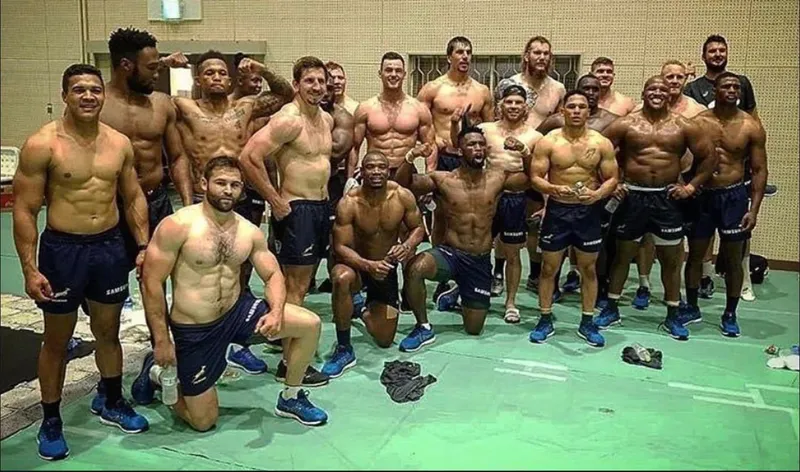
The Springboks’ PEDs: 3%
These are only alleged. But investigators using the “just look at them” method have produced some compelling evidence.
Stuart Smith’s ability to cope with rejection: 5%
National’s whip was ghosted by Chris Luxon, and now coup rumours are reigniting around the prime minister. No one likes being ignored when they’re trying to set up a date but most people cope without fundamentally altering the setup of a country’s government. Will Luxon find a way to make amends? Has Smith considered that he just might not be that fun to hang out with?
Mike Hosking: 10%
In the end it’s not really up to Smith. If the nation’s most powerful right-wing political figure decides Luxon is done for, then the government really will have to sunset its CEO and undergo a fundamental restructure to streamline its operations for the current market conditions.
So far, Hosking is standing firm behind the PM, monologuing this morning about “fools and amateur political operators” trying to bring down their leader, before writing off polls as basically useless anyway. Hosking went on to ask Luxon, who has sunk to 16% in the 1News-Verian poll’s preferred prime minister ratings, whether he is a “victim of his own success”.
Donald Trump: 20%
There’s only so much Anna Breman can do to put some pep in this sad, beleaguered, butter-starved nation’s step. The Reserve Bank governor has set some relatively low interest rates. But even they’re no match for whichever brainworm it was that told US president Donald Trump to bomb Iran, setting off a chain reaction of events which has inexorably led to a live feed of ship traffic in the Gulf being stationed on the Stuff homepage.
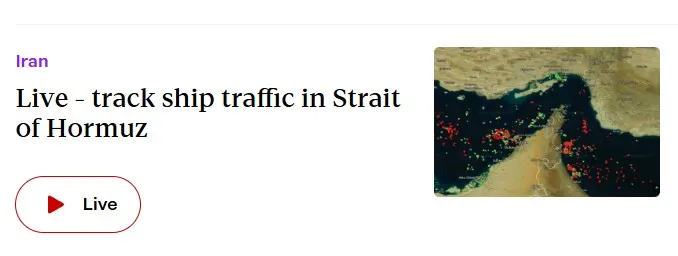
The Iran war is causing an inflation shock just when the government needs it least. It could take the wind out of the country’s economic recovery before it really begins, leaving us all feeling like we’re marooned on a bleak island at the bottom of the South Pacific with just a $36 pack of mince for company, and in the process priming us to vote for anything but the grim status quo.
Now finance minister Nicola Willis has been sent to the US to ask White House officials when they think things are going to go back to normal. The answer is likely “we don’t know” given Trump doesn’t appear to have a guiding philosophy or even really a plan that extends beyond tweeting confronting, often contradictory screeds into Truth Social every six to seven minutes.
![A tweet from user "@sus_admin" reads: "[devastatingly gutted nz voice] nah all good." The tweet is dated 7:23 PM, Oct 31, 2022. A profile photo of a bearded person in a hat appears next to the handle.](https://images.thespinoff.co.nz/images/01a0454c-4a7c-7665-918e-7363b381e5a5?w=800)
The US president’s effort to effect regime change in Iran may yet bring it about in New Zealand. If the Iranian regime doesn’t like the art of his deal and petrol prices are $4 plus when the election rolls around, the government’s prospects might really be in the Strait of Hormuz.

Hayden Donnell
Hayden Donnell is a senior writer for The Spinoff. He previously worked at RNZ, TVNZ and the New Zealand Herald, alongside other media companies that have since closed down or been renamed. His primary passions are local politics and the Big Fresh animatronic fruit and veggies.


