Nationalist with a capital W: Winston Peters sets out NZ First’s plan to win 2026

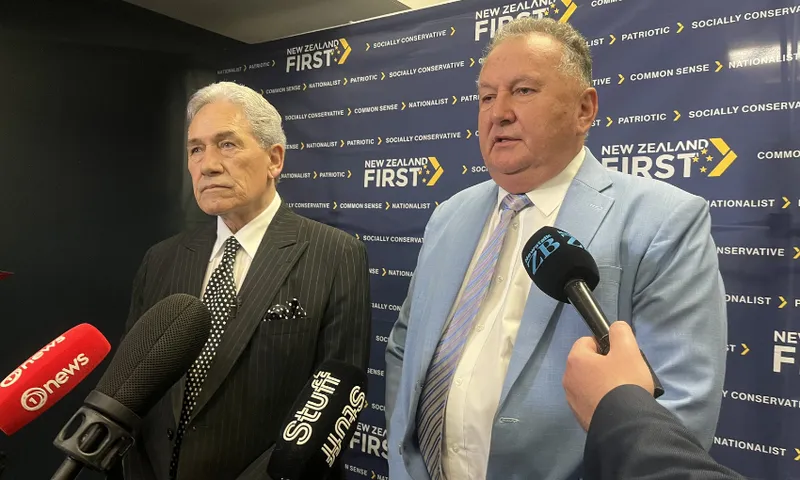
Winston Peters and Shane Jones.
At New Zealand First’s state of the nation event in Tauranga, the war on woke played a bit part so the dire state of the economy could shine.
Winston Peters has news for you, sunshine, and “this time, it’s all good” – but mostly just for him. Buoyed by upwards polling and the unique ability to be the anti-establishment establishment, New Zealand First may again hold the balance of power at November’s general election. The nationalist “with a capital L” party (yes, that’s what he said) is “the only socialist –” wait, that was another Freudian slip. Cue the laughter, and the correction: they’re “the only socially conservative party” and economically nationalist party in Aotearoa, and the message is resonating.
Inside Tauranga’s The Atrium on Sunday, Peters’ state of the nation speech picked from a charcuterie board of his party’s classic tasters. Immigration concerns, the problems with the left, and a call for justice for those allegedly injured by the Covid vaccine were heard by a 1,000-strong crowd that could only be described as having the potential to keep the NZ Super 0800 number busy for the foreseeable future.
Peters’ speech lasted 70 minutes, and revealed only two new tidbits: that National minister-turned-NewZeal-leader Alfred Ngaro (who opened the show but forgot to introduce himself, prompting calls from the crowd of “who are you?”) has turned again, this time into an NZ First candidate. (He may well end up not the only former MP from a major party to come out of the woodwork in the coming months and run for NZ First.) The second was a promise from minister Shane Jones to restructure the electricity market, which was repackaged as an election policy to split up the gentailers.
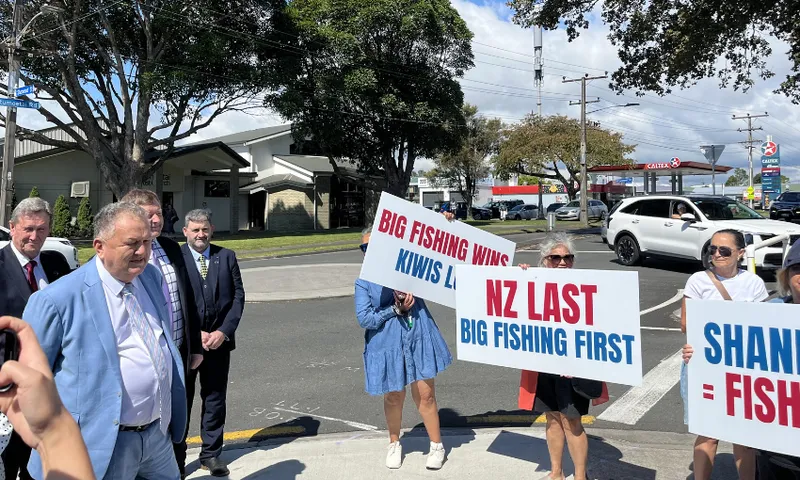
Entry into the venue came with a gift of a mini New Zealand flag and was set against a soundtrack of rap music from a boombox in the carpark. Outside, pro-Palestine protesters waved flags and opponents to Shane Jones’ commercial fishing reforms held signs lambasting his “fishy deals”. There was a brief standoff between Jones and Jenny Marshall, assistant to Brian Tamaki, but when she tried to implore Jones to protect kaimoana for future generations with the suggestion that she would be more likely to live to see that future than he would, Jones turned spiritual.
“That’s up to the lord, lady,” Jones replied. “That’s up to te atua as to how long I last.”
God does appear to be shining on NZ First. The party continues to hit a consistent sweet spot of 9-11% in polling, which would give it at least four more seats in parliament than its current caucus of eight. Those polls suggest NZ First is swallowing up a chunk of Act and National’s votes, reflecting a global surge in populist-nationalist parties such as Reform UK, whose leader Nigel Farage is a friend of Peters’.
And while Peters rallied against the the woke agenda with gusto, it was the state of the economy and a nationalist approach to managing assets that took up a bigger chunk of his speech. Waging a war on woke may have been effective in making some noise in the first two years of a parliamentary term, but in an election year, you should expect bathroom politics to be shunted aside to make way for policies focused on financial relief.
It’s also important to set yourself out from the crowd. Here, Peters’ digs at his coalition partners were more subtle than in comments he’s made in recent months – “experience has never mattered more” than it does now in a “challenging international environment”, he told the crowd. And there was the reminder that the party has “always fought against neoliberal economics”, stressing the “lunacy” in recent calls for the government to sell off its Air New Zealand shares – calls championed by Act Party leader David Seymour.
As NZ First looks towards the rest of 2026, it’s hoping to lead more face-to-face engagements with voters. Peters made a big deal of this state of the nation being a “public meeting” – despite little input from the public – and NZ First being the only party willing to go back to the old-school style of hosting gatherings. (They’re not; Seymour just held a public meeting in Christchurch on Friday night, and Greens co-leader Chlöe Swarbrick is hosting two “pints and politics” sessions in the South Island this week.)
One of the prominent features of a public meeting, as Peters noted, is the ability to hear from voters themselves. And while his caucus was busy working the crowd (and Jones busied himself with protesters outside), the same couldn’t be said of Peters, who hopped on the next plane out of Tauranga when it was all said and done.
But maybe he doesn’t need to be there anyway. If NZ First is good at anything, it’s reading the room. That room specifically being the one where those disenchanted with the bigger parties, and with the establishment in general, hang out.
Concerns on the ground from members largely revolved around the economy, the price of fuel, the lack of jobs. These are worries every New Zealander is facing. Yes, the woke nonsense coming out of Labour and the Greens (the “party of Palestine and pronouns”) troubles them, but so does being able to pay the bills. So at least there’s a party that is unabashedly nationalist with a capital W out there willing to criticise the status quo and bad economic vibes – even if they’re a part of it.

Lyric Waiwiri-Smith
Lyric is an award-nominated politics reporter at The Spinoff. She covers parliament from the press gallery, pens the weekly column One MP, One Pint and is endlessly curious about what makes our decision-makers tick. Off the clock, Lyric loves a live gig, a cold brew, and being a Wellingtonian (on a good day).


