As alternative energy options grow, renters will be left holding the power bill

We risk entrenching a two-tier energy system – expensive energy for the poor and cheap energy for the rich, writes Kasey McDonnell.
A version of this article was first published on Kasey’s newsletter, threesixtysix.
Two of my friends used to rent a flat in Wellington that ran off gas. It cost them a fortune every month and their energy bills became so expensive that they had to move.
They’re not alone in feeling the pinch of rising energy prices. The price of power and gas is eye-watering, and every year it’s getting more expensive. Despite there being low-cost, low-carbon solutions for homeowners, renters don’t have any ways to solve this problem.
There’s a serious risk that renters will be paying higher and higher bills to run older, crappier tech while owners reap the benefits of a cheap, electrified future. We risk entrenching a two-tier energy system – expensive energy for the poor and cheap energy for the rich.
The cost of gas is only going up
Gas prices are wild – the cost of using gas is 33% higher than a year ago. Many families are paying punishing gas bills even if they don’t use much. The charge for accessing the gas network is $65 a month. If your gas bill is $80, you’re spending $65 to use $15 worth of gas.
The best thing households can do to solve this problem is electrify everything. Get a kick ass induction stove, install a hot water heat pump, add solar panels, switch to an EV. You’ll save around $3,000 a year in running costs with tech that’s so much better. Your water will boil faster and your monthly bill goes down.
Modern electric tech slashes bills and pollution. Rooftop solar and garage batteries lower your power costs by storing energy from the sun during the day and powering your house at night for free when power is expensive. These stunning innovations are appearing everywhere you look.
Homeowners can already live in this cheap electrified future – they can access low interest loans from the bank and start saving immediately.
Renters can’t make energy choices
Firstly, and obviously, renters can’t upgrade their appliances. My friends desperately wanted an electric stove, but it’s not their stove to swap. They depend on their landlord to spend the money to upgrade the house’s appliances.
There lies the incentive problem. When you live in a home, you have an incentive to upgrade. Borrowing to upgrade appliances lowers your household costs. Landlords have no such incentive. It literally does not matter to them how expensive it is for their tenants to run a rental. What does matter to them is the cost of upgrading appliances that they don’t use.
Consumer NZ agrees. A spokesperson told me: Landlords are generally incentivised to spend as little as they can on their properties in the electrification space, especially when the running costs are passed onto the tenants. Why pay $8,000 for a hot water heat pump when you can spend about $3,000 on an instantaneous gas hot water heater instead?
Think ahead a decade: the home gas network still exists but the richest in New Zealand have already electrified everything. They drive EVs and power their homes for free from the sun. Meanwhile, poorer renters will pay higher daily charges because they’re the only ones left paying to maintain the gas network. They have no choice but to foot the bill for powering pricey, polluting appliances their landlord has no reason to replace.
It doesn’t have to be this way. Across the ditch, the Australians are already trying to incentivise fossil free flats. We should do the same.
How we could usher in fossil free flats
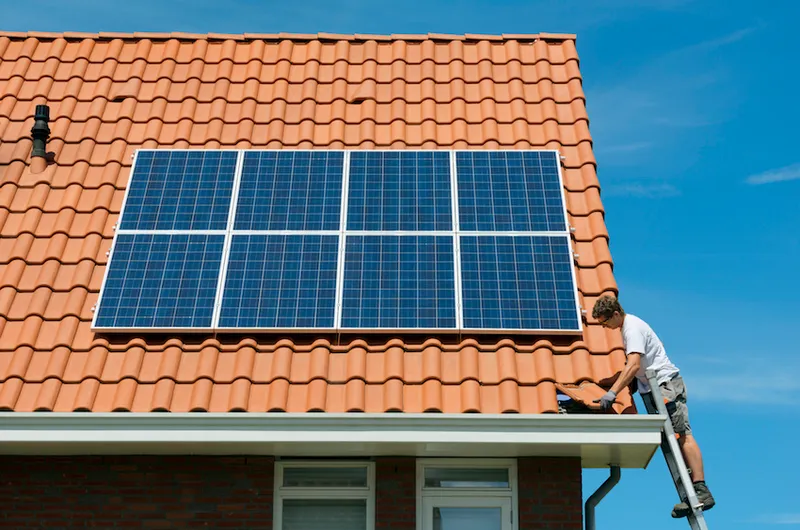
New Zealand is a laggard in solar energy: barely any of our households have solar. Meanwhile, Australia used incentives to get solar panels on a quarter of Australian owner-occupied houses.
Still, there’s a problem of inequality: less than 5% of Australian renters have the benefit of solar on their roof. Australia is exploring ways to solve this issue.
Victoria’s Solar Rebates Scheme. In Melbourne’s great state, they chuck in $1,400 to install solar and offer an extra $1,400 zero interest loan for landlords. Interestingly, under this scheme tenants can contribute up to $15 a month paying off the loan. The bet here is that solar will save tenants more than $15 a month (it will), and the reduced cost of upgrades will lure landlords.
SolarCo. The organisation Better Renting wants to see a new generator called SolarCo – a government-owned power company that pays to install solar, then offers discounted power prices to tenants. After five years, the solar system is the landlord’s, and the tenants get the power for free. It cuts renters’ costs and means SolarCo would earn money to keep installing solar indefinitely.
There’s one more model worth exploring: the Healthy Homes standards.
The last Labour government made it mandatory for rentals to be warm and dry. Imagine if every rental required home battery storage, solar and electric appliances too. We’d boost our electricity generation substantially and we’d cut costs for the poorest in our community.
Healthy Homes had problems, like shitty heaters being installed instead of heat pumps and no system-wide checks that rentals were actually complying. The results have been mixed: 18.1% of rentals are still cold and damp. For Healthy Homes to live up to its mission, requiring free solar energy to cut the cost of heating a home feels like a logical next step. Requiring electric upgrades is worth considering.
Solving this challenge will take action
Underinvestment in energy generation, poorer people footing increasing costs, and the most well off enjoying the benefits of a fossil free future. That’s the reality of our energy system. It’s shitty, and it is doing exactly what it’s designed to do.
“Ultimately, the current settings in Aotearoa’s energy market encourage landlords to minimise their upfront costs by installing cheaper, less efficient appliances or sticking with gas, while tenants are left carrying the burden of higher ongoing bills. This is particularly damaging for households reliant on gas, where rising costs risk creating a ‘death spiral’ effect.” – Consumer NZ
Energy doesn’t have to be this painful. Politicians can quickly help hundreds of thousands of families save on their bills by incentivising fossil free flats. Doing so is a great way to cut our pollution and future proof our electricity system.
Renters deserve cheaper energy and appliances that don’t pollute their kitchens or the planet. They deserve just as many opportunities to save money on power as homeowners.
It’s time for our flats to be fossil free.

Kasey McDonnell
Kasey McDonnell is a Wellington-based writer and designer. He publishes the climate newsletter Three Sixty Six.


