
Misconceptions and myths are woven through the draft document, which, rather than ‘restoring balance’, reinforces a Eurocentric framing of the past.
The Ministry of Education has now revealed the much-anticipated social sciences curriculum to be implemented in primary and secondary schools from 2027.
In 2019, a “refresh” of the social sciences curriculum began with the writing of the Aotearoa New Zealand histories curriculum (ANZH), followed by a wider rewrite of the social sciences learning area in 2021. Both curriculum documents went through significant consultation with the public, and benefited from the expertise of a range of academics and teachers. The ANZH was a bold and at times controversial attempt to draft a curriculum that provided an inclusive view of Aotearoa’s past, with an explicit emphasis on Māori histories. Schools were encouraged to explore their local histories, to build relationships with mana whenua and local communities, and to locate our national histories within a wider global context.
When the ANZH became compulsory, it was the result of a determined action by students from Ōtorohanga College, who demanded that our nation’s histories, particularly the New Zealand Wars, be taught truthfully. However, despite years of work developing, resourcing and implementing the curriculum, the ANZH is now itself a thing of the past, to be replaced by the new social sciences curriculum: a curriculum that looks to have been written overseas within a very short six-month period.
At face value, the document still contains a lot of New Zealand history. But the removal of conceptual understandings, such as the foundational nature of Māori history and the role that power plays in shaping historical events, means that the curriculum has lost its critical depth and capacity to foster critical engagement with New Zealand’s colonial past. Year 9 students, for example, will cover 1840-1914 in the course of a single year. So much content is included that the concern is not that New Zealand history is absent from the new curriculum, but that it will be taught in a cursory and monocultural manner, possibly reinforcing outdated misconceptions and myths.

But it’s a more ‘balanced’ and less political history curriculum now, right?
Upon its release, associate education minister David Seymour claimed that history in the new social sciences curriculum would no longer “indoctrinate young people for political purposes”.
Nothing could be further from the truth. The draft social sciences curriculum risks creating a national history that perpetuates a lack of understanding of our shared, complex and sometimes difficult histories. It is less truthful, less bicultural and significantly more Eurocentric than its predecessor.
Misconceptions and myths are interwoven throughout the document, with topics leaning into outdated, disproven and at times racist narratives. That is hardly surprising, given the difficulty of providing necessary context and explanation when you are speeding through centuries of history at pace.
For example, a reference to “forest clearing and moa hunting (to extinction by 1450)” for year 3 students lacks the balance previously included in the ANZH, which contextualised Māori environmental impacts alongside kaitiakitanga and the much more significant impact of European settlement on te taiao (the natural world). Unfortunately, the inclusion of one-sided statements linking Māori to extinction events while failing to contextualise them feeds into racist narratives about the benefits of colonisation. Notably, in the previous curriculum this history was taught to students in years 7 and 8 who have a greater ability to critically unpack topics such as these with appropriate teacher guidance.

While esteemed Māori academics such as Linda Tuhiwai-Smith have been internationally recognised for championing Māori knowledge systems as legitimate and vital, Māori ways of knowing and understanding the world are marginalised throughout the new curriculum. The Eurocentric form of literacy is categorised as a defining characteristic of “civilisation”.
When studying the Stone Age, year 2 students are to be told that that prehistory was “the time before people could write down stories or facts”. This assertion dismisses indigenous cultures with strong oral traditions and patronisingly aligns pre-European Māori society with the Stone Age. It marginalises indigenous forms of literacy – the ability to construct, transmit and interpret traditional narratives through whakataukī, pūrākau and the rich performative and artistic practices Māori culture is renowned for.
But learning about the Tudors is just good fun?
The Aotearoa New Zealand histories curriculum was unapologetically focused on the history of this country. It also supported teachers and students to learn about our place in the world and to connect this learning to global events and histories.
The new curriculum draft has prescribed a vast amount of global history content, much of which serves to reinforce a Eurocentric framing of the past that positions British history as the default or “universal” history.
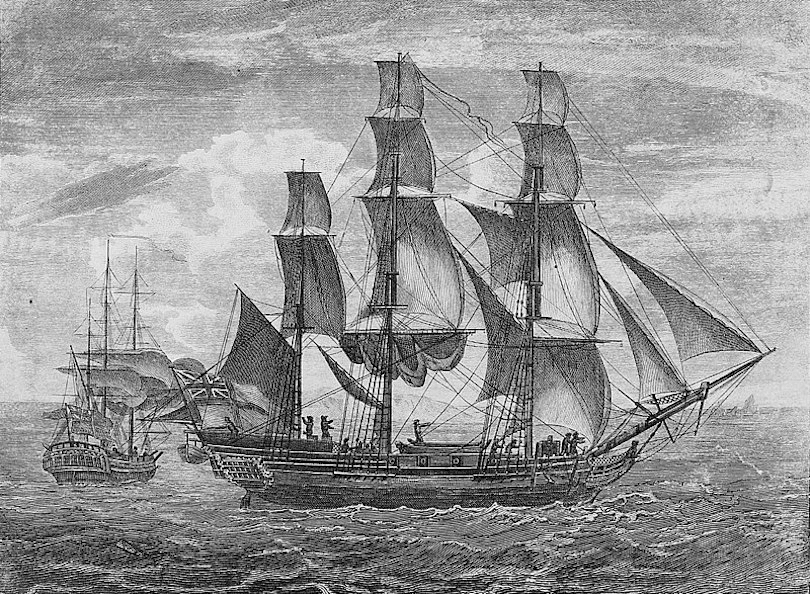
For example, in year 6 students are set to learn about the Elizabethan and Victorian ages. The monarchs of Britain are centred in a story of civilisation and progress; one that positions exploration, industrialisation and trade as neutral or positive developments. There are no references to resource extraction, exploitation, dispossession and enslavement, all of which occurred as a result of imperial conquest and had significant consequences for indigenous peoples globally, including Māori. A national history curriculum should reflect the context of the country in which it is taught. In this curriculum the impact of the Elizabethan and Victorian periods are simplified and sanitised, while authentic links to New Zealand’s own history are omitted.
What’s missing from the curriculum?
There are significant omissions in the document, despite its length. Incredibly, students will not be required to learn about Parihaka. Waitangi Day is relegated to a day of celebration without acknowledgement of the tension and protest that often defines the day for many. And while there is reference to the Māori renaissance and language petitions in the curriculum, there is no deliberate mention of the 1867 Native Schools Act. Teaching about the revival of te reo Māori without developing an understanding of the deep intergenerational trauma that this act caused is cynical at best.
Historical sources such as pūrākau are confined to years 1 and 2, sending a clear message that oral history traditions are “children’s stories” not valued as legitimate historical narratives that encode cultural epistemologies, values and worldviews. Significant historical events such as the land march, the Bastion Point occupation, the Haka Party incident and the foreshore and seabed hīkoi are listed as optional examples, rather than prescribed content. This is despite these being rare curricular examples that illustrate Māori agency and an ongoing struggle for rights.
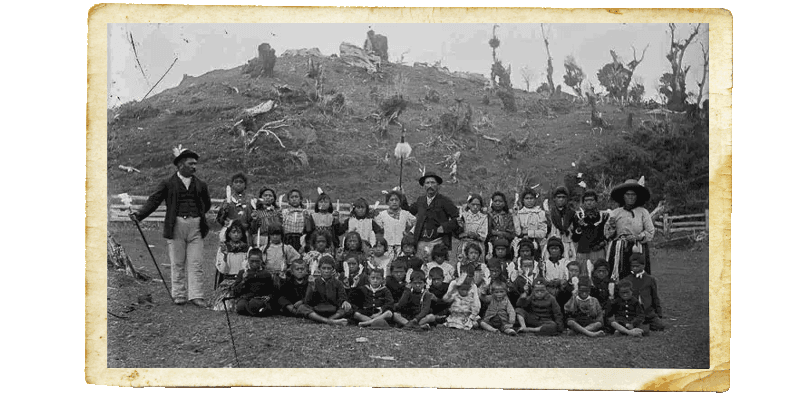
The level of content prescribed also leaves little space for the teaching of local histories. Local history exploration provided an opportunity for teachers to facilitate culturally relevant, place-based and experiential learning, helping connect students to their communities, the land and landscapes around them. It fostered a sense of identity and belonging. When students see themselves as part of an ongoing local story, the learning becomes more meaningful, even transformative.
This is still a draft curriculum and a period of feedback and consultation has now commenced. Given the lack of transparency, and the sidelining of subject associations in the current draft’s creation, it is hard to trust that any meaningful changes will eventuate from the process. We continue to hope that the Ministry of Education will authentically engage with New Zealand experts in the field, rather than dismissing their critique as a minority view.
For generations, Aotearoa New Zealanders completed their schooling without learning about events that shaped our nation as it is today. The absence of that knowledge became a wound; festering into poorly informed, even racist, rhetoric around rights and privilege. The ANZH was designed as a rongoā – a salve – for that wound, holding the potential to heal and nurture a more just and thriving Aotearoa New Zealand. The implementation of a Eurocentric curriculum that marginalises the experiences and knowledge of Māori will only deepen our divisions. We contend that not only is this government failing to meet its obligations under te Tiriti o Waitangi, but is failing to equip present and future generations of Aotearoa New Zealanders with the education they require to be active, informed and engaged citizens.