No one had a bigger year than New Zealand’s road cones

From left to right: road cone, Wayne Brown, more road cones, Chris Bishop, more road cones.
We made art about cones and snitched on people who used too many of them, but there was a twist coming.
For most of the 21st century, the road cone occupied a modest place in the hierarchy of Kiwi conversations. It took a noticeable upturn in 2022, as Mayor Wayne Brown swept into office on a wave of cone-based rage bait. It continued trending upwards after the 2023 election of the aggressively anti-cone coalition government. And then, in June this year, the government rolled out its new cone hotline and all hell broke loose.
A few weeks prior, perhaps presciently, the Wellington City Council had published an article titled “The history of the road cone”, the introduction to which ran as follows:
“What is the meaning of life? What is our purpose on this earth? We spend our days thinking about existential questions, but have you ever wondered, when did the road cone become universally known as a symbol of caution?”
Hell’s bells, I thought, is that ever an intro. I wished I had written it. It made little to no sense, but maybe that was the point: Spend too much time thinking about road cones and they’ll consume your mind and regurgitate madness.
That certainly seemed to be the case with the coalition government’s hotline, which encouraged the public to snitch on cone abusers and cost $400,000 for its year-long pilot. Not saying that’s too much, but for less than a quarter of that I would happily spend a year driving the country’s roads and snitching on anyone using cones, up to and including my own family.
Following the coneline announcement, Newsroom’s Fox Meyer wrote that a similar scheme in the UK in the 1990s had failed miserably, turning prime minister John Major’s government into a laughing stock and helping bring it down. While it was a bit sad to see our country being so stupid, it was good to know Ikea was not the only party we were late to in 2025.
The hotline did get off to a strong start, with 375 reports in its first week, but because data was anonymised there was no way of knowing how many of those were from Wayne Brown.
In July, Minister of Transport Chris Bishop escalated the war on cones, calling their use “ridiculous”, “excessive” and “over the top” and announcing that councils would not receive government funding for future transport projects unless they transitioned from the cone-heavy code of practice for temporary traffic management (COPFTTM) to the not quite as cone-heavy New Zealand guide to temporary traffic management (NZGTTTM).
It was the ninth road cone related announcement the government had made in its time in office. As Joel McManus wrote on The Spinoff in August, that beat the number of announcements from any previous government by 900%.
In August in Auckland’s Te Komititanga Square, someone created an artwork made of 100 cones, titled You’ve Walked Past Me So Many Times. At first glance it seemed like a much needed laugh over a few cones, but then the artist posted the description, which revealed it to be a Brownist rant in artsy clothing: “The installation critiqued traffic management inefficiencies, government bureaucracy, and collective misuse, while offering a practical alternative: a real-time, user-friendly tracking platform for community-driven accountability.”
In October, the media started getting their hands on data from the government’s cone hotline and it was exactly as bad as everyone in the UK could have told us it would be 25 years ago.
Stuff’s Glen McConnell reported that each tip from the public had resulted in less than one cone being removed. The Herald reported that, of the handful of sites deemed worthy of a visit, only 7.5% of them were found to be using too many cones; 2.5% were using too few. In Wellington, 110 hotline complaints resulted in the removal of two cones. In Whanganui, more cones were added than removed.
The strangest thing about the coneline is that its biggest opponent has been Wayne Brown.
Although he spent years using AT chief Dean Kimpton as his personal cone hotline, he wants the government to forget about its own version and focus on the solutions suggested in the report he has commissioned from Ernst & Young, which presumably cost the sort of money he promised Aucklanders he wasn’t going to waste on road cones.
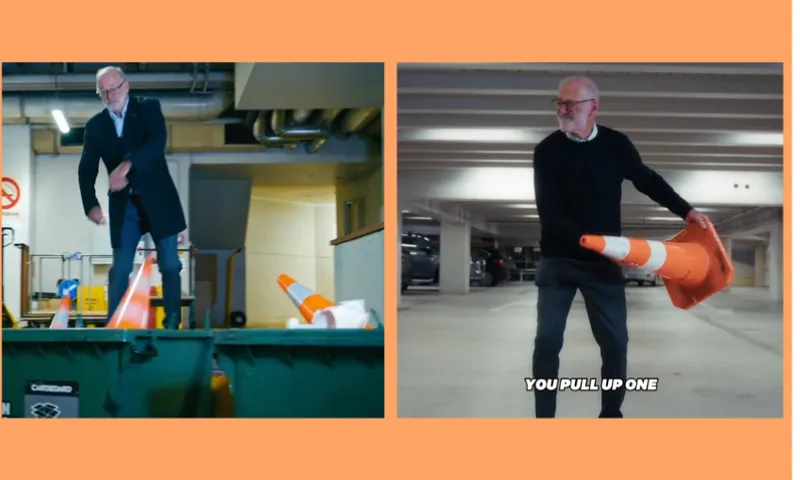
In a video, he stands in a dark carpark, holding a cone. Scary music plays in the background. “The government thinks they can fix this with a phone line!” he yells, mashing his phone screen and holding it up to his ear performatively.
A pleasant voice on the other end says: “Thank you for calling coneline. All our operators are currently busy.”
“That’s just hot air!” he yells, storming off.
The video is surprisingly watchable, largely because of Brown’s authentic performance, but the big unanswered question hanging over it is what number he has actually dialled, because, as the dozens of New Zealanders who have used it already know, the “hotline” is not a phone line at all: It’s an online form.
At one point in the video, we see a hand opening a desk drawer and pulling out the Ernst & Young report. Beneath it, we briefly see a copy of a glossy magazine called Cones Weekly which features the prominent cover line “2025’s HOTTEST CONES”. It’s not clear whether it’s Brown’s magazine, and it’s pointless to speculate, but as Shakespeare knew, several decades before Brown was even born, our greatest love often springs from our greatest hate.

Greg Bruce
Greg Bruce is a freelance writer and the author of Rugby Head, a book about the ways in which New Zealand’s national sport has shaped our lives, particularly his. He is currently writing his second book.


