This intersection is making me cross!

What gives? Or rather... who? (Photos: Emma Gleason, Google Maps. Design: Emily Wong, The Spinoff)
Brief pedestrian lights and impatient drivers are testing one writer’s composure. How much time do you need to cross the road safely, and who decides?
Every day on the way to The Spinoff I pass through an intersection that challenges my perception of safety and sanity. Located on the main drag of Kingsland, it marks the nexus of New North Road, Bond Street and Sandringham Road. This is a busy intersection due to these three main roads and its close proximity to the train station and several bus stops, with rush hour delivering a Richard Scarry tableau of cars, trucks, cyclists and pedestrians.
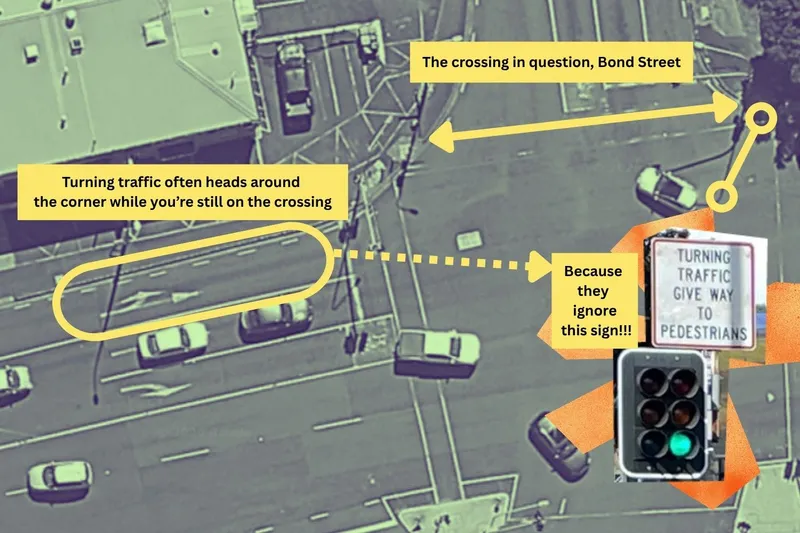
The latter wait patiently to cross the road, but doing so on Bond Street is a hairy endeavour. When the pedestrian light finally turns green you step confidently off the kerb and start walking until, half way across the four lanes, it starts flashing red. Then, more often than not, vehicles begin to turn in front of you before you can reach the other side. Pedestrians appear confused and panicked. Drivers look pissed off that you’re still on the crossing. What gives!? Am I too slow? Or to blame? And who’s in charge here?
That’s Auckland Council. The city’s roads are now its responsibility, acquired from Auckland Transport’s control following the sweeping reforms ushered in by the Local Government (Auckland Council) (Transport Governance) Amendment Bill, which passed in May. This means intersections and their lights fall under the council’s remit.
However, timings are much the same everywhere; green pedestrian lights are generally standardised across the country to a set duration of six seconds. (It can sometimes be longer in certain locations, according to Auckland Council, but only at intersections with high demand or those near schools.)
The red flashing pedestrian light is more variable, with site-specific timings. The duration depends on how long it takes someone to cross the road. This setting functions like the amber traffic light – you’re safe to finish crossing if you’re already on the road, but don’t step out if you’re still on the kerb.
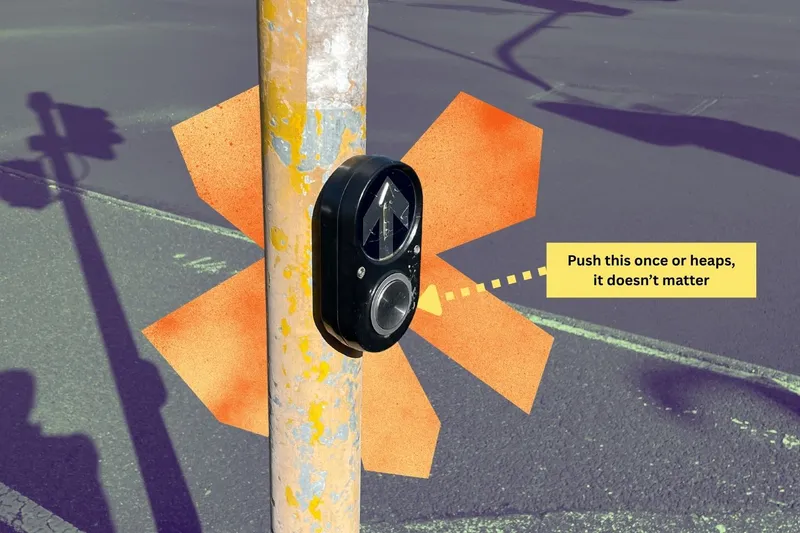
Armed with knowledge of settings and variations, I march up the road to the offending intersection. The green pedestrian light lasts six seconds, as expected. The flashing red figure is far longer, 18-19 seconds, providing ample time to cross the road. That takes me 14 seconds, but here’s where the situation gets complicated.
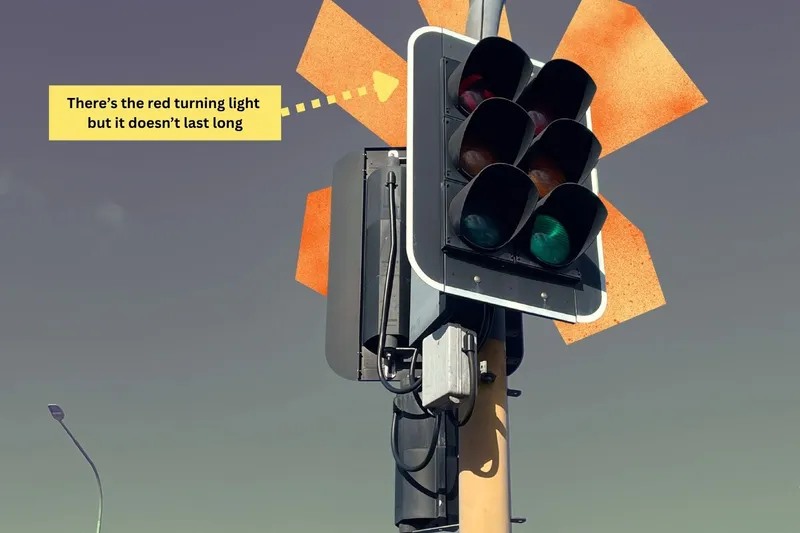
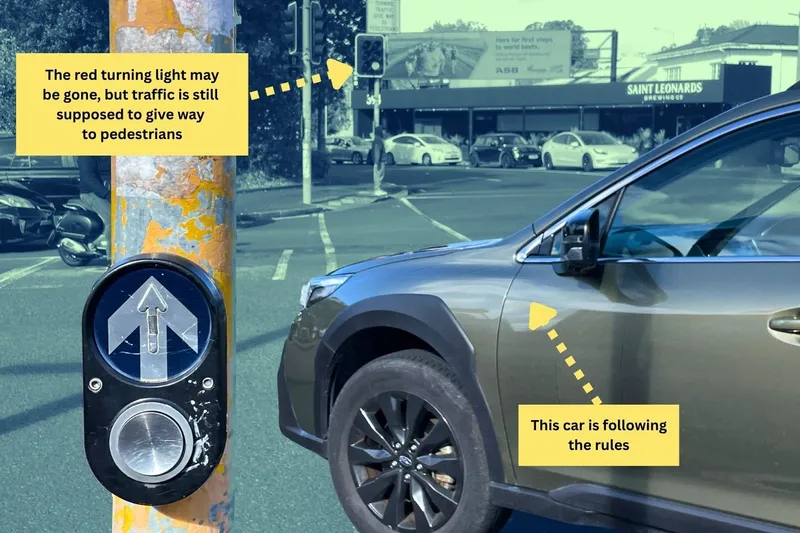
While crossing, cars waiting to turn left into Bond Street have a red turning light, however that only lasts four seconds after the green guy disappears. Following that, turning traffic is supposed to give way to pedestrians (the sign affixed to the light says so) but that’s not always the case. Whether due to ignorance or defiance, drivers often turn anyway. Regardless of intent, it’s scary.
Bus and train patronage during August was up year on year: 6.89m and 1.50m respectively, compared to 6.37m and 1.35m in August 2025, according to Auckland Transport reports. And that’s before the CRL opened. There were also more cars registered annually than in 2025, with 92,995 compared to 87,719, though both figures are lower than the 10- year average. In the central city, pedestrian counts from August were up last year. Traffic is a problem everywhere.
In New Zealand, most pedestrian injuries happen while crossing the road. My fears of being run down by a Ford Ranger – hugely popular and the country’s most-purchased new vehicle in July – aren’t completely unfounded; pedestrians and cyclists hit by a light truck are 80% more likely to die, compared to a car, although those are dangerous too.
Using a pedestrian crossing correctly is the safest way to cross the road, which doesn’t mean everyone does it; some people jaywalk, others ignore any and every signal light to play chicken with cars instead.
This kind of stuff grinds the gears of most road users. So do many other common behaviours: cars not stopping on the sensors, pedestrians not keeping an eye on oncoming vehicles, cars blasting through red traffic lights, cyclists blasting through red traffic lights, people who press the crossing button again or not at all, and everyone distracted by their phones.
As far as traffic crossings go, the most common feedback Auckland Council receives concerns faulty sensors (the metal loops embedded in the road to detect traffic). “When there are issues with sensors we quickly arrange for contractors to repair these,” explains Mitchell Tse, principal traffic engineer at the council. It gives them the opportunity to assess the lights too. “We can also adjust the intersection settings to operate with a fixed-time setting if appropriate.” (This setting relies on a pre-programmed schedule to transition the lights.)
Adjustments to signal durations do happen. Tse says timings across the Auckland network are “constantly reviewed” and adjusted. They’re changed to accommodate things like network improvements, temporary roadworks and land use changes or network improvements. Annual reviews also help ensure each intersection “operates as efficiently as possible to meet changing network demands”.
And demands are changing. Auckland has more people in it than a couple of years ago and the population is expected to increase by 10% over the next decade. New builds in Kingsland, Morningside, Arch Hill and Grey Lynn coupled with more people using the train network mean the New North Road intersection will become even busier (and busier roads mean more stressed out drivers). As it stands, crossing Bond Street at the traffic lights relies on an agreement of trust between pedestrians and cars. Should drivers be patient enough to respect the “give way to pedestrians” sign – even though many already don’t – or is it time to change the signal settings?

Emma Gleason
Emma Gleason is a staff writer at The Spinoff and an award-winning fashion journalist. But it’s not just clothes that interest her, you’ll find her exploring tasty cheese, influenza outbreaks and more important things right here. She has experience with some of the country’s leading media outlets as well as the toaster in our kitchen.


