No one knows how many vape shops there are in New Zealand

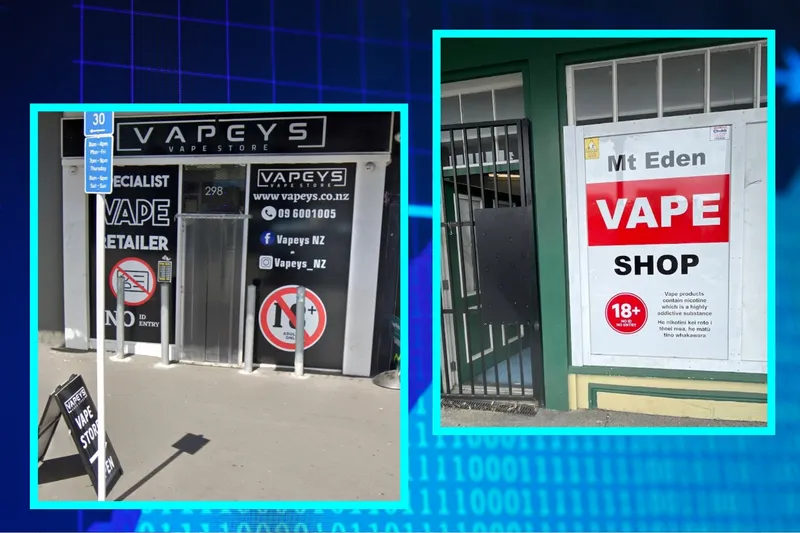
How many are there? (Photo source: Google Maps)
They’re supposed to be highly regulated. So why can’t authorities provide a reliable figure?
Let’s rewind to 2023 for a minute. New Zealand had more than 7,000 vape retailers but both Labour and National were promising to cap the number of stores at 600. Chris Hipkins reckoned Labour would do it if they got in (they didn’t). So did Christopher Luxon, campaigning on the same number with National’s Better Health Outcomes policy (they won and didn’t follow through). Three years on, with another election looming, there are still thousands of stores around the country. Exactly how many is hard to determine.
Under New Zealand jurisdiction there are two different categories of vape retailers: specialist and general. All specialist vape retailer (SVR) businesses have to be approved by the Ministry of Health, and must make a separate approved vaping premise (AVP) application for each store they want to operate. There are currently 1,337 approved AVPs in New Zealand, ranging from the tiny vape shop carved out of your local dairy to the flash-looking stores operated by tobacco giants. The country has more SVRS than liquor shops (bottle stores account for 930 of our 4,802 registered off-licences).
The numbers get a bit trickier once we zoom out to general vape retailers: places like dairies, supermarkets and service stations. They’re permitted to sell a limited range (no fancy flavours) as long as vapes aren’t their primary product. These businesses have to file a regulated product seller (RPS) notification with the Ministry of Health, whose current list – shared with The Spinoff in response to an Official Information Act request – totals 1,694 registered businesses. Some of those businesses operate multiple stores, of which there are more than 2,100.
Adding that figure with AVPs gets us to more than 3,400. That’s a lot of shops. But it’s far fewer than an estimate from a couple of years ago.

In 2024 the Ministry of Health estimated there were more than 7,000 individual stores selling vapes in New Zealand, which were being run by somewhere between 5,000 and 6,000 retailers.
What’s going on? Has the number of vape shops really halved since 2024? It certainly doesn’t feel like. Perhaps these businesses are simply not registering with the authorities? According to a Ministry of Health spokesperson, “the earlier estimate of 5,000-6,000 retailers, and references to 7,000+ stores, were based on broader system information, including historic notifications and intelligence about market activity. These figures are indicative rather than precise point-in-time counts, as the retail environment is dynamic and businesses frequently enter, exit, or change how they operate.”
The spokesperson said that while “differences between estimated retailer numbers and current notifications do not necessarily indicate widespread non-compliance… we recognise there is a gap between the estimated retailer numbers and the current RPS notifications, and the ministry continues to work closely with Health NZ to support compliance and remind retailers of their obligations under the act.
“As retailers are visited, investigated, or reviewed by enforcement officers during their usual activities, their registration is checked and followed up if not in place.”
Registration is part of the increasing regulation of the industry. The SVR regime was introduced in 2020, when the Labour government passed the Smokefree Environments and Regulated Products (Vaping) Amendment Act. Disposable vapes have been banned since June 2025 (although pre-filled pods are still allowed). The rules around promotion changed at the same time and marketing tightened up too.
One retailer The Spinoff spoke to had converted part of their dairy premises into a separate vape store after the SVR regulations came in, a process that was “very hard” due to the cost and time involved. Was it worth it? Today vapes only make up a very small portion of their business, they said. “It’s not big.”
While neighbourhood shops are the most visible segment of the market, there are also online stores – 132 approved internet sites are registered with the Ministry of Health. A 2026 study by University of Auckland academics, discussed in a Public Health Communication Centre Briefing, found only 18% of online retailers were fully compliant with the suite of new regulations.
Regardless of who’s doing the selling, all vaping and smokeless tobacco products are designated as notifiable products in New Zealand, which means they have to be registered with the Ministry of Health. Its current list includes 1,267 vaping devices, 1,037 different kits, 3,496 varieties of “nicotine salt vaping substance” and 848 of “freebase nicotine vaping substance”.
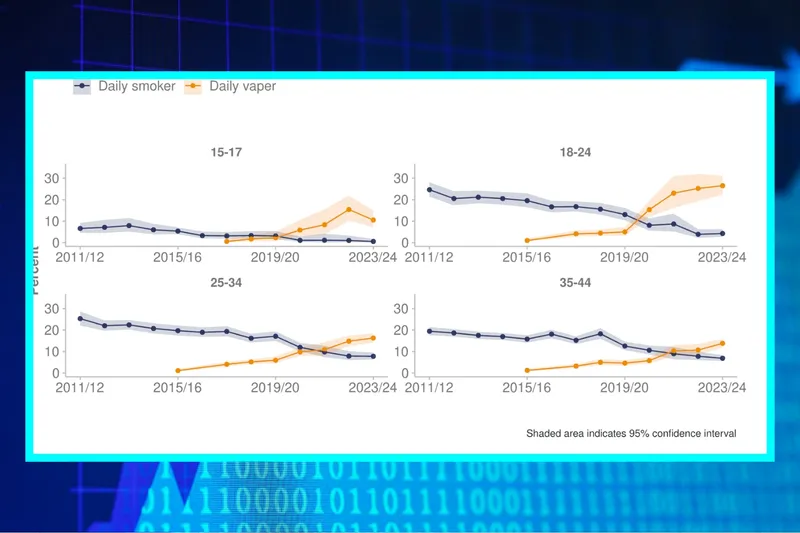
The risks associated with vaping are increasingly under the microscope. Last month a study by the University of Canterbury, published in New Zealand Medical Journal, linked vaping with an increased, though “unquantifiable”, risk of cancer. It’s now more common than smoking, with 11.7% of adults vaping daily, according to the 2024-2025 New Zealand Health Survey – that’s around 509,000 people, up from 33,000 in 2015/16. They’ve overtaken the 6.8% of people who report chuffing darts every day, down from 16.4% in 2011/12. Both rates are higher in the country’s most deprived neighbourhoods (21.1% vape daily and 12.9% smoke) where there are a disproportionate number of SVRs.
However, youth vaping appears to be in decline. While the 2022-2023 New Zealand Health Survey reported 15% of 15-17 year olds vape daily, a 2025 survey by Action on Smoking and Health showed regular youth vaping had halved from a high of 20.2% in 2021 and daily vaping by year 10 students had dropped from 8.7% in 2024 to 7.1% in 2025.
Despite the reduction, recent regulations and the 18+ age limit introduced back in 2020, underage teenagers are still buying vapes. Of the 157 stores visited during the Ministry of Health’s Controlled Purchase Operation last year, 10% were found to sell vapes to under 18-year-olds (the legal age of purchase and possession in New Zealand).
Whatever the true number of vape retailers in New Zealand, Marnie Wilton says it’s too many. “They’re just everywhere now, and the location of them normalises this product around our kids and our young people,” says the Vape-Free Kids NZ co-founder. The ubiquity proves vaping has moved far beyond being a tool used to quit smoking, says Wilton. “If these are supposed to be helping smokers… why on Earth have we got so many stores, if that’s really what vapes are about?”
Vaping Industry Association of New Zealand (VIANZ) chair Jonathan Devery doesn’t agree the number of vape stores in New Zealand should be reduced, saying “reducing access to the most effective smoking cessation tool risks pushing some adults back towards combustible tobacco [cigarettes etc]”. VIANZ says that regulations should focus on preventing youth access and helping adult smokers move away from combustible tobacco. “We support targeted enforcement and sensible tightening of loopholes. We do not support arbitrary reductions in store numbers where there is no evidence this would improve outcomes.”
He points to Australia’s pharmacy-only model as a cautionary example. “Restricting lawful retail access has not removed demand; instead, it has pushed much of the market into illicit and harder-to-regulate channels.” VIANZ also shared concern about the store-within-a-store model, saying it was inconsistent with the original intention of the retail regulations. “Closing that loophole and requiring specialist vape retailers to sell only vaping products, nicotine replacement therapy and directly related cessation products would better target opportunistic retailers, while retaining stores that provide genuine specialist knowledge and support for adult smokers.”
Wilton believes the high number of vape shops is beyond the capacity of the country’s enforcement officers and thinks fewer outlets would be easier to monitor. “If you limit the supply, you can keep tabs on it.” While the regulations that have come in in the last few years are a “step in the right direction”, she doesn’t think they go far enough. For example, the distance of a specialty vape store to a school was restricted to 300m in 2023 but doesn’t apply retroactively. “Almost 30% of New Zealand’s vape stores are within 400 metres of a school,” she says, citing a 2024 study by the University of Canterbury. Research by the University of Auckland last year found 44% of schools were within a kilometre of a specialist vape retailer.

Emma Gleason
Emma Gleason is a staff writer at The Spinoff and an award-winning fashion journalist. But it’s not just clothes that interest her, you’ll find her exploring tasty cheese, influenza outbreaks and more important things right here. She has experience with some of the country’s leading media outlets as well as the toaster in our kitchen.


