Has Ikea changed our lives yet?

Greg Bruce reconsiders our December excitement over the arrival of Ikea
Four months on, has Swedish furniture made any difference to our lives?
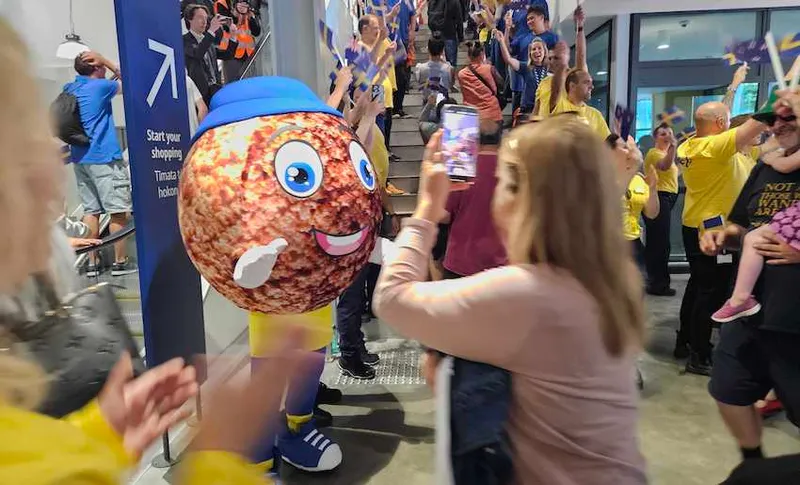
The wave of excitement had been building for years so we should not have been surprised by the power with which it hit, at which point we all went to pieces like a poorly-assembled chest of drawers. Otherwise sober journalists wrote breathless accounts of the glory of cheap Swedish furniture and predicted whole days spent queuing on the motorway offramp at Mt Wellington.
That was our attitude to Ikea on and around its opening in December 2025, but as I arrived there in the fading light of a weekday evening this month, it may as well have been a hundred years ago.
As I entered the store, it was clear the excitement of the launch was long gone and what remained was the familiar tinge of embarrassment that has followed our frenzied reactions to so many other enterprises that were going to change our lives: Costco, H&M, Top Shop, Taco Bell, Mark Wahlberg’s burger restaurant etc.
Each time one of these businesses announced their New Zealand openings, we created Facebook groups, made friends with excited, like-minded strangers and convinced each other this was the moment we had been waiting for: life was going to be amazing from now on, and, yes, we did say that last time, but this time would be different.
We would gush at each other like poorly installed bathroom tapware and then – weeks or months later – look back with regret on our failure to install more carefully.
You don’t need the pretend Nobel Prize in economics to understand the reasons for this phenomenon: scarcity creates value and until December 2025, nothing in New Zealand was scarcer than a frustratingly designed, unnavigable shop selling unfindable boxes filled with imitation wood panels coated in melamine and accompanied by bags full of lock nuts.
We wanted all these things and we wanted them immediately and then we got them and now, four months on, the excitement has faded and, rather than a shining light on a hill, Ikea is just a blue and yellow box on Auckland’s commercial/light industrial border.
Of course, none of this is to say the store is failing, or even struggling. On the Ikea Fans NZ Facebook page, one contributor pointed out that it had taken them half an hour just to get into the carpark at Easter.
But this is the exception, not the norm, and the Facebook page is the natural resting place for those hardy few who have maintained their fervour throughout the usual scarcity / abundance cycle.
These people sometimes post pictures showing off the Ikea rugs and light fittings they’ve installed in their lounges and offices, although they typically look much less like the chic and sleek displays at Ikea and much more like the front room at Auntie Jan’s. There’s an almost unbearably poignant quality about these photos. Their creators have spent money to buy the feeling the beautiful Ikea mock-ups induced in them and then, after getting home, they have taken photos that show, presumably unintentionally, that what they’ve actually bought is… furniture.
This is the nature of being human. We have all been there: we reach for a feeling solid enough to hold onto and we end up with a fist full of blown-out MDF and a lingering wistfulness about the impermanence of the world, and then we reach for it again, because what else are we supposed to do?
Despite our best efforts, and the claims of classically trained economists, we are not rational. We are full of emotions we can’t easily control, but which large companies like Ikea do everything they can to manipulate.
Despite the claims of its excellent marketing team, Ikea does not and never has loved New Zealanders the way New Zealanders have loved it. Ikea exists to make money, which is a goal for which emotions are useless. The corporate equivalent of emotions is data, which they turn into statistics, which they use to extract money from us.
When we go to Ikea to buy yet another module for our Billy bookcase and hand over our apparently unironically-named “family” loyalty cards, our purchase is put into a database where it’s added to everything else we’ve spent already, segmented a hundred ways from Tuesday and fed into an algorithm which is used to shape, customise and personalise the company’s marketing in the hopes we will spend more at its store than we ever dreamed possible.
This is of course not news, but it’s a bit embarrassing to think we have so frequently and repeatedly fallen in love with entities that so nakedly see us as resources to be exploited for the financial gain of their shareholders.
Still, if anyone from – or connected to – Uniqlo is reading this article and thinking about opening a store in Auckland, please understand that none of the above applies to you.

Greg Bruce
Greg Bruce is a freelance writer and the author of Rugby Head, a book about the ways in which New Zealand’s national sport has shaped our lives, particularly his. He is currently writing his second book.


