‘It’s relentless’: What it’s like to be an ED nurse in New Zealand right now

A nurse with over 20 years of experience in Aotearoa shares the harrowing reality of working in the public health system in 2026.
As told to Alex Casey
I got into nursing over 20 years ago because I love helping people. Particularly in emergency nursing, you meet people who are maybe in crisis, or maybe are supporting a loved one who’s really, really sick or injured, and my job is to be there to help them navigate through that. I don’t look at it as just treating a medical condition, but as supporting someone through the worst moments of their day, their week, or sometimes their whole life. It’s that personal touch that I always strive for, to be that person that can ease this crazy moment for them.
Having been in the emergency department for the last two decades, it has become harder and harder to provide that kind of care. At my hospital, we have been sounding the alarm about staffing and patient demand for years. We’ve seen a huge increase in waiting room hours, which have more than doubled in the last five years, and more and more people are leaving without being seen, which is scary because we don’t know what risk lies there because we haven’t had a chance to assess them yet.
We are seeing more and more people in ED because they can’t afford to go to the GP, or they can’t get an appointment for weeks. And if you’re really worried about something, then sometimes ED is your only option – if you wait for that appointment two weeks down the track, that chest infection could become pneumonia. The scary thing is we expect to see a lot of respiratory illnesses and things like RSV and influenza every winter, but we haven’t really hit that yet. That makes us really worried, because we’re already completely at capacity.
What’s also happening more and more is access block, which means that there’s no room for patients to move from ED into the hospital because there’s just no free beds, and so they end up being moved into the corridors. That corridor has fluorescent lights, it’s got people wandering up and down constantly with beds, taking patients to x-ray, patients coming in by ambulance, patients going into resuscitation bays. You have no privacy, no dignity and no proper monitoring sitting out there in a corridor – it’s just not a clinical space where someone should be treated.
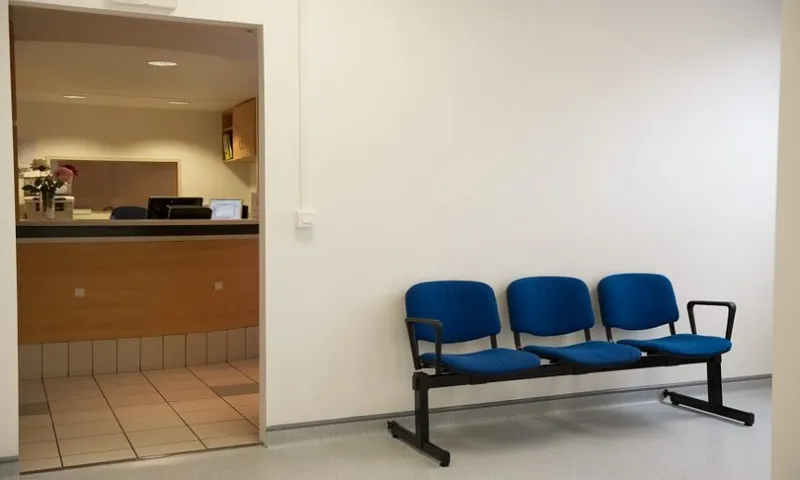
Corridor care used to be the exception, but it has become normalised. In my hospital, patients are now spending around 10 times the amount of hours in corridors compared to just five years ago. I’ve had a situation where an elderly lady was in her bed in the corridor for over 16 hours. Eventually her family just said, “we’re taking Mum home, because there is no way this is a healthy place for her”. This was a patient who needed to be admitted, but none of us would want our elderly mother sitting in a corridor like that.
Situations like that happen all the time and it just breaks my heart. On my shift on Saturday, I started at 2.30pm and it was pretty under control with only a few patients in the waiting room, but things started to blow out as soon as we got a sudden influx of patients in a short amount of time. There’s nowhere to absorb a sudden increase like that, and so then the ambulances come in and they’ve got nowhere to offload anyone, we’ve got dozens of patients lined up in the corridor that haven’t been seen by anyone yet, and you feel like you are just scrambling.
By the time it got to 10.30pm, when it was time for me to hand over to the night staff, it was chaotic – we had a full waiting room at that point, all of the bays were full in my pod, and my colleagues and all their pods were all full. That’s where it really feels like you are shuffling the deckchairs on the Titanic, where you’re searching the patients that you’ve got and pulling out the ones that are more well to replace them with the sicker ones, and juggling around to try and make it work the best for whatever else is walking in your door at that time.
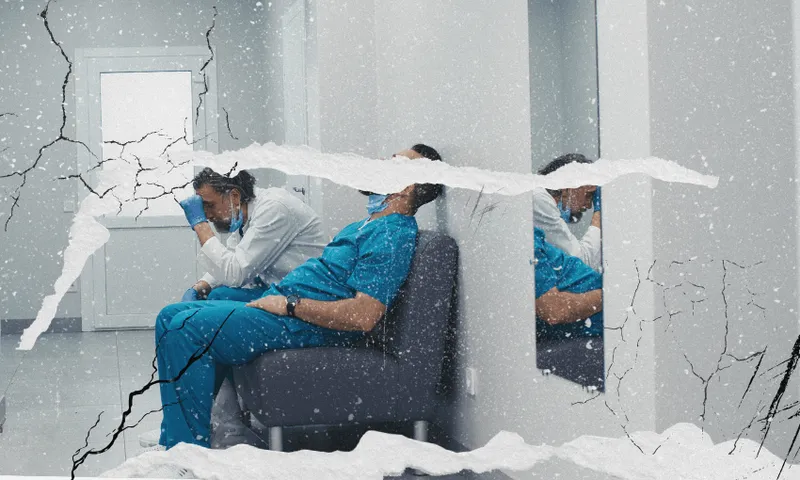
It’s never easy going home for the night and knowing that the night shift is starting off on the back foot with a backed up corridor and a full waiting room. We nurses often talk about moral injury, which is the distress you feel when you can’t give the care that you know someone needs. I’ve often caught colleagues with tears in their eyes as they’re walking to the changing rooms because they’re just exhausted from pulling everything out the tank, but they still haven’t been able to give the care to their patients that they’ve wanted to give. It’s relentless.
Every day there is that feeling of constant squeeze and worry, and we have had huge numbers of staff leave in the last five years because you just can’t sustain working in an environment that asks this much of you consistently. We have had quite a few people leaving to go and work in Australia too, where the nurse-patient ratios are better, the pay is better and people feel more appreciated. It’s a very high turnover rate, which is also stressful because it means you always have to be retraining your new staff to bring them up to that skill level.
Thankfully, more and more staff are starting to speak up and say, “hey, we can’t cope with these numbers, we can’t meet these demands, we need more resources”. It’s not just ED that is the problem either – I would say that the entire healthcare system is completely broken in New Zealand. There has to be enough beds on the wards, there has to be enough nurses in the hospital to staff those beds, and there has to be enough room in residential care to be able to take the discharged patients that need that extra help when they get out of hospital. We also need good, strong primary care nurses, facilities and GPs that can help support people’s health to avoid them getting into really acute, unwell situations and avoid some patients having to come into the ED at all
Doctors and nurses have been out there saying all of this for the last 10 years, and we’re not just complaining for the sake of it. It’s not just the fault of this government, or the last government, it’s progressive governments that haven’t invested in the system to keep it functioning at its best. Health is one of the most important things that we have, and New Zealanders need to demand that their health services are going to be there when they need it. Because everyone will need it at some point, and it’s not until you do that you’ll realise just how broken it is.
Update, 15/07/07: Chris Lowry, executive regional director central, Health New Zealand, provided this statement:
We are committed to growing our domestic nursing workforce to help give us sustainability and stability in our hospitals across the country.
We want to acknowledge and thank the professionalism and care being shown by our amazing staff at this challenging time of the year. From March 2022 to December 2025 the number of ED staff nationally has grown by over 700 to 5821. Our nursing workforce is larger than ever before, turnover has reduced and our vacancy rate is now at a six-year low.
Through 2022 and 2023 we saw a period of very high demand on emergency departments, driven by a combination of factors including the after-effects of Covid-19, more complex patient needs, and workforce pressures. Since that peak, wait times have come down, fewer people are leaving before being seen, and more patients are being treated quicker.
Nationally, ED performance is improving. Last month 75% of ED patients were admitted, discharged or transferred within six hours. This compares with 72% in June 2025 and 67.6% in June 2024.
Work is progressing on Health NZ’s Nursing Workforce Safety and Sustainability Programme, our national body of work focused on strengthening how we plan for, manage and assure nursing safe staffing across our organisation. This work is being developed with our workforce to ensure a more clinically informed and sustainable approach to nursing workforce planning so we can better deliver safe, high-quality care for patients, whānau and communities.
We plan for winter every year because we know demand in our emergency department increases, particularly with respiratory illness.
This year we’re focusing on improving patient flow through the hospital, supporting our workforce, and making sure patients are seen and treated as quickly as possible.
We’re ensuring we have the right staffing in place, working closely with primary care to keep people out of hospital where appropriate, and continuing to reduce bottlenecks for patients waiting for beds.
85% of the additional 378 FTE to support our winter plan is in place. This includes nursing, allied health, medical, healthcare assistants, support and non-clinical roles across our regions. Recruitment for the remaining FTE continues.
Emergency departments are dynamic environments with pressure changing hour to hour. When there are periods of high presentations, escalations are implemented to support the changes in demand and ensure the most urgent patients are seen as soon as possible.
Across the country we actively manage pressure, and people should continue to expect that if they need urgent care, they will be seen and treated. Patients are prioritised based on clinical need, so those who are most unwell are always seen first.
Further to this, a $20 million emergency department boost focuses on improving patient flow – both in ED and inpatient settings. This is supported by an acute care programme of work with two workstreams that are made up of clinicians from around the country. Their work continues to relieve further pressure.


