My Uber driver fell asleep at the wheel

Four Spinoff writers were in an Uber when the driver fell asleep at the wheel. Lyric Waiwiri-Smith recounts their harrowing ride to the airport.
It was the snoring that gave it away. The sound could have been mistaken for the hum of the motorway, cars flying at 80km down Auckland’s state highway 16. Or the laughter and gabbing in the back seats, all three of them full. Then I see the way the Uber driver’s hands are only loosely gripping the steering wheel, his head lolling forward, mouth open, eyes closed, foot on the gas.
My heart stops for a second, then the adrenaline rush of it kicking back into gear helps me move. I roll with my first instinct, which tells me that shocking him out of slumber and hitting him on the shoulder combined with a “you good, bro?” is the best course of action. Plus, I think it’s less likely to alarm the other passengers in the back – my Spinoff colleagues, all out-of-towners like me, trying to get to the airport and get home.
He startles as I hit him, which gives himself, me and my co-workers a fright. “Yeah, yeah, I’m alright,” the driver says, his eyes blinking. I, on the other hand, have never felt less alright in my life. Did that really just happen?

I’ve got two options here: play it cool and pray we get from A to B safely, or make a fuss and get out of an anxiety-inducing situation. My head races through the pros and cons of each option in rapid time.
Pro: If I ask the driver to cancel the ride, everyone will get to leave this journey alive.
Con: But was it all just a trick of my mind? Was he really asleep, or was I being paranoid? He’s awake now – why make a scene when I can sweep it under the rug and move on?
Pro: No, no, he was definitely asleep. And if he crashes, he’ll wipe out close to half of The Spinoff’s writers.
Con: Well, if I cancel the ride, we might miss our flights and I’ll miss question time at parliament. Plus, it’s hardly an easy task to pull over on the motorway.
Pro: OK, be so for real right now – what’s a few missed flights compared to a potentially horrific crash?
Con: But what about the driver? You know what it’s like to show up to work exhausted and force yourself to power through. This guy might be overworked, and he’s awake now. Is a brief mistake worth cancelling, complaining and maybe causing him to lose his job?
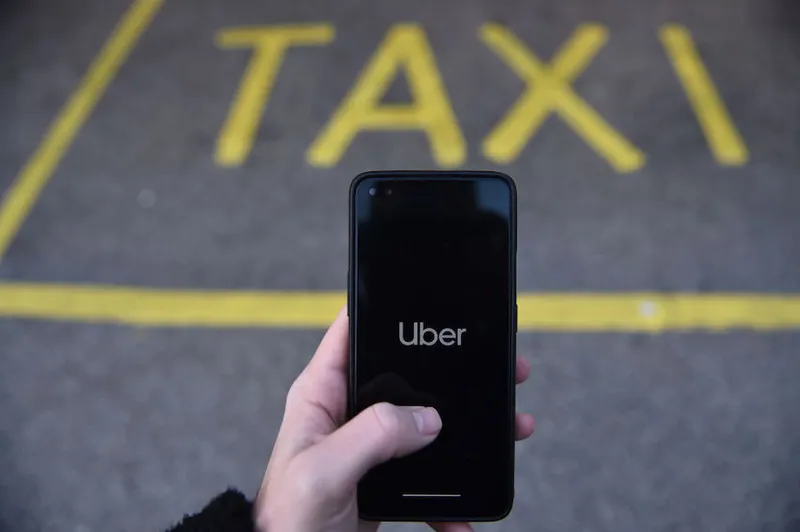
So, I continue sitting there and let sleeping dogs lie. The eyes in the backseats are fixed on the rear view mirror and they see the driver’s eyes shutting and opening, shutting and opening, flickering like a lamp losing its light. I have my MacBook open on my lap and was focussed on finishing some work, but now my eyes are permanently fixed at three points: the windshield, the steering wheel, and the driver’s face.
I can’t drive myself, but at least I can do my bit and monitor the road. But that stretch down state highway 16 to the airport feels like the longest 10 minutes of my life. What was an atmosphere of laughter and giddiness is now tense, all of us listening to the driver’s heaving breathing and alert to his sporadic speeding and slowing. I wonder if he’s picking up on the bad vibes too.
We make it to the airport without any physical damage but with a whole lot of frayed nerves. I let the other passengers get themselves out, kiss the sidewalk and thank God for the miracle of life, and I have a quiet word with the driver. “Mate, I think you should pull over and have a rest before you get back out on the road,” I say. His response is weary. “Yeah, I need to charge my car around the corner anyway.”
We’ve made it out alive, and now survivors’ guilt clouds our next decision: do we report the driver to Uber? My colleagues and I all take a few moments to convince ourselves that reporting him is the right thing to do, even though it feels like punishing him. My colleague opens the Uber app, and we’re both surprised to find that “drowsy driver” is one of the automatic complaint options. How many exhausted Uber drivers and scared riders came before us to necessitate the app having this as an option?
But, as in any life or death situation, we find the dark humour. If I had died in a crash, the last text I sent (to my colleagues in the back) would have made a great headline when the coroner sifted through the evidence of my death: “I lowkey think this dude just fell asleep.”
What did Uber do?
In a statement, Uber told The Spinoff that the safety of its users and drivers is its highest priority. “Reports like this are concerning and we do not take it lightly,” their statement read. “As always, if a rider is concerned about their safety on a trip, we encourage them to report their concerns via the Help section of the Uber app. Alternatively, riders can use our On-Trip Reporting feature to discreetly report non-emergency situations. Uber’s 24/7 support team will look into the matter and take appropriate actions.”
After we complained on the Uber app, we never received any response from the company, but Uber did refund the cost of the trip.
According to the Ministry of Transport, driver fatigue was a contributing factor in 546 crashes in 2024. Of these, 19 were fatal, leading to 23 deaths, while 115 people were seriously injured, and 594 people experienced minor injuries.
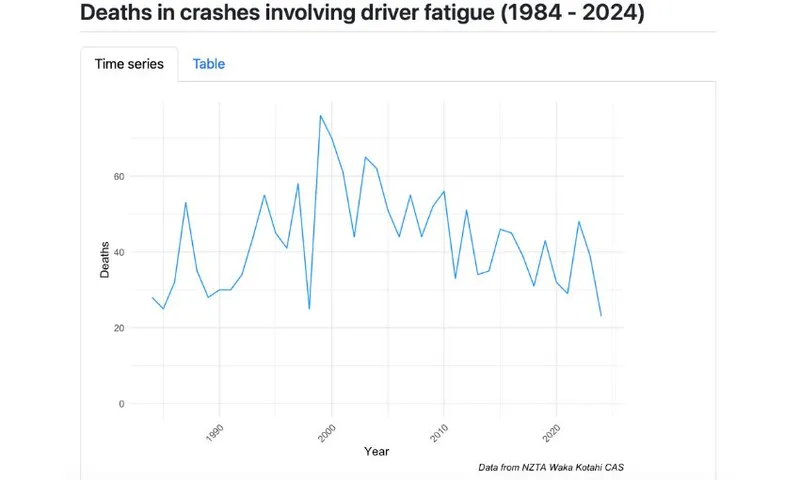
Documents released by Waka Kotahi under the Official Information Act in late 2025 showed that up to November, reporting of fatal crashes caused by fatigue had dropped significantly year-on-year to eight crashes. (The Spinoff has requested the latest information on crashes where fatigue was a contributing factor under the Official Information Act.) Crashes, however, where fatigue is a contributing factor are also likely under-represented in the police’s reported crash system, as fatigue can be difficult to identify, according to the Ministry of Transport’s website.
Fatigue isn’t only caused by a lack of sleep – the natural circadian rhythm (that makes you sleepy at nighttime and alert in the morning) can get the better of you if you mess with it, and long periods spent driving and/or working can also affect focus.
By law, commercial drivers are required to take a 10-hour break following 13 hours of driving, as well as a half-hour break every five hours. Within the Uber app, there are tools such as notifications to alert drivers when they’re near their driving time limit and educational modules to help drivers recognise signs of fatigue.
NZ Police told The Spinoff they haven’t noticed a rise in crashes related to drowsy rideshare drivers, but police do “regularly attend crashes where fatigue is a factor, and the outcome can be fatal”. In a statement, superintendent Steve Greally, director of road policing, said his prevention advice is to “have a quick nap before you drive or if you’re feeling tired on the road. Fifteen minutes’ sleep could save your life”.
“Some people think other remedies, like rolling the window down or increasing the radio volume, will work, but those just mask the tiredness. It’s never worth the risk,” Greally said. “If you’re in a rideshare and are concerned for your welfare, ask the driver to pull over and cancel your ride. We would encourage people to make a report to the company and Police as well.”
Well, now I know it’s better to say something than not. But ideally, no one should be in a position where they have to say anything at all.
Lyric Waiwiri-Smith
Lyric is an award-nominated politics reporter at The Spinoff. She covers parliament from the press gallery, pens the weekly column One MP, One Pint and is endlessly curious about what makes our decision-makers tick. Off the clock, Lyric loves a live gig, a cold brew, and being a Wellingtonian (on a good day).


