Birds of the Year: A New Zealand vs Australia fantasy grudge match

Aotearoa and Australia have a long, shared history as collaborators and rivals, keenly aware of the trans-Tasman pecking order. (Photos: Bird of The Year, Pixabay.com)
Australia has its own annual Bird of the Year competition – so who’d win a Bird Bledisloe?
It’s the event that stops the nation – no, not local body elections or an All Blacks test, Bird of the Year. The competition invites voters to settle the pecking order in the name of conservation. Voting opened this week for the 2025 lineup.
Contention is fraught territory, with family dinners and workplace breakrooms destabilised over chasms of opinion. Is the titipounamu (rifleman) cuter than tauhou (silvereye)? Who’s more victimised and vulnerable, the kawau tikitiki (spotted shag) or pukunui (southern New Zealand dotterel), both of which are “in serious trouble”? Did the hoiho (yellow-eyed penguin) really deserve to win again last year? To the surprise of many, the 2021 event was taken out not by a bird at all, but a mammal: the pekapeka-tou-roa (long-tailed bat).
Beyond the tensions of its competing voting blocs, the high-profile ornithological competition isn’t immune to questions of international interference, with eyebrows raised over John Oliver’s involvement (his pūteketeke-backed “hijacking” of the 2023 competition likely led to the bird’s landslide victory), and alleged Russian vote hacking in 2019. Two unnamed teenagers flooded the 2015 competition with “fraudulent votes” for the kōkako, shocking the nation (the pair were “supposed to be studying for their NCEA”). In 2018 “illegal voting” was traced to Perth.
Much like other debatable topics like social media bans and Russell Crowe, avian popularity has jumped the Tasman. Australia’s 2025 Bird of the Year campaign kicked off this week too, inviting nominations for the shortlist before voting begins on October 6. The biennial competition, a partnership between charity BirdLife Australia and Guardian Australia, debuted in 2017 and has experienced its own accusations of vote-fixing.
Aotearoa and Australia have a long, shared history as rivals and collaborators. We joined forces to fight in World War One and host the FIFA Women’s World Cup in 2023. Residents of both nations have crossed the watery strait through various means in search of a better life; New Zealand is home to possums and wallabies, while nearly 30,000 Kiwis moved to Australia last year. And we already compete in trans-Tasman sporting leagues.
So what might it look like if our native birds faced off? Here’s our pecking order:
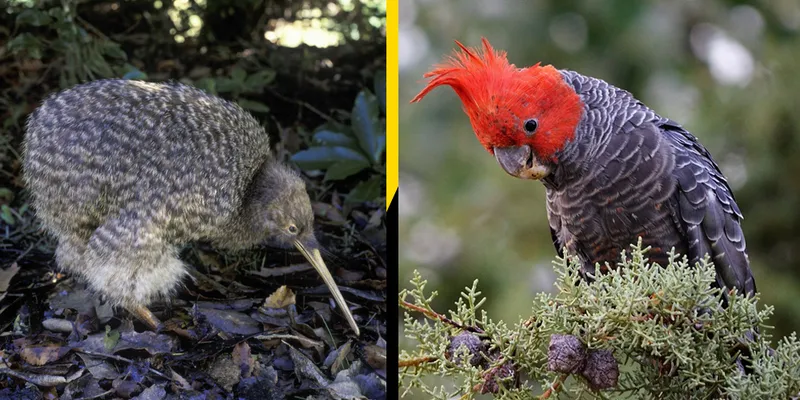
Kiwi vs gang-gang cockatoo
Concerned as they are with national interests, capital cities on both sides of the Tasman have formed factions this year. The “Canberra crowd” has reportedly got behind the gang-gang cockatoo. Meanwhile, in Te Whanganui-a-Tara, the competition’s 20-year milestone has been cause for a campaign in favour of the kiwi, backed by high-profile and influential entities including private businesses, Wētā Workshop and Trade Me, charitable trusts like the Royal NZ Ballet and Te Māra a Tāne, and the state-owned Te Papa and the New Zealand Symphony Orchestra. (For what it’s worth, John Oliver has likened the bird to a “rat holding a toothpick”.)
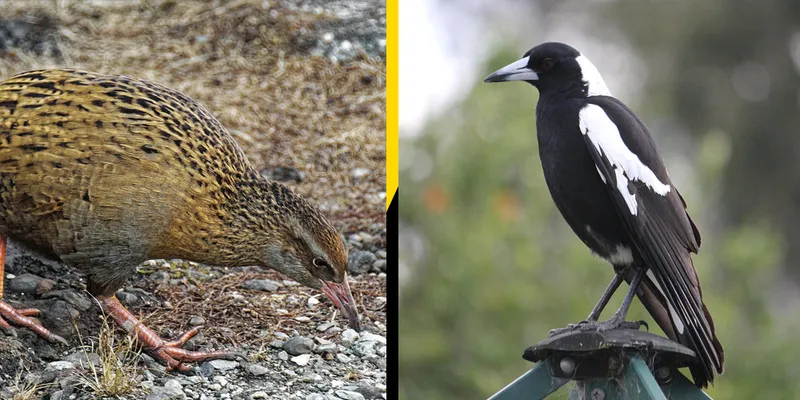
Weka vs magpie
The latter was the inaugural winner of the Australian competition, with the magpie (considered an “evil fucker” by some) beating the equally feral bin chicken (ibis) to take the top spot. The mercurial, charismatic weka has so far failed to secure the New Zealand crown. In 2019, a grassroots campaign implored people to #votebadass, and some researchers see opportunity in this protected species, suggesting they could be farmed to boost numbers.
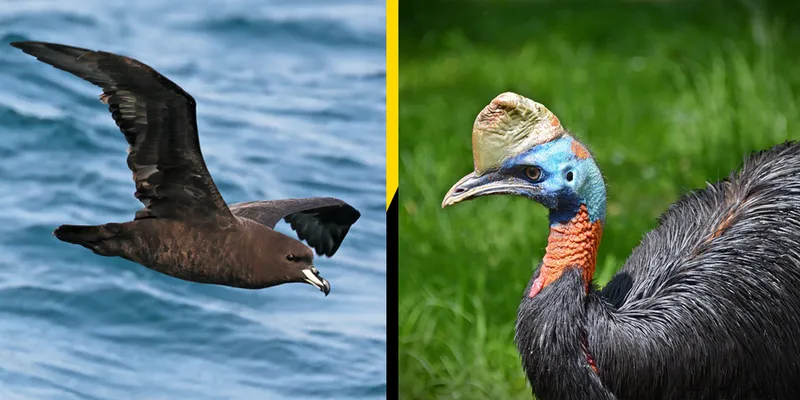
Tāiko vs cassowary
The tāiko is a “bogan” bird, according to one-time backer of the black petrel, Jacinda Ardern. This working-class hero is declining in numbers, so it could look for backup (a coalition agreement?) from its bigger, more bogan mate across the ditch, the cassowary, which will literally smash you if you get in its way.
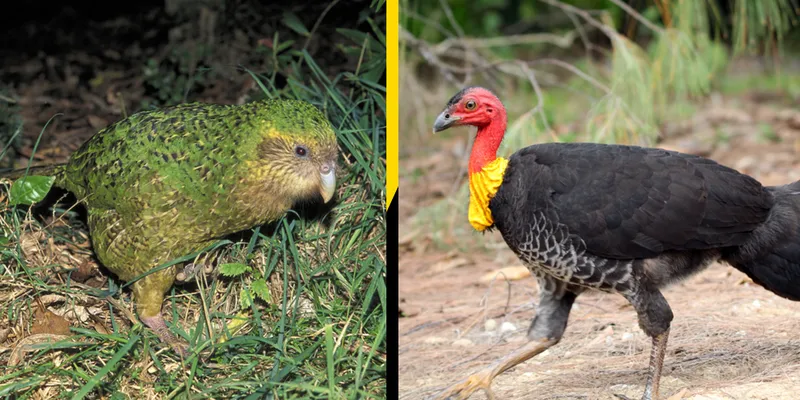
Kākāpō vs Australian brushturkey
Past years have seen the kākāpō declared too popular to compete (raising the question of officialising term limits) and banned from the ballot. But, like a prize fighter making a comeback, this robust two-time champion is in the running this year. Its musky body odour is matched only by its physical gravitas, and it could compare girth and posture with the scrappy Australian brushturkey.
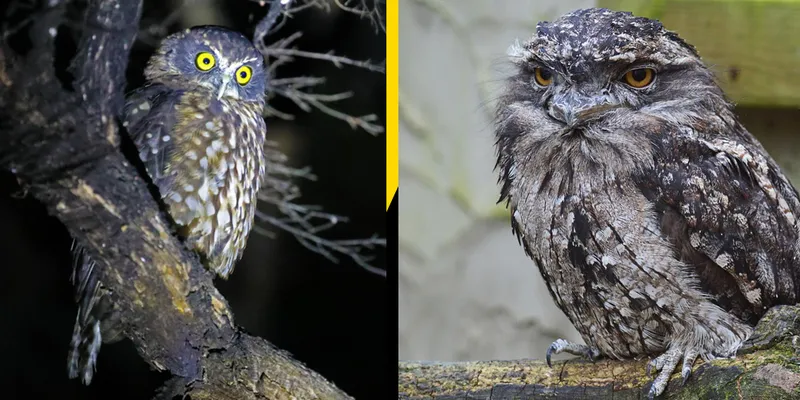
Ruru vs tawny frogmouth
One’s an owl and the other isn’t, though both emanate a vibe of stoic mystery – proof that if you sit there and stare, people assume you’re wise. In the Australian competition, odds appear to be on the frogmouth this year, which has been runner-up twice. The morepork has never secured the New Zealand prize.
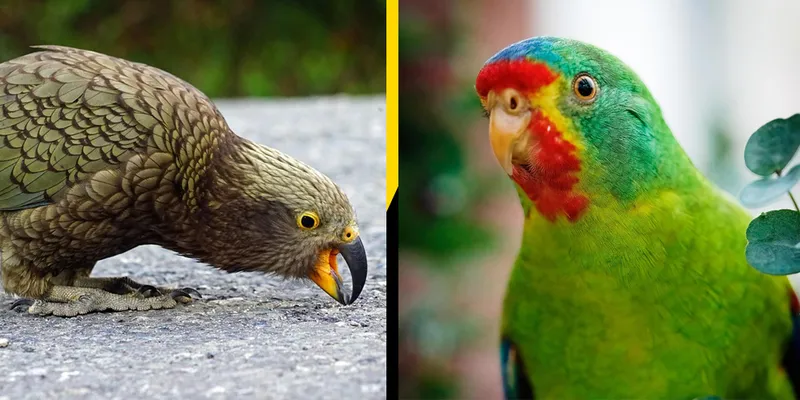
Kea vs swift parrot
With hard-won street cred of being “snarky” and a “bit naughty”, the kea would be well-equipped to take on the swift parrot, Australia’s 2023 winner, in a battle of the brash.
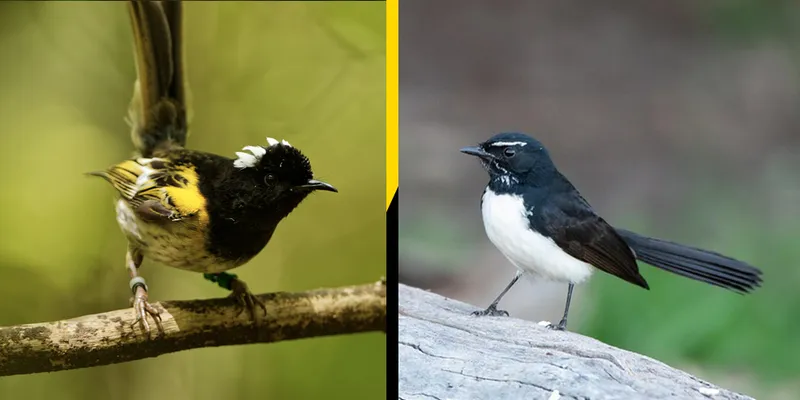
Hihi vs willy wagtail
This Australian native has been labelled “promiscuous” (a critique often levelled at the nation’s more libidinal inhabitants, like NRL players). However, New Zealand’s non-monogamous hihi presents stiff competition, and is the only species of bird to “have intercourse face to face”. (This match-up was debated in The Spinoff office, with the fantail and king shag also proposed.)
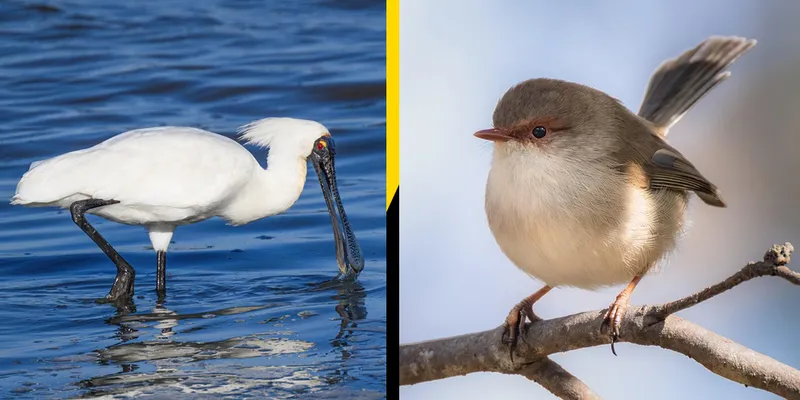
Kōtuku ngutupapa vs superb fairywren
Having a superlative in one’s name is usually reserved for celebrities and conquerors – The Mighty Hannibal, Alexander the Great, etc – but Australia’s elegant 2021 champion enjoys similar vaunted status. Aotearoa’s birds are generally a more humble lot, with the royal spoonbill (kōtuku ngutupapa) a rare example of honorifics.
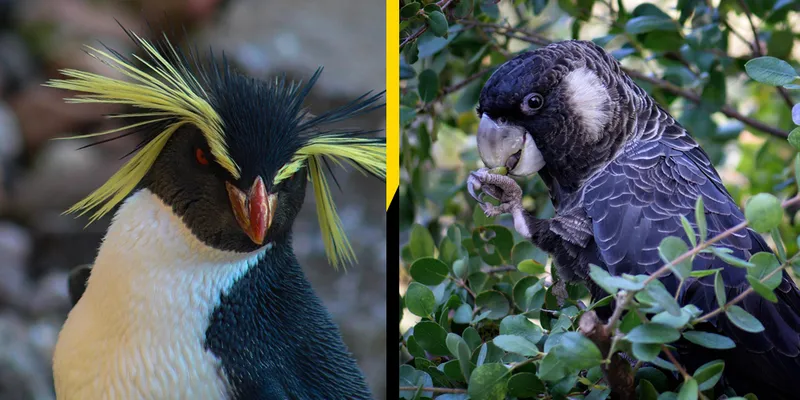
Tawaki piki toka vs Carnaby’s black cockatoo
Both look like they have an attitude.
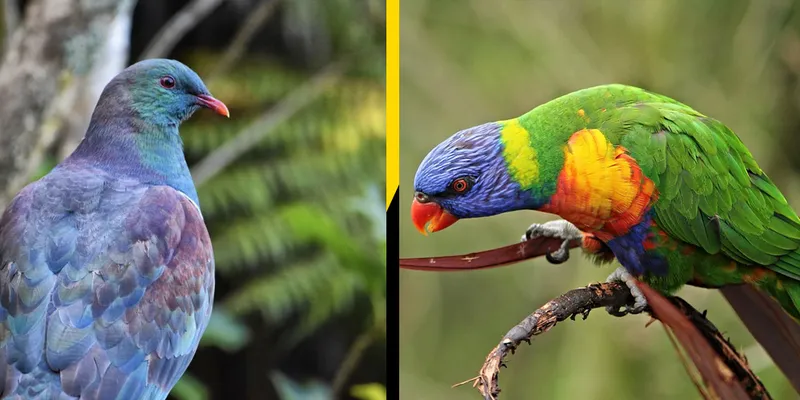
Kererū vs rainbow lorikeet
Our local lush has a taste for fermented fruit. Some go so far as to call wood pigeons “gluttinous”, and they’re known to get so inebriated that they fall out of trees. Across the ditch, such “drunken behaviour” from native parrots has made headlines, joining the vast canon of stories on our two nations’ habitual intoxication.
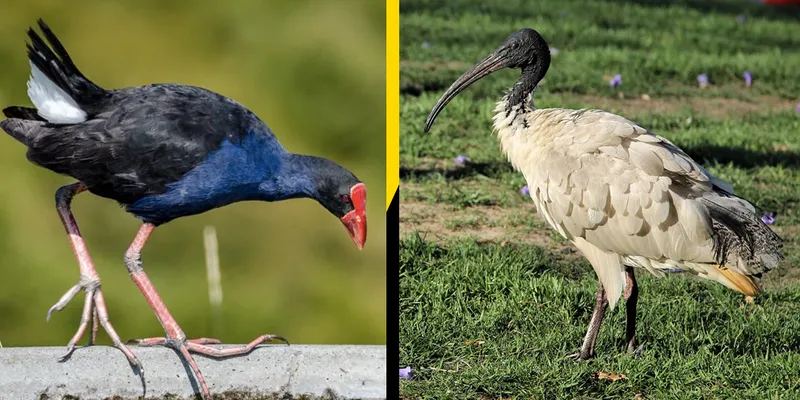
Pūkeko vs Australian white ibis
Nicknames are a common sight in local body politics, competitive sport, and avian circles too. The pūkeko also goes by the name swamp hen, while the ibis has been called everything from “bin chicken” to “rubbish raptor”. Both have also built reputations. DOC warns our native bird can be “aggressive”, while its “hated” Australian peer is considered misunderstood, and the scavenger has enjoyed a reappraisal in recent years with the “grotesque glory” of its survival seen as a success in the face of habitat loss. To date, @teambinchicken has been unsuccessful in topping the polls, though has won global fans thanks to Bluey.
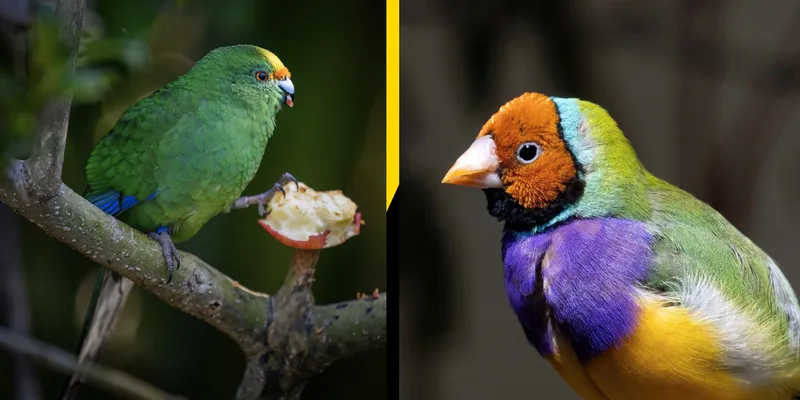
Kākāriki karaka vs Gouldian finch
Two colourful contenders, these demonstrate the kind of flair that cuts through the noise of modern electioneering. The kākāriki karaka deploys emerald green with a flourish of orange, matched by the decidedly louder (as is often the case) stylings of this Australian finch.
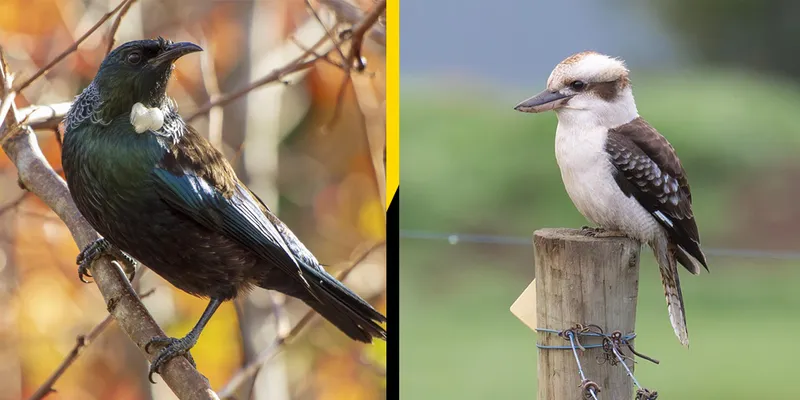
Tūī vs laughing kookaburra
Both birds can also be found on beer cans, the pinnacle of antipodean success. Given their distinctive vocal stylings, comparing these two is like having Dame Kiri Te Kanawa and Bon Scott go head to head in Australasia’s Got Talent.
Flitting around the edges of the field are the internationals – crows, mynas and pigeons – barred from competing due to their citizenship status. This differs from politics, where eligibility is more relaxed. Aotearoa only requires proof of New Zealand citizenship; however, once elected, if an MP swears allegiance to another country or receives foreign citizenship, they risk disqualification. People who hold dual citizenship can’t run for parliament at all in Australia though, and will lose their seats if found out.
When it comes to the All Blacks, you don’t need to be a citizen or even a permanent resident, but you do need to have a connection to the country (like a parent or grandparent) or have spent a set period of time here, and be contracted to the national union and local club. However, there have been renewed calls for NZ Rugby to relax its “strict” eligibility rules to improve the competition. Though some commentators who watched the test match the other weekend may beg to differ, unlike our native birds, they’re not yet considered a vulnerable or threatened species.
Voting for Bird of the Year closes on September 28.
Emma Gleason
Emma Gleason is a staff writer at The Spinoff and an award-winning fashion journalist. But it’s not just clothes that interest her, you’ll find her exploring tasty cheese, influenza outbreaks and more important things right here. She has experience with some of the country’s leading media outlets as well as the toaster in our kitchen.


