

As ministers promise more powers to clear rough sleepers from town centres, the people most affected say the new move-on orders won’t solve homelessness – they’ll just shift it out of sight.
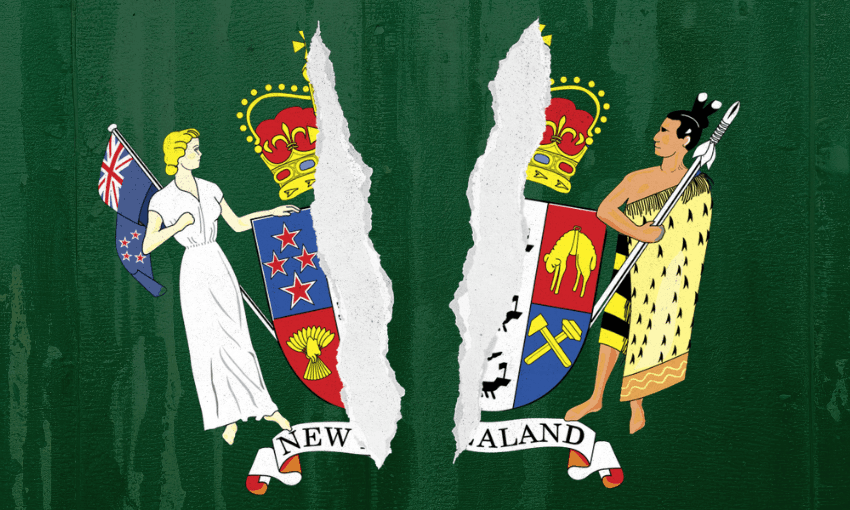
The government is “cracking down” on rough sleepers, begging and disorderly behaviour in New Zealand’s town centres, with plans to give police powers to issue move-on orders.
Justice minister Paul Goldsmith says the government is fixing the basics of law and order and ensuring communities feel safe.
Social agencies and the opposition say the legislation will punish people in hardship, while failing to address the cause of homelessness.
But what do the people at the heart of the issue, those on the street who may be moved on, have to say? We talked to people in Auckland’s CBD.
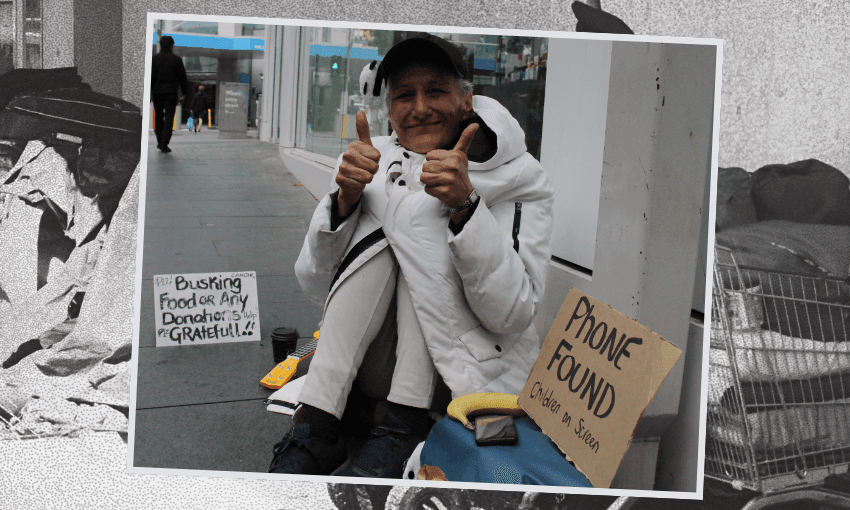
Sharon
Sharon says move-on orders won’t feel new to many “streeties” – they “know the [unwritten] rules” and are usually awake by 7am, which is when Auckland Council compliance wardens and other security guards start asking people sleeping in doorways or outside buildings to wake up and shift.
Sharon says being asked to move on can be “irritating” and feels degrading at times.
She wonders how people on the streets, who often suffer from illnesses like gout, diabetes or other conditions that impact their mobility, will actually be able to move on if asked. They can often be in severe pain and have no choice but to stay where they are, she says.
Sometimes, there are “troublemakers” – they cause a ruckus, urinate in public, or shoplift – but Sharon says a member of the public or street community will often ask them to move on.
A chef by trade, she lives in a house in Mt Eden that her kids help pay for, but she busks to pay for living costs. She helps people new to the streets (“newbies”) to find support. Sharon, who has been diagnosed with cancer, is busking today for money to travel to an upcoming MRI appointment.

Joe
“I’d move on if I had somewhere to go,” says Joe.
He used to be a security guard at Sylvia Park mall. After a bad break-up, he stayed with a friend, but he says when that became an unsafe place to be, he had to leave with nowhere to go. He’s been on the streets for two weeks.
Joe says if he was approached by police and asked to move on, he would respectfully inform them he was waiting for Kāhui Tū Kaha (an organisation that helps with housing and social services) representatives to return. He’d tell them he’s just waiting for a home, somewhere safe and secure. If they forced him to leave, he’d likely just go around the corner, or somewhere safe out of sight.
Kiani
Kiani says when he’s asked to move, he doesn’t acknowledge it, and that isn’t about to change.
He says police or security guards will often move on whole groups of people even though only one or two people have been causing issues.
“They throw handcuffs on one of us and then throw them on the rest of us, or tell us to all move on just because we’re there,” says Kiani.
Kiani thinks asking people to move on only leads to issues arising elsewhere, particularly when groups of people then congregate in abandoned buildings or sites where they are out of public view. “That’s where you get the real issues,” he says.
Kiani was once homeless and remains a father figure to many on the street. He worries that a lot of them have mental health or substance abuse issues and that being asked to move on simply adds another layer of stress for vulnerable people already in a fragile state. “They’re already worrying about other things and then they have to worry about this too,” he says.
Pop
“The government is selfish. They don’t care,” Pop says.
He’s been on the streets since he had an argument with his father when he was six years old.
Pop says the government needs to focus on looking after its own people instead of people who come from overseas “with nothing”.
He says the government’s move-on orders would be “taking away our democratic right to say yes or no”.
Harry, Payne, Isaiah and Trey
Harry, Payne, Isaiah and Trey know what it’s like to be moved on. “The worst is getting woken up by somebody’s foot,” says Isaiah.
He says he’s woken up feeling someone nudging him and realised it wasn’t a hand but a shoe. “They could just lean down and say ‘excuse me’, but they don’t.”
Harry says security guards around the city “know not to approach” him. He says he had an interaction with one guard but he won’t say what went on. “You’d have to ask him what happened.” He thinks the “14 hits” on his name serve as a warning to guards not to approach him.

Brenda
Brenda thinks the government is introducing move-on orders because homelessness is more visible now.
She was “born and bred” on the streets, but she has a place to live now. She thinks streeties’ attitudes have changed over the past few years and it may have contributed to the government’s decision to crack down.
“There’s less respect now.”
Some bad behaviour from a few people reflects on everyone who’s on the street one way or another.
Some of the names in this story have been changed.