Goodbye Splore. We’ll try to hang on to the memories

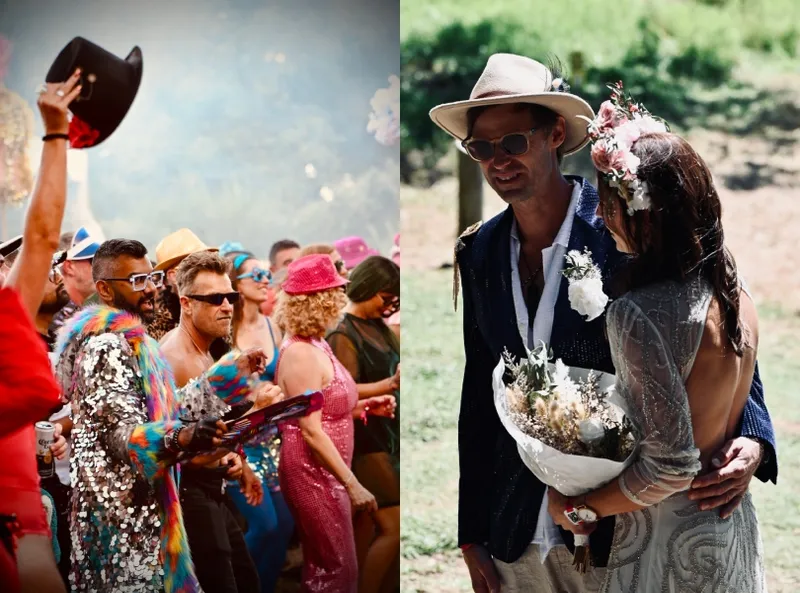
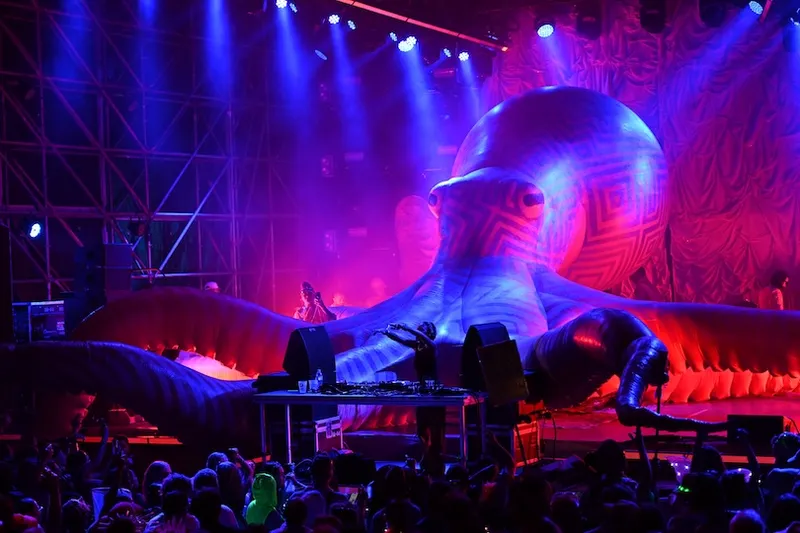
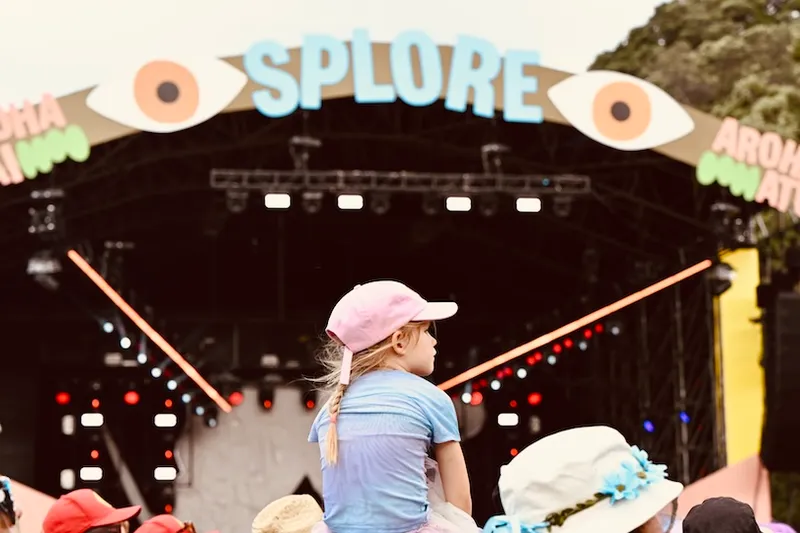
Scenes from the last ever Splore (Photos: Nico Penny)
At the last ever Splore, Simon Day reflects on the end of the festival that was so much more than a festival.
The last ever Splore was a glorious three-day celebration of everything the festival has come to represent for so many people. It was a collective mourning for the hole it leaves behind. And it was a lament for the fact that creating unique local events that provide a space for human connection is not financially sustainable.
At the Friday afternoon pōwhiri to open the final festival, the kaikōrero, artist Pita Turei, captured the emotion of the moment. “It’s like saying goodbye to your lover of 20 years. So what do you say? I’m going to say what I wished I said to my lover of 20 years: whatever happens if I spend the rest of my life in solitude under an ancient tree, every day and night will be built with joy because of the memories I have of you. So let our parting be as sweet as when two lovers first do meet.”
In the blazing sun on Saturday afternoon at the lagoon stage, DJ Bobby Brazuka cried as he shared what a special place Splore had been for him and his family. Later that night, to the packed crowd in front of the Kanikani Stage, JessB reflected on the milestone of Splore 2020, her first ever headline slot on a main stage. At 4am on Sunday morning, Dylan C, whose sunrise sets became a much-loved fixture of the festival, reflected on his very first, 20 years ago – which was also Splore’s first year at Tāpapakanga Regional Park. In 2006, he played his set to a single person.
All the artists I spoke to celebrated Splore’s organiser John Minty for creating a festival that has provided a space for artists from diverse genres and backgrounds to connect with demographics they would struggle to otherwise reach. When I caught up with Minty, he was overwhelmed by the love he’d received throughout the weekend.
But it couldn’t change the fact the festival was no longer viable in the current environment, where the costs to create such a carefully curated event outweighed the ability of the audience to provide the revenue required. After Minty’s proposal to secure a portion of the government’s $70 million major events funding failed, he announced that 2026 would be the last Splore.
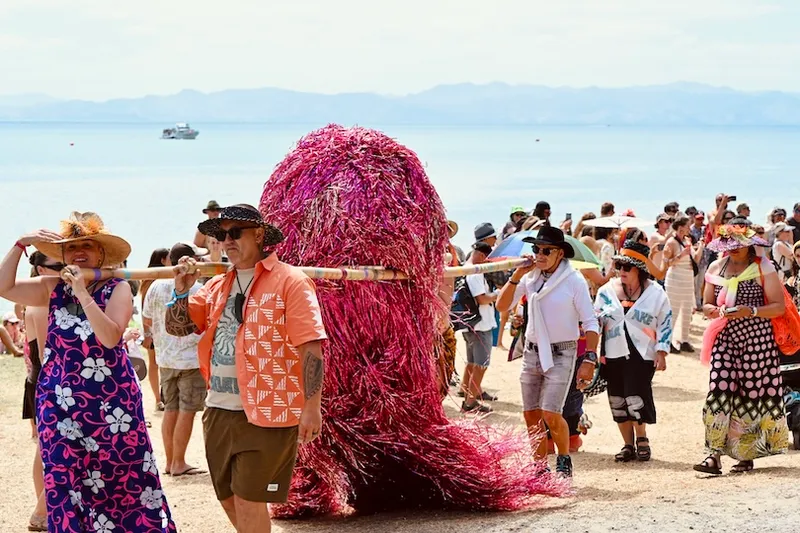
In the 12 years I’ve been going to Splore, it’s exposed me to acts and art I would never have encountered otherwise. It’s given me a place to connect with people I would have otherwise never met. And it’s helped me find parts of myself that I didn’t know about.
Splore started as a New Year’s Eve festival in 1998 on the rugged cliffs above Karioitahi Beach south of Auckland, after a group of close friends wanted to host 500 or so mates for a bush rave. It progressively grew and evolved in size and vision and when Minty became involved in 2006, when it first moved to Tāpapakanga Regional Park, he wanted to make the festival more accessible to a wider audience, while retaining its original spirit.
It’s so much more than a music festival. It’s a visual art exhibition spread across the stunning forest and beachfront venue. The cabaret stage is host to some of the most ambitious and bizarre performances I’ve ever seen (including a trapeze artist performing with a laser butt plug). There is a deep commitment to sustainability and protection of the whenua the festival gets to use.
It’s a place where people feel safe. Families have embraced Splore and the presence of children is an essential piece of the festival’s soul. Every year weddings are a part of the spectacle, and you’ll hear applause break out as the bride and groom move through the grounds on the back of a golf cart. This year a couple renewed their vows on their 10th anniversary of getting married at Splore.
There is a genuine connection with mana whenua. Ngāti Paoa and Ngāti Whanaunga have a visible and important presence at the festival and are given space to share their story and promote connection with their whenua to the guests.
Splore is also an event with a loud and brave social and political voice, with revolutionary British trans poet Kae Tempest performing on the main stage in 2023. This year Aboriginal rapper and activist Miss Kaninna called out colonisation, police brutality and white and male privilege from the headline Friday slot on the main stage.
This is what has made Splore such a special event. It managed to cross over without betraying the things the festival stood for. Yes, it has alcohol sponsors and telco brand partners and if things went right, a profit. But it never sold out. It held firm to the principles that defined its first iteration: a celebration of humanity, and our connection with each other and the land.
It’s meant that Splore retained its relationship with the ravers and artists that built its foundations, but it also brought them together with a mainstream audience. It’s shown us how similar we all are when forced to live on top of each other for three days and look after each other in a mutual pursuit of a utopian escape from the grind of our daily lives.
On the front page of this year’s programme was an excerpt from an essay by Ivan March on what he describes as “the Festival Industrial Complex”.
“The pursuit of a truly radical gathering is confronted by a paradox: the problem of scale and refinement. The true challenge is not to reject ambition, but to reinvent it. The question shifts from ‘How impressive is the spectacle?’ to ‘How profound is the participation?’ The ambition is not just for grandiose production but for a grandiosity of spirit, a scale measured not in attendance or production value, but in the intensity of shared vulnerability, cognitive risk, and mutual creation.”
The quote captures the essence of Splore’s ambition: to create an experience where people actively embraced and enhanced the festival’s vision for its community. But it also reveals the contradiction of Splore’s offering – it’s really hard to have profound participation in a festival built to foster meaningful engagement in a way that is financially viable and affordable for the community at the same time.
Splore taught us something about ourselves and the way we are meant to connect with each other. Unfortunately, it also showed us it’s not a sustainable experience to offer in the current world we live in.
I remember sitting at my desk one Monday morning after Splore, struggling to stay awake. Photos of the festival were flying around Instagram and Twitter. An unconvinced colleague shared a tweet with me describing a perception of Splore as a “midlife crisis en masse”.
Ten years on from that festival, I’ve come to reinterpret that thesis. Splore is a manifestation of crisis. It’s a place where for a moment we were shown an alternate reality, one where the village has been reconstructed and a collective utopia feels attainable – if only for a moment. In that moment we got to abandon the ugliness of the algorithm and genuinely connect with each other.
The communal joy at Splore is a response to the underlying crisis of the stress and loneliness of our daily existence. It’s a joy that feels in opposition to the increasing individualism and disconnection of our world. Unfortunately, that world requires Splore to run a profit.
Sitting at my desk today, again trying not to fall asleep, the loss of that space feels sad and revealing. I will try to build on the joy of the memories instead.


