
Data from ACC and NZTA shows that people travelling in buses have the fewest accidents and deaths of any transport mode in New Zealand – even though there are no seatbelts. Shanti Mathias explores why.
The rising price of petrol is making public transport look a lot more appealing right now, but it’s not the only benefit to leaving the car at home: bus passengers have the fewest accident claims of any form of road transport, according to data from ACC. (Not counting ATVs, ie quad bikes, which are primarily used off-road.)
This applies even when accounting for how much time people spend on buses. A regular NZTA survey assesses different transport modes by how much distance they cover, how much time is spent on them and how many trips occur per year. Comparing that data to the accident data shows what percentage of accidents are lodged on that transport mode relative to how much time people spend on that transport mode.
Some forms of transport are disproportionately accident-causing, like motorcycling. In 2024, less than 1% of all time people spent on transport was on a motorbike, but 13% of accidents resulting in ACC claims involved people on motorbikes. (It’s important to note that this data shows the number of accidents causing injuries that warrant ACC claims being made, not whether or not that vehicle type caused the accident.)
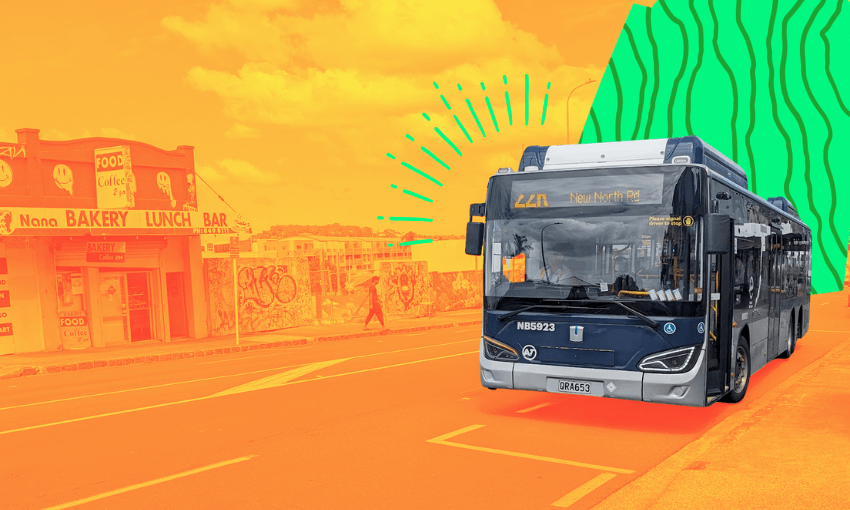
But one of the safest forms of transport, even more so than walking, is taking the bus. (It’s worth noting here that we’re talking about road accidents, not personal safety – these figures don’t take into account the likelihood of being assaulted on the bus, though while such incidents can naturally feel concerning, they are very rare compared to the number of bus trips taken each week.) In 2024, 5.3% of hours spent travelling were on public transport, and only 3% of accidents on roads were to people on the bus. It doesn’t make immediate sense why there would be so few accidents in a bus; after all, just one bus getting in an accident could potentially injure dozens of people. “An hour in a bus has 10 times less accident risk than an hour driving a car,” says Ping Sim, the principal safety adviser at Auckland Transport.
One potential reason is because bus drivers are specifically trained for driving big vehicles full of people. “Unlike most road users, bus drivers are professional drivers who operate vehicles every day and undertake regular refresher training and safety assessments throughout their careers,” says Steven McKeefry, the chief operating officer of bus company Kinetic.
Most urban buses don’t even have seatbelts for people to use – NZTA doesn’t require this because buses “typically travel at lower speeds, make frequent stops, and are designed to safely accommodate both seated and standing passengers”, says McKeefry.
Drivers often have rest stops written into their contracts, making accidents caused by fatigue less common. Kinetic is trialling “driver fatigue monitoring technology” in Auckland that can track early signs of fatigue – drooping eyelids, slower response times – and notify drivers.
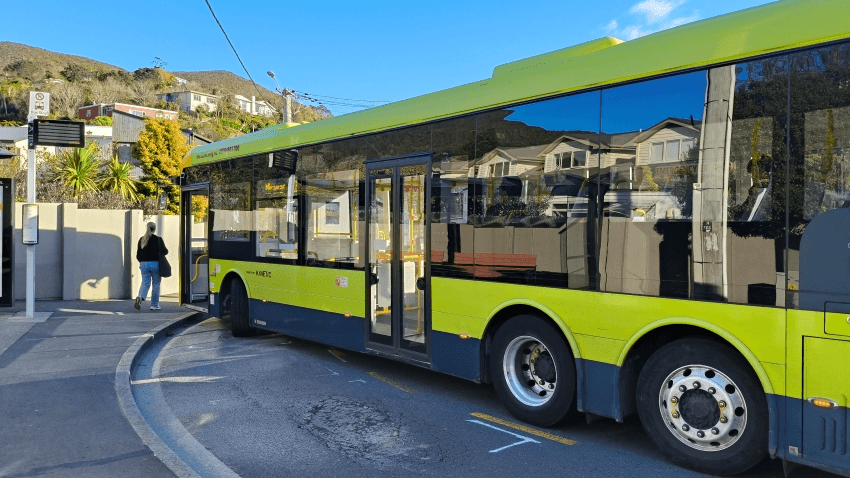
There’s also the maintenance factor. There’s no question of a bus skipping its WOF and hoping it’ll be OK; because these vehicles are in use so much of the time, they undergo a much higher degree of maintenance.
The size and external design of buses contributes too. “Drivers also sit higher than most other road users, which improves visibility of surrounding traffic, cyclists and pedestrians,” says McKeefry. Buses are bigger than most of what is around them, making them more visible and easy to avoid, and if they do collide with another vehicle, it’s usually smaller and comes out second best.
Sim thinks about these factors as “layers” of safety around bus passengers, making it a transport mode 10 times safer than driving a private car. Trained drivers, big and visible vehicles, going more slowly, usually on sealed urban roads rather than “windy, unsealed rural roads”.
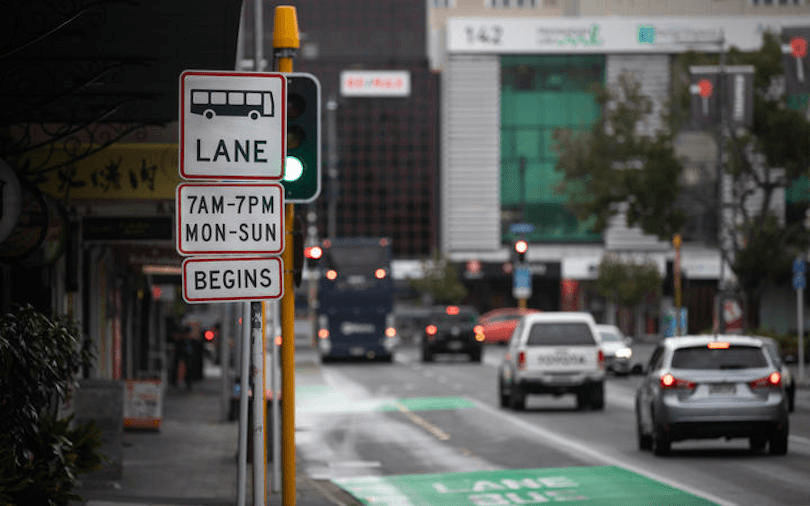
What about bus lanes? Do they contribute to safer outcomes for buses? A 2022 study in LA found that bus lanes consistently improved efficiency for buses but in some cases contributed to more collisions, because of where parked cars were positioned in between buses and traffic. But bus lanes are mostly a win-win, says Sim: they improve efficiency and safety at the same time. “Those goals can complement each other – one thing that will make public transport unreliable is a crash.”
In some places, bus lanes are also shared with cyclists, or a cycle lane is positioned next to a bus lane. This can lead to poor outcomes for cyclists, as some of the smallest vehicles on a road next to some of the biggest vehicles on a road. Research shows that when buses are next to them, cyclists ride right at the edge of the road, and where it isn’t safe to overtake, buses tend to follow cyclists more closely, with a less than two-second gap.
While Sim says that “in general, it’s best for each transport mode to have its own space”, there is a limited amount of space on the road – meaning that cyclists, motorbikes and e-scooters sometimes have to share with buses. “It can be tight with how much space is in bus lanes… we have to make sure there is support and resources for users travelling at different speeds,” says Sim diplomatically.
Changing transport modes impacts the safety of all road users, says Jamie Hosking, a senior lecturer at the University of Auckland. “Cars are much more dangerous to other [transport users] by far.” In terms of risk to you as an individual, driving may be safer than cycling or riding a motorbike, but as a whole, more driving causes more dangerous accidents. He’s concerned that current government policies raising speed limits and offering less funding for public transport “are going in the wrong direction” for safety, as well as using more fuel.
And beyond accidents, there are other health benefits: 30 people taking a bus produces less air pollution than 30 people driving. “We have over 3,000 deaths a year from air pollution in New Zealand, close to how many people die of smoking, [and] a lot of that is from the transport system,” he says.
Sim says that one reason Auckland has a lower rate of deaths on the road than other parts of the country is because there are more people on public transport. “Having fewer cars on the road increases safety for everyone,” she says.
It takes years to get quality data that might reflect how government policies on transport and fuel impact how New Zealanders travel, as well as how many transport accidents there are. But if fuel prices are putting people off private vehicles, at least relative safety is one more reason to take the bus.