
The attack on Iran has prompted fierce debate about its legality – and whether New Zealand’s response goes too lightly on Donald Trump, writes Catherine McGregor in today’s excerpt from The Bulletin.
To receive The Bulletin in full each weekday, sign up here.
A regime decapitated
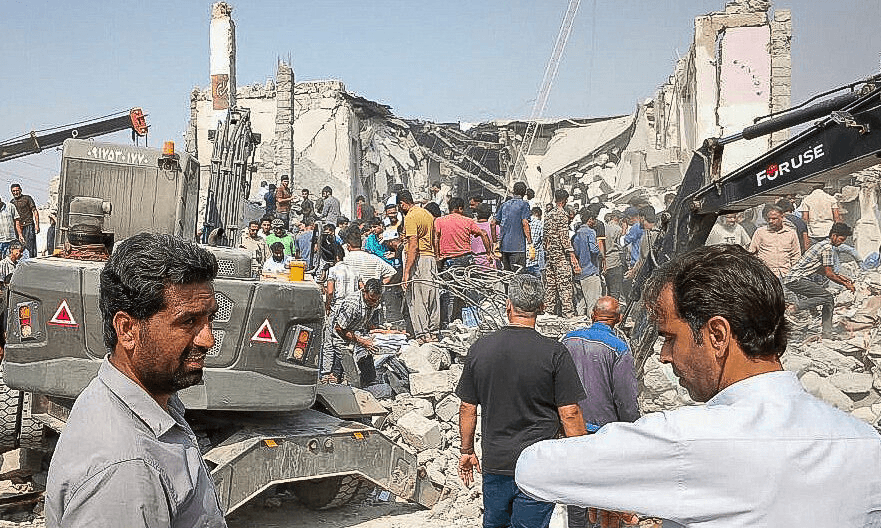
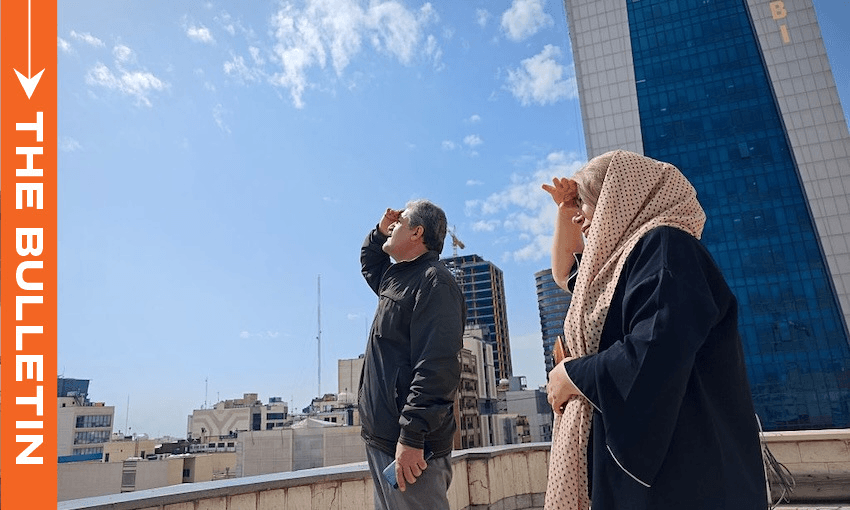
Iran’s supreme leader, Ayatollah Ali Khamenei, is dead – killed in the first wave of a massive joint US-Israeli strike launched late on Saturday night NZT. The operations, labelled “Epic Fury” by the Americans and “Roaring Lion” by Israel, targeted Iranian leaders, military installations and nuclear facilities, as The Spinoff’s Toby Manhire reported in his useful piece yesterday setting out what we know so far. Among the most distressing moments of an already devastating day: 150 people, almost all children, were killed when a missile struck the Shajareh Tayyebeh girls’ school in Minab, southern Iran, according to the Guardian. The school sits adjacent to a Revolutionary Guards barracks.
Iran’s response was swift. “The most ferocious offensive operation in the history of the Islamic Republic of Iran’s armed forces will begin any moment now,” the Revolutionary Guards posted on Telegram. A fresh wave of strikes on Sunday targeted 27 US military bases across the region, along with Israel’s military headquarters and a defence industries complex in Tel Aviv.
Donald Trump cited an “imminent threat” from Iran to justify the strikes, but has provided no specific evidence. It is a critical distinction. Under the UN Charter, force can only be used against another state with Security Council approval, or in self-defence – which some interpretations extend to pre-emptive action against a clear and imminent threat. Without such evidence, the attacks are illegal under international law.
NZ’s measured words
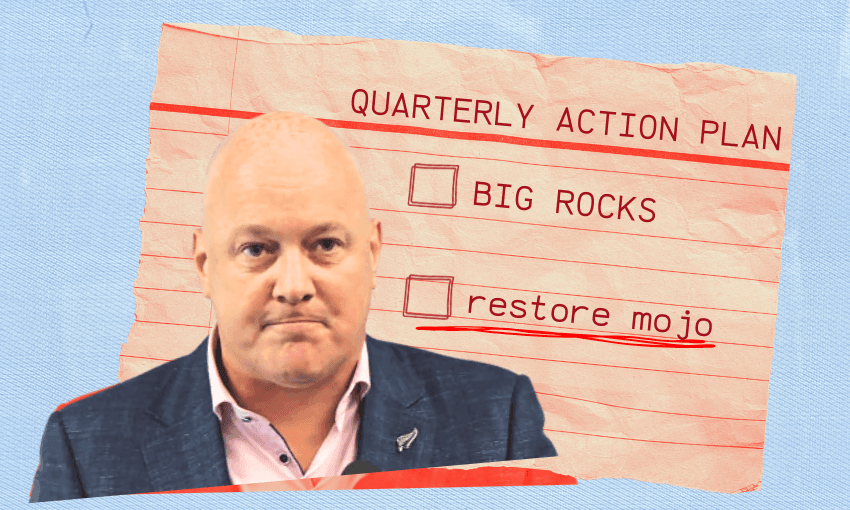
New Zealand was not among the countries given advance warning of the strikes – foreign affairs Minister Winston Peters confirmed that at a subsequent press conference. But the response from Peters and prime minister Christopher Luxon was sympathetic to the US government’s position. Their joint statement acknowledged that the US and Israeli actions “were designed to prevent Iran from continuing to threaten international peace and security”, reserving condemnation for Iran’s “indiscriminate retaliatory attacks” on its Gulf neighbours.
The statement did include one nod toward international law: “We call for a resumption of negotiations and adherence to international law – and we urge the Iranian leadership to seek a negotiated solution that returns Iran to the community of nations.”
It was not enough for critics. Labour leader Chris Hipkins said the strikes and retaliatory attacks both “undermine international peace and security and put civilian lives at risk”. Greens co-leader Marama Davidson called the US-Israeli attack “an illegal and unprovoked act”, saying Luxon’s failure to condemn it “demonstrates his lack of leadership or moral courage”.
War spreads across the Gulf
Iran has long distinguished between striking Israel and striking the Gulf states, a line it rarely crossed in previous rounds of conflict. Not this time. Within hours of the first bombs falling, Iranian missiles and drones hit Dubai, Doha, Manama and Kuwait City. The luxury Fairmont hotel in Dubai’s Palm Jumeirah was struck and set alight, injuring four people; debris from an intercepted drone later caused a fire at the Burj Al Arab tower. In Bahrain, a drone struck a high-rise building and engulfed it in flames; Kuwait’s main airport was also hit, the Guardian reports.
Iran’s foreign minister told NBC that Tehran had “no intention to attack” its neighbours, insisting the strikes on Gulf states were directed at US military bases “in an act of self-defence”. But that’s not the full story, the Guardian notes: “Imposing material costs on Gulf states, stable kingdoms unused to wars in their back yards, could be to get the monarchies to put pressure on Trump to halt the bombing campaign.”
Grounded planes and nervous markets
The closure of airspace across Iran, Iraq, Kuwait, Bahrain and Qatar, combined with Emirates’ suspension of all flights from its Dubai megahub, has produced one of the worst aviation disruptions in years. Dubai International Airport – the world’s busiest for international traffic – has suspended all operations.
Meanwhile, the oil market faces its biggest shock in decades, Reuters reports, with the price of Brent crude expected to jump when trading resumes. The critical variable is the Strait of Hormuz, the narrow waterway between Iran and Oman through which nearly 20 million barrels of oil flow daily, a third of all global seaborne crude oil exports.
Several major oil traders have already suspended movements shipments through the strait and Iran has threatened a full blockade. Reuters says that’s unlikely, but Iran’s stockpiles of mines and short-range missiles pose a serious risk to shipping. The impact on oil and petrol prices – and on economies worldwide – could be enormous. “A prolonged closure of the Strait of Hormuz is a guaranteed global recession,” former White House energy advisor Bob McNally told CNBC. New Zealand’s Rupert Carlyon of Koura told RNZ markets are “already fearful and volatile” due to fears of an AI bubble and higher US inflation. “Now they have something real and tangible, they may react strongly.”