Big elections here and in the US, a sputtering economic recovery, and more issues that will have us all talking in ’26.
To receive The Bulletin in full each weekday, sign up here.
Happy new year and welcome back to the Bulletin. I hope you had a sunny and relaxing break, and if you’re headed back to your desk this morning that the adjustment isn’t overly painful.
We’re starting the year with a look at some of the key topics and events that are set to dominate the news this year. On The Spinoff this morning, political pundits including Lyric Waiwiri-Smith, Andrew Geddis, Veronica Schmidt and Mihingarangi Forbes share their picks for the big political issues on which the year will hinge. And if you missed it, be sure to check out the team’s 2026 “wild political predictions”, plus a bonus episode of Gone By Lunchtime in which Toby, Annabelle and Ben share their own predictions for the year.
Will this year see the removal of not one but two party leaders prior to the election, as Toby predicts? Only time will tell. For now, let’s focus on the issues certain to hog the headlines this year – no crystal ball required.
Will the coalition make it to ’27?
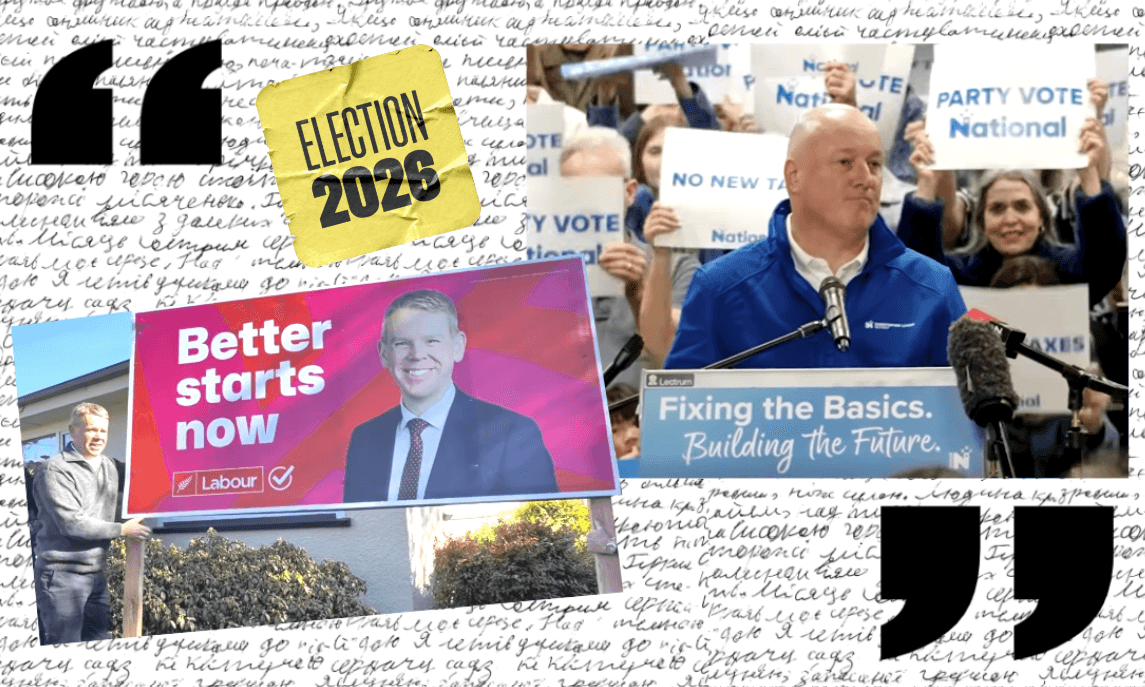
You don’t need me to remind you that this is an election year, but you may need your memory jogged on the final poll of 2025: we ended the year with Labour ahead, and not by a whisker. December’s Post/Freshwater Strategy poll had Labour on 38% to National’s 30%, with NZ First on 9%, Act and the Greens on 8% apiece, and Te Pāti Māori down at 2% – numbers that would leave both the current coalition and the left-bloc blocs short of an outright governing majority. Add in the preferred prime minister stakes – Hipkins on 45% to Luxon’s 39% – and National’s challenge for 2026 comes into sharp focus: Luxon will have to spend the year both defending his record and reintroducing himself to the voting public.
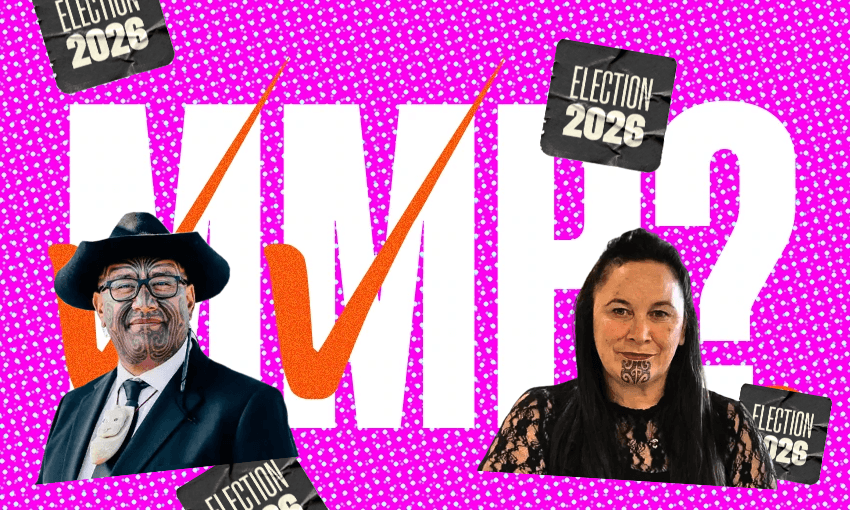
Meanwhile, NZ First’s ability to siphon support from disaffected Labour voters – older, culturally conservative, sceptical of government – could help sway the election, and decide whether Winston Peters gets to reprise his favourite role as kingmaker. Labour also can’t ignore the opportunity presented by Te Pāti Māori’s internal turmoil: unless the party manages a heroic turnaround this year, the Māori electorates will be ripe for the picking come election time. Luxon is expected to announce the election date later this month – the moment he does, the 2026 campaign kicks into gear.
Is the Year of Growth finally here?
If the election is close, it will be close for a simple reason: the state of the economy and the cost of living are the issues that trump every political argument. As Stuff’s Glenn McConnell reports, National says an uptick in GDP and the growth in “job-rich sectors of the economy” promises “better times ahead”, while Labour argues the economy is smaller now than it was when National took office back in 2023.
This is where Luxon’s past rhetoric comes back with interest. In January last year he promised 2025 would be a year of “growth, growth, growth” – a line delivered with the confidence of a man who assumed the economy would oblige. It didn’t. The question that will hang over 2026 is whether the government can credibly argue that the hard part is behind us and the Year of Growth has arrived – just a little later than expected.
Will local government reform pay off?
While Wellington obsesses over the party vote, councils are bracing for something more structural: a reshaping of local government and planning rules that will land right in the middle of an election year. The government has already announced the bills set to replace the Resource Management Act – the Planning Bill and the Natural Environment Bill – with ministers aiming to pass them into law in 2026.
At the same time, regional councillors have an eye on the future as they prepare for legislation that will ultimately abolish their roles. As announced in November, regional councils are set to be scrapped and replaced with boards made up of mayors from the region’s city and district councils. That legislation will be introduced this term and is expected to come into effect in 2027. As the deadline edges closer, expect more councils to move early, trying to shape what happens to them rather than having it imposed. As we wrote about last month, mayors across Wellington and Wairarapa have already begun exploring amalgamation options in response to the government’s reform agenda.
Can the US hold on until November?
Right around the time New Zealand goes to the polls, Americans decide whether to put a congressional handbrake on an increasingly out-of-control presidency. On November 3, the midterm elections will put all House of Representatives seats and a third of Senate seats up for a vote, giving Democrats an opportunity to wrest control of at least some levers of government from the party currently controlling the presidency and both Houses of Congress.
While presidential approval polling doesn’t track exactly onto these statewide races, a Reuters/Ipsos poll in mid-December put Trump’s approval at 39%, a significant drop from the 47% with which he began his second term. It’s a trend that could be accelerated by the outpouring of shock and revulsion at the killing by an Ice officer of Minneapolis woman Renee Good last week. It’s hard to imagine stronger evidence for the need to rein in Trump’s authoritarianism than Good’s execution-style shooting, compounded by the administration’s grotesque lies about the circumstances that led to her death.