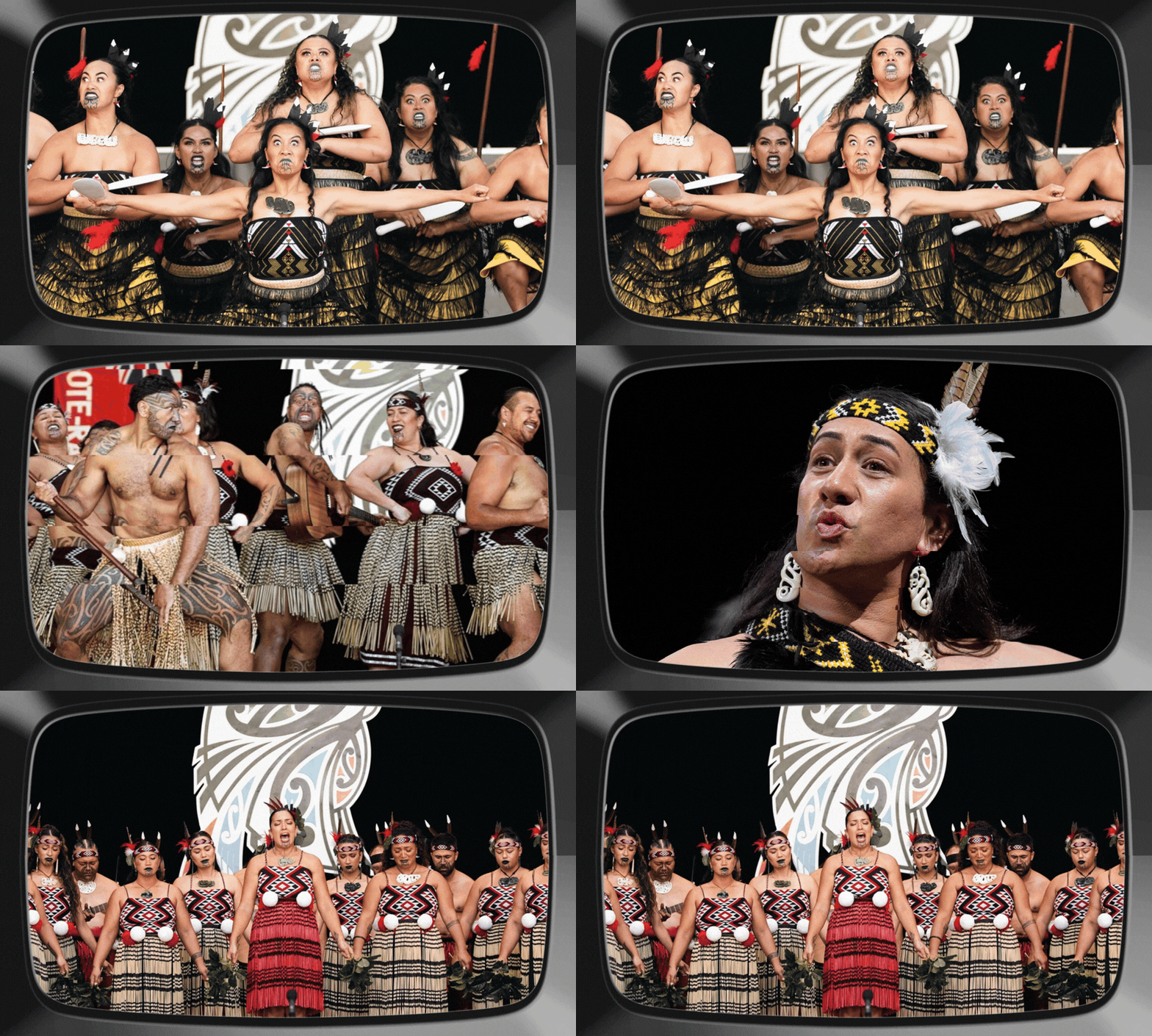


From Rotorua heavyweights to Gold Coast hopefuls, 11 regional competitions over the coming months will decide who earns a place on the biggest kapa haka stage in Waikato next year.
We’re officially on the road to Te Matatini 2027. There will be 11 regional kapa haka competitions across Aotearoa and one in Australia over the next four months. The top groups from each competition will qualify for the next national Te Matatini, to be held at Hopuhopu in Waikato from February 22 to February 27, 2027.
A total of 55 kapa competed in the event last year – the most ever seen at Te Matatini. The number of groups to qualify for next year’s national competition will be determined by how many compete in the regional competitions, with the maximum number being six groups from one region.
About 70,000 people attended last year’s festival over five days and around 2.5 million viewers watched on television and online, according to a report from Te Matatini. Social media channels also generated over 21m views. Economically, the 2025 festival had an estimated direct economic impact of nearly $24m, making it the largest and highest-earning competition in its history.
Ngāti Kahungunu was the first rohe this year to hold its regional competition, which took place in Waipukurau, Hawke’s Bay earlier this month. First place went to defending champions Te Rangiura o Wairarapa, while Te Kapa Haka o Kahungunu improved on its third place result from 2024 to take second. Ngāti Ranginui took third place, up from fourth last time with Mātangirau claiming the final qualifying spot at fourth.
With so much more kapa haka coming up, we’ve carefully crafted a guide on how to watch the regional competitions, previous winners, and things to look out for.

Mataatua senior regional kapa haka competition
When: February 27-28, 2026.
Where: Te Kāeaea o Taiwhakaea (Rugby Park), Whakatāne.
Previous results: Te Kapa Haka o Te Whānau a Apanui (first), Ōhinemataroa ki Ruatāhuna (second), Tauira mai Tawhiti (third equal), Te Taumata o Apanui (third equal), Ōpōtiki mai Tawhiti (fifth), Te Kapa Haka o Ruatoki (sixth).
Mataatua was well represented on the final day of Te Matatini last year, with three of their kapa making the top 12. Defending champions Te Whānau ā Apanui will be looking to make it four regional titles in a row when they take to the stage at 9am on Saturday. The crowd favourites constantly set the benchmark for kapa around the region and will be hoping to emulate the form that saw them take out the national competition in 2023. It will be an emotional return to the regional competition for Ōpōtiki Mai Tawhiti kapa haka, following the passing of their leader Ricky Mitai in 2024.
Ngā Uri a Awanuiārangi will be making their second stand since combining Te Whare Wānanga o Awanuiārangi, Te Rūnanga o Ngāti Awa and Te Tohu i te Ora o Ngāti Awa kapa. Celebrating 60 years since forming to revive te reo Māori in the rohe, Te Whakatōhea-based rōpū haka Ngā Pōtiki are set to make a return to the stage this year.
Te Tini o Awa are aiming to end a 37-year drought by qualifying for Te Matatini at this weekend’s regional competition and Te Matatini 2025 finalists Te Taumata o Apanu will also be rōpū to watch closely.
Te Kāhui Maunga senior regional kapa haka competition
When: March 7, 2026.
Where: Clifton Park, Waitara.
Previous results: Te Reanga Morehu o Ratana (first), Ngā Purapura o Te Taihauāuru (second), Te Kura Nui o Paerangi (third), Ngā Waihotanga (fourth).
Unfortunately, none of the rōpū representing Te Kāhui Maunga were able to capitalise on the home ground advantage at Te Matatini last year, with no local kapa qualifying for finals. Defending champions Te Reanga Morehu o Ratana have dominated the regional competition over the last decade, taking out at least four titles in the time. Consistently at the group’s heels over the past 10 years, Te Matapihi will be seeking redemption after failing to make the top four last time.
Competition will be fierce again this year, with four spots at Te Matatini up for grabs. Ngā Purapura o te Tai Hauāuru will also be one to watch closely after wowing the crowd at Te Matatini last year with its bracket dedicated to the poropiti Mere Rikiriki. Leader Aroha Broughton-Pue took home the Manukura Wahine award as a result.
Te Arawa senior regional kapa haka competition
When: March 13-14, 2026.
Where: Rotorua International Stadium.
Previous results: Ngāti Whakaue (first), Tuhorangi Ngāti Wāhiao (second), Te Pikikōtuku o Ngāti Rongomai (third), Te Hekenga ā Rangi (fourth), Ngāti Rangiwewehi (fifth), Te Hikuwai (sixth).
The pressure is on in one of the most competitive regional competitions in Aotearoa. Defending regional and national champions Ngāti Whakaue will be looking to replicate its success as it competes against 26 kapa from throughout the region. Ngāti Rangiwewehi were just behind them at Te Matatini last year, as Te Arawa took one and two at the national competition.
There are several powerhouse rōpū from Te Arawa, with Rotorua considered a major heartland of modern kapa haka and Māori cultural performance. Despite the winners of Te Matatini in 2011 Te Mātārae-i-Ōrehu disbanding in 2023, there are several rōpū that will still fancy their chances of going all the way at next year’s national competition.
Look out for Tūhourangi Ngāti Wahiao, who placed first equal in the whakaeke and poi at Te Matatini last year. Te Pikikōtuku o Ngāti Rongomai also made the final 12 at Te Matatini and will hope it can make it back again next year.

Te Whenua Moemoeā senior regional kapa haka competition
When: March 28, 2026.
Where: Gold Coast Sports and Leisure Centre.
Previous results: Manawa Mai Tawhiti (first), Te Kapahaka o Te Hau Tawhiti (second), Te Atawhai Puumanawa (third).
Kapa haka is rapidly growing in popularity across the ditch, thanks in large part to the ever-increasing number of Māori making the move to Te Whenua Moemoeā. The previous qualifying competition held in 2024 saw nine kapa from across the country battle for three spots at last year’s Te Matatini in front of over 10,000 people.
This year, nine kapa will once again compete for three spots at Te Matatini 2027. After just missing out last time out, Te Kahu Ariki and Te Whare Haka o Nārama will be looking to book a ticket to the big dance this time. Defending champions Manawa Mai Tawhiti will likely be favourites heading into the competition, having secured a spot at Te Matatini four times in a row. However, competition will likely be close, with several equal placings in the items’ judging last time.
Whoever qualifies for Te Matatini will be hoping to make history next year, with a kapa coming from Australia yet to make the final stage.
Te Taitokerau senior regional kapa haka competition
When: March 28, 2026.
Where: McKay Stadium, Kensington, Whangārei.
Previous results: Muriwhenua (first), Hātea (second), Te Uri o Manumanu (third), Te Puu Ao (fourth).
Despite being home to some of the country’s most prominent kapa haka composers and performers like Pere and Awatea Wihongi and Ōtene Hopa, no rōpū from Te Tai Tokerau has ever made it to the finals of Te Matatini in the modern era. The proud Northlanders will be hoping to change that next year, with the path to glory beginning in Whangārei.
Muriwhenua and Hātea are consistently at the top of the results and will be hoping to make it back to Te Matatini again. After 23 years away from Te Matatini, Ngāti Whātua was well represented last year by newcomers Te Uri o Manumanu. Look out for Te Au Warawara and its hearty mana waves should the group make a return this year.

Tainui senior regional kapa haka competition
When: April 17-18, 2026.
Where: Claudelands Event Centre, Hamilton.
Previous results: Mōtai Tangata Rau (first), Te Pou o Mangataawhiri (second), Te Iti Kahurangi (third), Te Kapa Haka o Ngā Pua o Te Kōwhara (fourth), Te Pae Kahurangi (fifth).
There’s extra incentive for competitors at this year’s Tainui senior regional kapa haka competition, with the region set to host Te Matatini for the first time since 2000. Although Te Tauihu was originally set to hold the biannual event, the board of Te Matatini decided the region lacked required capacity, choosing to shift it to Ngāruawāhia instead.
A total of 20 kapa competed for six spots at Te Matatini in 2024, with Mōtai Tangata Rau taking top honours. The group went on to make the finals at Te Matatini last year, alongside fellow Tainui kapa Te Pou o Mangataawhiri. However, neither rōpū placed in any of the aggregate sections at the national competition.
Debut group Hauraki Kōwhao Rau performed strongly and was unlucky to miss out on a trip to Te Matatini after two groups withdrew from the competition at the last minute, meaning only five were able to qualify for the national finals.
After a successful debut in 2024, Te Pae Kahurangi will be looking to improve on its fifth place result this time around. Established in 2000, Te Iti Kahurangi also remains among the top caliber of kapa haka in the country.
Rangitāne senior regional kapa haka competition
When: April 18, 2026.
Where: Central Energy Trust Arena, Palmerston North.
Previous results: Te Tū Mataora (first), Te Tini o Rehua (second), Te Whirikōkō o Rangitāne (third), Te Ringa Kaha (fourth).
In 2014, only five groups competed in the Rangitāne regional competition. By 2024, that number had grown to 14, highlighting the growth of kapa haka in the region over a decade.
Winners Te Tū Mataora are a veteran group from the rōhe who first performed at Te Matatini in 2009. Last time out, the kapa displayed its mastery in singing and developing skills with the poi. They will be hard to beat again this year.
A stand out of the Rangitāne competition in 2024 was it’s kākahu, which became a talking point for kapa haka enthusiasts around Aotearoa. Those interested in kapa haka outfits and design will be waiting patiently to see what sort of costumes the likes of Te Whirikōkō o Rangitāne and others will pull out this time around.
Kia Hukere te Hoe! Te Tau Ihu senior regional kapa haka competition
When: April 24, 2026.
Where: Marlborough Lines Stadium 2000.
Previous results: Te Kuru Marutea (first), Kia Ngāwari (second).
It will be a bittersweet regional competition this year for the would-have-been hosts of next year’s Te Matatini. The controversial decision to move the biannual national competition to Waikato upset many in Te Tauihu. At the regional secondary school competition following the announcement, many kura included items expressing disappointment at the decision.
Kapa haka has been steadily growing in the region, with a total of six rōpū competing for a spot at Te Matatini in 2025. Te Kuru Marutea and Kia Ngāwari, who were celebrating their 50-year anniversary took out top honours in 2024. With an increasing number of Māori-immersion kura in the region, the organisers are hopeful that the number and quality of kapa vying to make it to Te Matatini continues to grow.
At Te Matatini last year, Te Kuru Marutea stole the show with its viral waiata, which earned the kapa the inaugural People’s Choice Award. The song, which featured on the official album of Te Matatini 2025, has amassed over 2.2 million streams on Spotify and millions of views across social media platforms.

Tairāwhiti senior regional kapa haka competition
When: May 2, 2026.
Where: Houhoupiko, Gisborne Showgrounds and Event Centre.
Previous results: Waihīrere (first), Whāngārā Mai Tawhiti (second), Te Hokowhitu a Tū (third), Tū Te Manawa Maurea (fourth), Hikurangi Pariha (fifth).
Established in 1952 as a fundraiser for Te Tairāwhiti Māori Anglican churches, the Tamararo competition holds the title of New Zealand’s oldest continuously running regional kapa haka event.
Despite coming second at the last regional competition, Whāngārā Mai Tawhiti was the only kapa from Te Tairāwhiti to make it to the finals at Te Matatini 2025. Hikurangi Pariha made a successful return to the regional stage last time out, led by legendary composer Kuini Moehau Reedy. Despite placing fifth, the kapa was a strong example of Tairāwhiti mita and style.
Fourth placed Tū Te Manawa Maurea displayed its prowess with the poi last time and will be favourites in the section again heading into this year’s regional competition. Te Hokowhitu a Tū will be looking to capitalise on the momentum from 2024, where it earned a place at Te Matatini for the first time since 2013.
After making a successful comeback under the tutelage of Lorraine ‘Lolo’ Brown, Waihīrere will be hoping to make it two in a row this year. However, their work will be cut out for them given the ever-increasing standard of kapa haka in the region.
Tāmaki Makaurau senior regional kapa haka competition
When: May 16-17, 2026.
Where: Spark Arena, Auckland.
Previous results: Angitu (first equal), Ngā Tūmanako (first equal), Te Waka Huia (first equal), Te Rōpū Manutaki (fourth), Te Rōpū Hinekahukura (fifth), Te Taha Tū (sixth).
The Tāmaki Makaurau competition is consistently one of the most anticipated regional competitions in the country. With the highest population of Māori of all regions in the country, Tāmaki Makaurau is awash with high-caliber performers from around Aotearoa. A total of 25 groups competed at the last regional competition.
There was a three-way tie for first place, with Angitu, Ngā Tūmanako and Te Waka Huia all claiming the top spot. These groups also made it to the top 12 at Te Matatini last year. Ngā Tūmanako claimed third overall at the national event, while Angitu made headlines with its AI-composed haka.
Based at Hoani Waititi Marae in West Auckland, Te Rōpū Manutaki took fourth place. From just down the road in Te Atatū, new kapa Te Poho o Hinekahukura made a successful debut at the last regionals. The group was led by acclaimed exponent Jeff Ruha, a former member of the 2019 winners Ngā Tūmanako and the 2023 Te Matatini champions Te Whānau a Apanui.

Waitaha senior regional kapa haka competition
When: May 23, 2026.
Where: Wolfbrook Arena, Christchurch.
Previous results: Kōkō Tangiwai (first), Ngā Manu a Tāne (second), Te Ahikaaroa (third), e Kapa Haka o Ngā Hau e Whā ki Murihiku (fourth).
It was the 60th anniversary of the Waitaha senior regional kapa haka competition in 2024, where 13 kapa took to the stage. Two new groups, Kōkō Tangiwai and Te Kapa Haka o Ngā Hau e Whā ki Murihiku made successful debuts, with the former taking top honours and the latter claiming fourth.
Ngā Manu a Tāne was the only rōpū from the top kapa of the 2019 regional competition to make it back to Te Matatini last year. No kapa from Waitaha were represented in the final 12 at the national competition.
Te Whanganui a Tara senior regional kapa haka competition
When: June 13, 2026.
Where: TSB Arena, Wellington waterfront.
Previous results: Te Ahi a Tahurangi (first), Ngā Taonga Mai Tāwhiti (second).
Six kapa haka rōpū battled for top honours at the 2024 Wellington regionals, with Te Ahi a Tahurangi claiming the title and Ngā Taonga Mai Tawhiti placing second. Te Ahi a Tahurangi made its debut in 2020 and successfully defended it last time out. The rōpū is largely made up of performers from Tūtemaungaroa and Tūhoe ki Pōneke – both former regional representatives at Te Matatini, and both affiliated with the Bay of Plenty iwi, Tūhoe.
Te Kairangi o Poutama also made its debut at the last regional competition and will be looking to claim a spot at next year’s Te Matatini after narrowly missing out last time around. The kapa is the first competitive haka group to represent Ngāti Toa Rangatira, famed for the Ka Mate haka. The kapa’s debut performance at the last regional competition told the story of migration from Kāwhia to Porirua.
All regional competitions will be available to livestream on Māori+. All but Te Whenua Moemoeā senior regional kapa haka competition and Rangitāne senior regional kapa haka competition will also be broadcast live on Whakaata Māori.