Mount Maunganui landslide: What the rāhui on Mauao means

Mauao maunga. (Design: Tina Tiller).
With six people still missing after last week’s landslide at Mauao, a rāhui has been put in place. What does it mean and who decides how long it lasts?
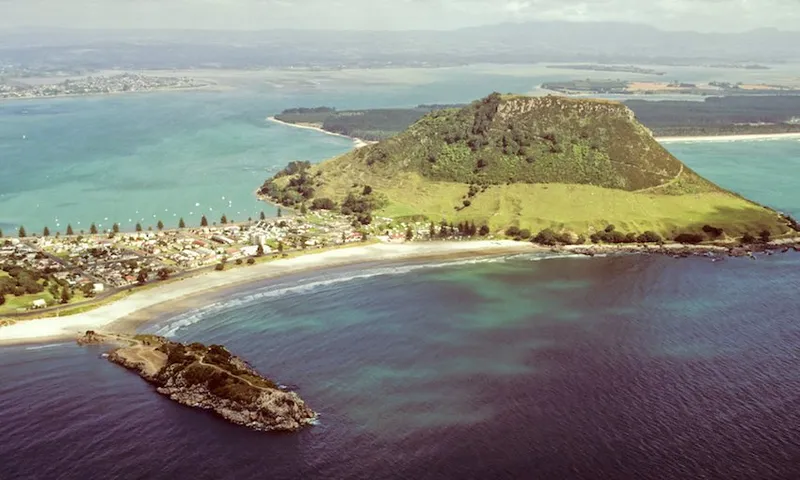
According to Tauranga Moana, Mauao was once a nameless inland mountain who fell in love with Pūwhenua, only to be rejected in favour of Ōtanewainuku. Heartbroken, Mauao asked the fairy-like patupaiarehe to drag him to the ocean to drown his sorrow. Through the night they hauled him seaward until dawn broke and the patupaiarehe fled, leaving the mountain stranded between land and sea. Caught by the light of day, he was named Mauao – mau (held fast) and ao (daylight). From grief and longing, he became a guardian of Tauranga Moana, standing watch over tides, waka, and the boundary between worlds. Now, Mauao is surrounded by grief and longing again.
Six people are presumed to have died following a landslide last Thursday at Mount Maunganui Beachside Holiday Park, located at the base of Mauao. A recovery operation continues, after some remains were found buried underneath the fallen earth. Efforts are being led by police, with assistance from local iwi. While locating those still missing remains the focus, questions have been raised about what – if anything – could have been done to avoid the tragedy.
As often happens when a tragedy occurs, local iwi have implemented a rāhui – a restriction of access to the area where the incident took place. But why? What is the logic behind rāhui, do they actually work, are they all the same and when do they end? Here’s an attempt to answer some of those questions.
Who actually owns Mauao?
In 2008, ownership of the maunga was formally returned to local iwi Ngāi Te Rangi, Ngāti Ranginui and Ngāti Pūkenga through the Mauao Trust – an entity established purely for the purpose of receiving ownership of the maunga through the Mauao Historic Reserve Vesting Act 2008. The Mauao Trust manages the maunga alongside the Tauranga City Council.
So iwi make all the decisions regarding the mountain?
Not quite. Although the ownership of Mauao was transferred to the tāngata whenua, responsibility for decisions on the control, funding and management of the mountain remained with Tauranga City Council. The council has administering body status under the Reserves Act 1977 and remains responsible for the day-to-day operations of the maunga – that means maintaining the tracks, looking after the trees, and archaeological preservation.
Ngā Poutiriao ō Mauao is the Mauao Joint Administration Board and consists of eight members – four appointed by the Mauao Trust and four by Tauranga City Council. They make governance decisions about the maunga and its management, including on rāhui.
What is a rāhui?
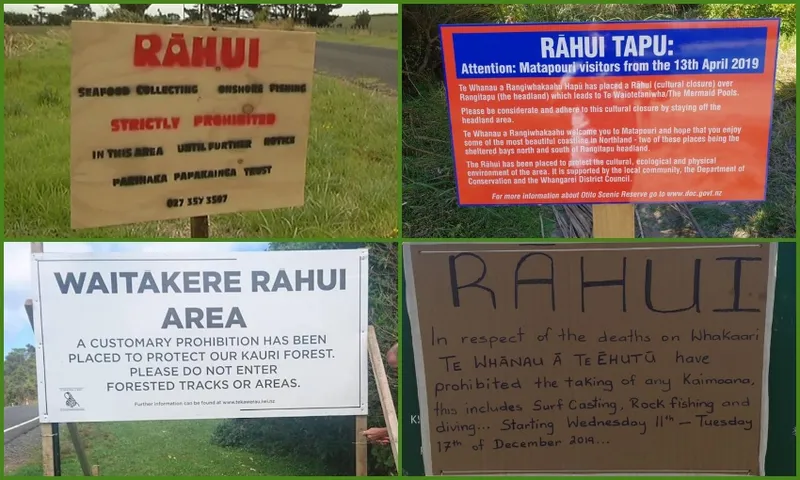
A rāhui is often interpreted as a ban or prohibition on something. It usually means people shouldn’t go to a certain place or do a certain thing, like gather seafood or swim in an area where someone has drowned.
Why are rāhui are implemented?
Rāhui can be placed on many things and for many different reasons. The most common forms of rāhui we see in Aotearoa often relate to death or depletion. While some claim tikanga Māori such as rāhui are purely based on superstition, there are often practical reasons for rāhui.
Take, for example, a ban on gathering seafood or swimming in a certain area after a person has drowned. This is often implemented as soon as the event happens and is lifted at least three days after the body is recovered. Eating something like a fish that may have eaten a deceased person is not only a breach of tapu, it’s quite frankly pretty unappetising. In fact, many members of Ngāti Whātua never eat araara, or trevally, as one of their key tūpuna is believed to have been eaten by the fish.
Another key reason for rāhui relates to protection of resources. Examples are not taking pāua where stocks are low, or crayfish when they’re spawning. This helps replenish stocks of certain species so they are around for future generations.
So why is there a rāhui at Mauao?
The current rāhui at Mauao, prohibiting people from climbing the maunga or swimming near it, has two main components. Firstly, there is an ongoing risk of further landslides. Secondly, there is a search still under way for those missing. Understandably, members of the public should not be near ongoing rescue efforts for a variety of reasons, including potentially hampering the search.
There’s also a different kind of safety to consider. Discovering a dead body or remains could be traumatic, especially for young people.
How long do they last?
Rāhui can last for a matter of hours, weeks, years, or in perpetuity – it depends on the circumstances. In the case of a rāhui on gathering seafood or swimming after a death, the duration usually depends on when or if the body is recovered. For replenishing stocks of a resource, a rāhui can often last years. Rāhui or bans on accessing wāhi tapu and sites of significance may be ongoing.
What is the process for placing and lifting rāhui?
Every group will have their own tikanga around placing and lifting rāhui, but there are some general processes that will usually be followed in some way. Firstly, a group will be made aware of an issue and then meet to discuss what course of action to take. Next, there will often be a gathering at the site where the rāhui is to be placed. This usually includes karakia, speeches, what the conditions of the rāhui are and where it applies.
To lift a rāhui, those enforcing it will first need to be satisfied that the conditions are right. Are the stocks replenished, or chances of consuming the deceased passed, or is there no longer a threat of injury or death? Once this has been confirmed, karakia and pure will be used to lift the rāhui and return the site to a state of noa, as opposed to a state of tapu.
Who enforces rāhui and what happens if people don’t listen?
Again, it varies, but usually iwi, hapū, marae, whānau, local authorities and other community members will play a role in monitoring and enforcing rāhui. This often means patrolling the beaches, monitoring activities, educating people and enforcing the rules.
To enforce a rāhui, groups may use fines, seize property, remove people or ban them from ever accessing a site again.
Disregarding a rāhui can have a big impact, including spiritual harm, damage to relationships, loss of mana or emotional stress. While these may seem intangible, they often result in very real consequences for those effected.
Will the rāhui on Mauao be permanent?
At this stage, local iwi are understandably prioritising the ongoing search efforts for those missing, with daily karakia and support on the ground. Once this process is complete, they will then turn their attention to how long the rāhui should last and what the next steps will be. A key consideration will be a geotechnical report on the stability of the land due to be completed by the Tauranga City Council. One spokesperson told The Spinoff a rāhui of at least six months was likely.

Liam Rātana
Liam Rātana (Ngāti Wairupe/Ngāti Kurī) is editor of The Spinoff's Ātea section. He is passionate about indigenous and minority issues. Liam enjoys cooking, poetry, photography, and exploring the outdoors.


