The housing reform that will reshape Auckland: Plan Change 120, explained

Plan Change 120 will allow taller buildings across Auckland.
Auckland is making a major change to its planning rules which could enable millions of new homes.
In 2016, Auckland Council passed one of the important documents in the city’s history: the Unitary Plan, a revolutionary change to housing regulations that enabled 900,000 additional homes and unleashed a flurry of new-build townhouses and low-rise apartments.
It became one of the world’s most studied zoning changes; celebrated by housing advocates and academics as an example of how city-wide upzoning can lead to greater housing supply and reduce relative price pressure on rents and house prices.
Throughout 2026 and 2027, the foundations will be laid for an even more significant change with an even catchier name: Plan Change 120. It will enable a further two million new homes in New Zealand’s largest city.
That doesn’t mean two million new homes will be built. Not every section in Auckland will be redeveloped or built to its maximum legal capacity. But it will lead to more homes overall, and those homes will be in better locations: near train stations, busway stops and areas with high-capacity sewerage.
The biggest change will be in the inner suburbs like Ponsonby, Mt Eden and Parnell, which are currently categorised as “special character areas” where new developments are restricted.
However, there are many decisions still to make. Like any piece of zoning policy, Plan Change 120 will be a long process filled with complex details designed to make your eyes glaze over. Here’s what you need to know:
The background
Plan Change 120 began its life in 2022 under a different but equally dull name: Plan Change 78. That earlier plan was created to implement the “3×3” law – a bipartisan regulation supported by National and Labour that allowed three dwellings up to three storeys tall by default on most city properties across New Zealand, officially known as the Medium Density Residential Standards.
The MDRS was a broad brush approach that spread growth across the city – but the risks were highlighted by the 2023 Auckland Anniversary floods. Many Aucklanders thought building thousands of townhouses in areas prone to flooding was a bad idea.
The National-led government gave Auckland Council permission to scrap Plan Change 78, but only if it wrote a new plan that provided for the same number of houses – enough for at least the next 30 years of projected growth. In October 2025, Auckland Council voted to do just that, setting the stage for Plan Change 120.
The process
It’s going to take a while. The first round of public consultation was held in November and December 2025. There will be another round of submissions early this year, then a series of public hearings in front of an independent panel.
The independent hearings panel will summarise those submissions and write a version of the plan that it will recommend to Auckland Council. Councillors will then vote to accept the recommendations or make amendments.
A final decision is due by June 2027. Groups that aren’t happy with the final decision will have the chance to appeal elements of it to the Environment Court, though only limited aspects will be able to be challenged.
What has already been decided
There are several baseline standards that Auckland Council is required to meet due to regulations set by the previous Labour government and added to by the current National-led government. These include:
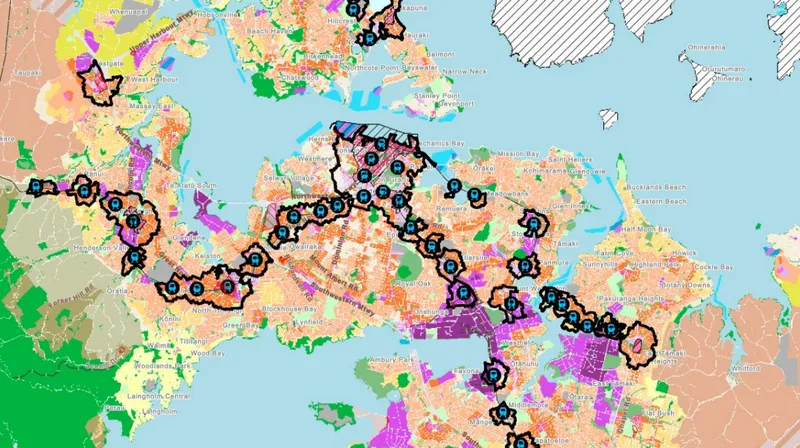
- Six-storey buildings must be allowed within 1,200m of the edge of the city centre, 800m of a train station or busway stop, or 800m from the edge of a metro centre zone.
- 10-storey buildings must be allowed within 800m of the Mt Albert and Baldwin Ave train stations.
- 15-storey buildings must be allowed within 800m of the Morningside, Kingsland and Mt Eden train stations.
What could still change
In order to remove the 3×3 rule and downzone floodplain areas, Auckland Council needs to find other areas to take on greater density.
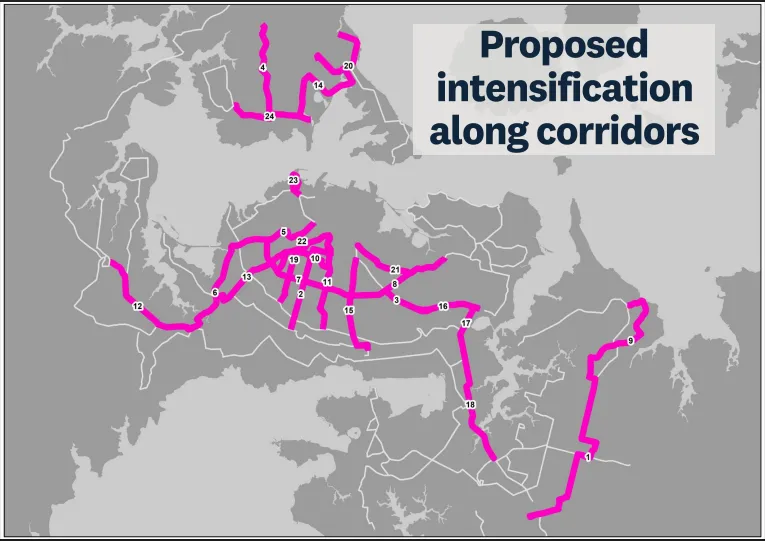
The council’s initial proposal suggests zoning for six-storey buildings in 57 suburban centres and alongside the 23 most popular bus routes. Some neighbourhoods may push back against these height increases, while some may ask to go even higher.
One of the biggest debates will be about “height in relation to boundary” rules. These determine how close a building can be to the edge of the property line and the angle the roof can be built on. Requiring buildings to be set back from the boundary blocks less sun for neighbours, but reduces the number of homes that can be built – and could possibly make some developments uneconomical to build.
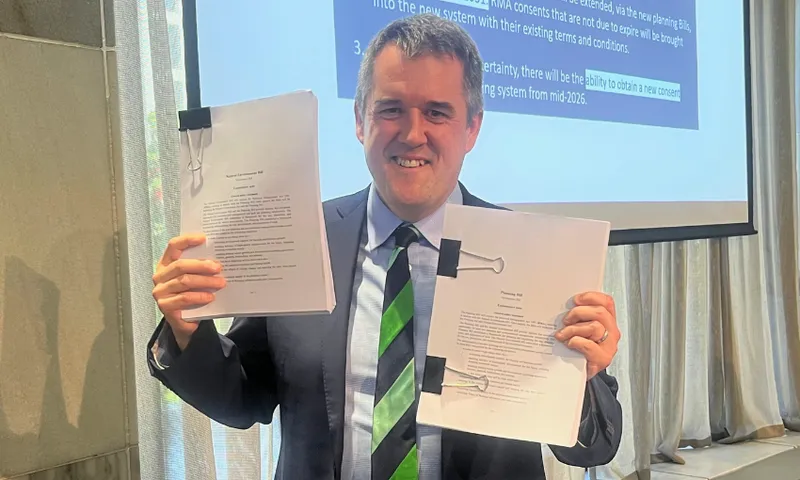
There could also be a lot of back-and-forth about “qualifying matters”, which make certain properties exempt from the minimum zoning requirements – for example, if development would block the view of a mountain or impact a historic heritage area. However, the recently-introduced RMA replacement bill greatly restricts how these can be applied.
The battle lines
Housing minister Chris Bishop and Auckland mayor Wayne Brown have both made it clear that they want the city to build a lot more housing, especially around the City Rail Link, which is due to open in the second half of this year.
It appears there is probably majority support around the council table for the change – or at least a majority who prefer this plan to the previous iteration. But there is a cohort that is vehemently opposed to almost all upzoning and can be expected to push back against it, including John Watson, Mike Lee, Christine Fletcher and Maurice Williamson.
Then, there are the members of the independent hearings panel. These have been a mixed bag in the past. The panel responsible for Wellington’s District Plan in 2024 became notorious for their spurious anti-housing recommendations (which were mostly overturned by the council). That’s unlikely to happen again. Bishop gave himself greater powers to appoint panel members, and chose several candidates known for pro-density views, including economist Stuart Donovan and transport and urban planner Malcolm McCracken.
Among activist groups, the Character Coalition will be a major opposition force, alongside various residents’ associations and heritage groups. Act MPs David Seymour and Brooke van Velden have made it clear they intend to oppose intensification in their electorates of Epsom and Tāmaki.
Yimby groups such as the Coalition for More Homes, Greater Auckland and Generation Zero will be among those supporting the plan and pushing for changes that will make it easier to build taller, denser buildings.

Joel MacManus
Joel MacManus is a senior writer for The Spinoff. He previously worked at RNZ and Stuff, and began his career at Critic Te Ārohi. His writing explores the political, economic and cultural systems that underpin modern New Zealand. He won the 2025 Voyager Media Award for Best Columnist, Opinion or Critique.


