‘Why do we do this to ourselves?’ A conversation between two freshly published authors

Daniel Devenney and Claire Mabey: anxious and elated at the very same time.
Made possible by


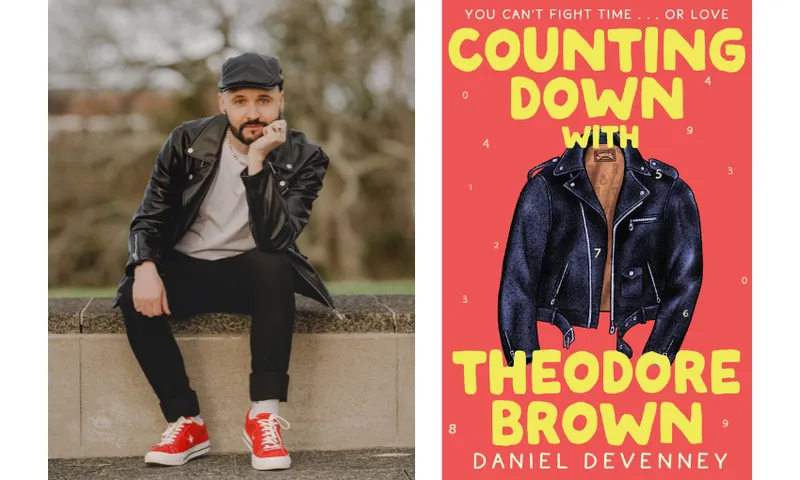
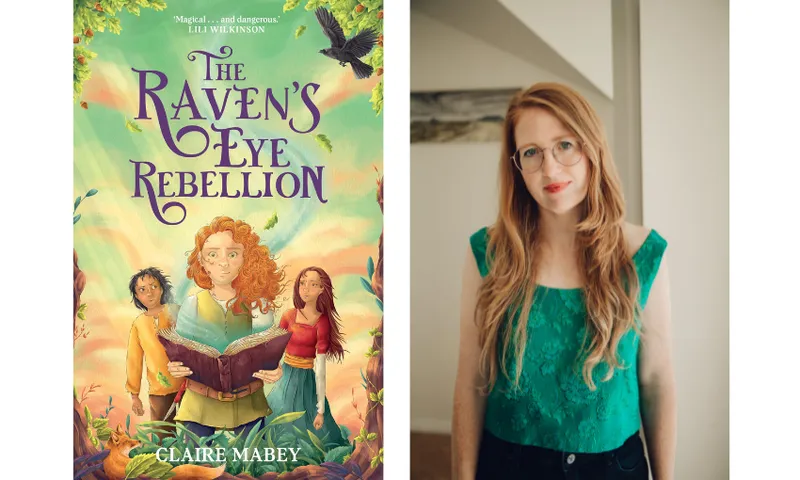
Daniel Devenney and Claire Mabey both released new novels on April 8. They discuss pre-publication anxieties and why they’re compelled to write in the first place.
Claire Mabey: Daniel, your very first book, coming-of-age novel Counting Down with Theodore Brown, came out on April 8, which makes us publishing twins. How are you feeling about it all?
Daniel Devenney: I’m feeling all the things! Excitement, nausea, pride, anxiety, relief… but ultimately, gratitude overrides every other emotion. The anticipation leading up to release day was unlike anything I’ve experienced. I was giddy with delight one minute, and ready to vomit the next. I imagine it’s how a parent might feel when their kids leave home. Theo and Lil are just out there doing their own thing now, and I hope the world will be kind. I miss them. But I’m also very proud of them. Many a tear has been shed.
I adored your first novel The Raven’s Eye Runaways and cannot wait to read the sequel, The Raven’s Eye Rebellion! This is your second rodeo, was it less nerve-racking this time round?
CM: You should be so proud of Theo and Lil! They’re going to be loved by so many new friends.
The answer to whether it’s less terrifying the second time around is – yes. Nothing compares to that very first experience of publishing. I was utterly petrified the first time around. It’s an exposing thing to do, give the innermost workings of your mind to strangers. This time I still had a ton nerves, for sure, but I also knew what I needed to do to make myself feel comfortable. Having said that, it is still surreal to have this story I wrote all wrapped up in a stunning cover and in shops and libraries – like a real-ass book!
Sometimes when the anxiety keeps me up at night I do wonder why we do this to ourselves. What compelled you to persevere (because writing a novel takes so very long) with your gorgeous, inventive novel?
DD: There are so many reasons. First and foremost, writing is my favourite thing in the world. Time moves differently when I write. If I’m in the zone, four hours feel like one. I get completely lost in the world of my characters. I used to think reading was the best form of escapism, until I began creating my own stories. It’s extremely therapeutic.
It’s also my way of better understanding myself and the world around me. Each project changes me. During this book, I confronted my anxieties regarding time and grief. Theo (my character) helped me work through some of my deepest fears.
Has writing your fictional worlds impacted your real life in any way?
CM: I love that Theo was a guide of sorts. I feel exactly the same way. My main character, Getwin, really is me. When I was 12 I remember having a profound realisation that grown ups did terrible and nonsensical things that I couldn’t understand. I raged and worried and plotted. Getwin is just the same except she’s braver and more pragmatic than I am, and far more defiant. So she actually does something about her discontent – living through her is very cathartic for me! As for the other characters, they arrived in my brain totally on their own terms. I can’t see people I know in them, or much of myself, so it’s mysterious to me where they come from. I have weird times in my non-writing hours where I, like … hang out with them.
Why did Theo’s particular story come to you, do you think?
DD: In a strange way, I feel like Counting Down with Theodore Brown chose me. I was struck with the idea after I applied for my New Zealand residency. I began questioning if I could live so far away from my friends and family in Ireland. I’d fallen in love with Aotearoa but couldn’t stop wondering how many days I’d have left with my loved ones on the other side of the world, if I chose to stay. I asked myself if I’d make the same decision if I knew those precise numbers. Theodore Brown was born from there. I simply couldn’t stop thinking about how such an ability would shape a person.
The story explores our basic need for connection. Theo’s journey highlights the joy close relationships bring to our lives, and the dangers we face when we isolate ourselves. It’s also a love story and many other things. Ultimately, I wanted to write about life, and the triumphs and tragedies we all experience.
There are so many strong themes in your work: friendship, rebellion, classism, censorship, and the power of literacy. Did you decide what themes you wanted to explore before you started, or did they reveal themselves along the way?
CM: Honestly, I didn’t really know what I was writing about when I started. The themes came out of the characters and their circumstances and decisions. I think my deep confusion about many aspects of the way we live, and have lived, wove itself into the fabric of the story. So, on a subconscious level, I was simply exploring things had always been both curious and problematic to me. Like you, I find the process of discovery in writing very intoxicating. When I settle in to write I can be there for hours – there, there, in the world. Writing fiction is a strange and immersive and magical act. I just hope that readers feel as enchanted as I did while I was creating the story!
One thing that I’ve realised since I started writing seriously is that there’s a vast chasm between writing and publishing. What, for you, are the best and worst bits about actually publishing your book (so far)?
DD: The best part has been hearing people talk about the different ways the book has touched them. So many readers have told me it helped them to process their own heartbreak, grief, or anxiety. My eyes water every time. A big part of Theo’s journey involves him accepting impermanence as part of life. Change is something I’ve always found difficult. I had a 10-year relationship fall apart during the process of writing this book, and experienced other profound losses too. I really had to walk the walk and live by the message I was asking my readers to embrace. And honestly, it helped tremendously. I’m a stronger person because of Theo. I pushed through and now I’m engaged to the love of my life and celebrating the release of my first book. Knowing readers are also finding strength and comfort in this story is my greatest accomplishment.
The worst part is the waiting. It’s a long process, and the anticipation is brutal. Imposter syndrome and self-doubt love to pop in and say hello every now and then. Sharing any piece of art is incredibly vulnerable. But you’ve just gotta be brave, ride it out, and keep doing what you love. When you hold your book in your hands for the first time; it’s all worth it. Getting stuck into my next project is what carried me through.
Do you have any tips or tricks on passing the interim between completing a project and its publication?
CM: I keep writing. I move immediately onto the next manuscript, which usually I’ve been thinking about for a good year or more while I’ve been writing the current thing. I’m on the second draft of a new (short!) novel for children and I’m obsessed with it. It helps take my mind off anxious thoughts about how people will receive the novels that are out there. I also read a lot and listen to interviews with authors and I find all of that so comforting. Publishing isn’t an easy process for most, even the authors you’d think are breezing through. It’s kind of nice to know there are bumps along even the most golden looking roads. I’ve started to think of other writers, the glorious community that is out there (especially in children’s literature!), as art friends and some as art saints – the books and authors that have had, and still have, a profound impact on me.
Does Counting Down with Theodore Brown have any saints? Books or authors who have influenced you?
DD: Probably more than I realise. But the obvious one is The Perks of Being a Wallflower. That book changed my life. There’s nothing more transformative than the right book, in the right hands, at the right time. The line “we accept the love we think we deserve” changed my brain chemistry. I quickly reevaluated every relationship choice I’d made. I’ve read it several times now, and I find something new to love each time.
Several early reviews have made a comparison to John Green. This is insanely flattering. I devoured his YA novels. Looking for Alaska is probably my favourite. It’s phenomenal. I don’t think I realised how influential he’d been until it was pointed out.
Who are your biggest influences, and have you had a comparison that’s made you smile ear to ear?
CM: The very first review I got for The Raven’s Eye Runaways compared it to Philip Pullman and I cried. Pullman’s His Dark Materials books are everything to me so that was both unexpected and a dream! His rich worldbuilding is always in the back of my mind: the sense you could visit Lyra’s Oxford and touch and feel and explore. That’s what I wanted my world of Wyle to feel like, too.
I read T.H. White’s The Once and Future King as I was drafting The Raven’s Eye Rebellion and while they’re very different books, I did revel in White’s deep respect for nature and how grounded that magic is. White and I have a shared unified theory of magic, nature and knowledge, I think, and so I quoted White’s Merlin at the front of my book. I love seeing his words there! They feel like a kindly talisman over my worlds, both fictional and real.
Counting Down with Theodore Brown by Daniel Devenney ($25, Allen & Unwin NZ) is available to purchase from Unity Books. The Raven’s Eye Rebellion by Claire Mabey ($25, Allen & Unwin NZ) is also available to purchase from Unity Books.
The Spinoff Books section is proudly brought to you by Unity Books and Creative New Zealand. Visit Unity Books online today.
Claire Mabey
Claire Mabey is a children's author of The Raven's Eye Runaways, The Raven's Eye Rebellion, and a picture book Cass and the Beast illustrated by Jill Calder. For a long time Claire worked on literary festivals and is the founder of Verb Wellington. She lives in Te Whanganui-a-Tara with her partner and son.


